A group of friends were at our home, and we were ten minutes away from turning the calendar. I called everyone into the TV room to watch the replayed broadcast from Times Square in NYC.
But as soon as I turned on the TV and the cable connection, I saw error messages.
Whoops. I had to laugh, suddenly remembering that my wife had called our cable provider to cancel the service earlier that same day. Impeccable timing, babe!
Not to worry. I logged into our TV’s YouTube app and quickly found a livestream of the countdown from nearby Seattle on NBC’s King 5 channel.
And that story says a lot about the state of entertainment media today.
TV’s Final Stand: Live Sporting Events
The slow death of cable TV is nothing new. It’s a prospect that we’ve seen coming for the last decade. But what’s always held me back from pulling the plug on cable are the live events.
Sports. Election night coverage. New Year’s Eve countdowns.
Okay, maybe it was always really only about the sports.
And therein lay the problem. I just wasn’t watching any. The monthly bill we were paying for our cable package was getting harder and harder to rationalize.
The Rise of Streaming Alternatives
In my mind, the final nail in the coffin of cable TV was the improvement and expansion of choices available in streaming sports packages.
The licensed ones, I mean. Pirated sports broadcasts — in all their pixelated glory — have been around for over a decade.
But after doing a little shopping, my wife and I confirmed that I could watch my favorite teams on a monthly subscription that cost a fraction of our old cable bill. I found it assuring to confirm that such options existed.
A Change in Time Priorities
Still, it’s been seven months since we made the fateful decision to cut the cable. And I have yet to feel much desire to activate an online sports package as a replacement.
I guess I want to hold out for a while. To see how long I can go without watching pro sports at all. To see how much I’ll actually miss it.
This is far from a hate-on for sports. I love pro sports — unapologetically so.
It’s simply an acknowledgment that I actually don’t have a lot of time to watch sports during the week.
As a husband and stepdad, it’s already challenging enough to carve out quality non-screen times with the family. As an educator, I always have more planning to do, assignments to assess, and emails to write. As a student, I have articles and books to read, forums to contribute to, and papers to complete. As a creative writer and podcaster, I’m trying to set aside time for reflection and content creation each week as well.
So the idea of sitting back on the couch and watching more than an hour of sports with a drink in hand just isn’t my reality today. It hasn’t been for a long time. And I can’t really say that I want it to be.
The Next Gen Perspective
Ask my two stepsons, 12 and 14, to name their favorite TV channels or shows and you won’t get much. The Amazing Race, maybe. Or American Ninja Warriors.
They only know those shows because we’ve made them family events in the past. Even then, the shows were always pre-recorded so that we could skip the commercials. And it’s worth noting that just like sporting events, these shows are available over streaming services, too.
My boys don’t care much TV or anything on it, but if that’s the only screen available, they’ll watch YouTube. For them, channels like Dude Perfect, FailArmy, TheOdd1sOut, or a host of others provide much more interesting and entertaining content than anything the cable networks can offer.
The late shows of cable TV capture the evolution of TV-to-internet as well as any video content in the marketplace today.
For a genre born entirely on the TVs of America’s living rooms, they’ve done well to adapt in recent years to the online shift in viewership. Jimmy Fallon (19M subscribers), Jimmy Kimmel (13M), and my personal favorite — Stephen Colbert (5.6M) — all earn millions of views daily.
On YouTube, their content is easy to find, doesn’t require pre-scheduled recording, caters to any bedtime, and can be watched in short bursts — like when I’m munching on an evening snack.
Just as importantly, the show clips are easy to post, share, and embed in other content. YouTube offers a virality and a binge-ability that conventional cable TV can’t match.
Not surprisingly, all the major professional sports leagues are all building their presence on YouTube as well.
Predicting the Future
What will the media landscape look like a decade from now? No one knows for sure — despite the fantastic scenarios conjured in Black Mirror.
The way things are trending, we can expect more on-demand offerings, more niche subscription services, improved TV apps, faster internet, and more powerful devices.
Will cable TV survive as we know it today? I doubt it.
But I can tell you this. I don’t miss it. My wife never cared about it. And to put it in middle school terms, my boys think it sucks.
As a fairly typical middle class family, that’s about as strong a signal about the future of media as you’re about to see.
We’ve cut the cable. And I doubt we’ll ever go back.
There’s no such thing as a slam dunk commitment. But when intentions are declared out loud, they tend to be just a little more sticky. They carry a little more weight.
They raise the stakes.
There are plenty of examples of this in public life. It’s the reason why weddings — despite concerning rates of divorce — still garner plenty of attention and fanfare. Though marriage has become passe in some circles, there’s still something about vows made in front of witnesses that means a lot.
It’s why we pay attention to what our politicians say in public (and by extension, it’s why a free and robust press is foundational to a healthy democracy). It’s why signed contracts in the world still warrant headlines. It’s why when CEOs at major corporations make announcements, the markets respond accordingly.
Facing the Fears
We’re often reluctant to declare goals out loud because of the social risk. It’s so easy to imagine the pushback months down the road.
“Didn’t you say you were going to lose 20 pounds this year?”
“I thought you were going to apply to law school. What happened to that?”
“So what ever happened to the book that you were planning to write?”
We can hear the snickers and see the sneers.
Channel the Energy
What would happen, though, if instead of backing down in the face of those fears, we embraced the pressure they signal. I mean, what if we really leaned into the power of audience.
This is something I’ve thought a lot about lately. Just a couple of months ago, I decided to finally — finally — FINALLY start writing on a weekly basis.
And in my writing, I’ve tried to be real. Real about where I’ve been. Real about where I want to go from here. In posts like My 27 Goals for 2019, I’ve really put it out there.
Some Public Goals and Decisions
In fact, since my first article on Medium in October of 2017, I’ve shared the following goals and decisions:
I’m working on a Master’s degree.
I keep my phone out of the bedroom at night.
My wife and I will not borrow money to buy a vehicle.
I’m going to start a podcast (this became reality in March of 2018).
I don’t eat potato chips, French fries, or non-alcoholic sugary drinks.
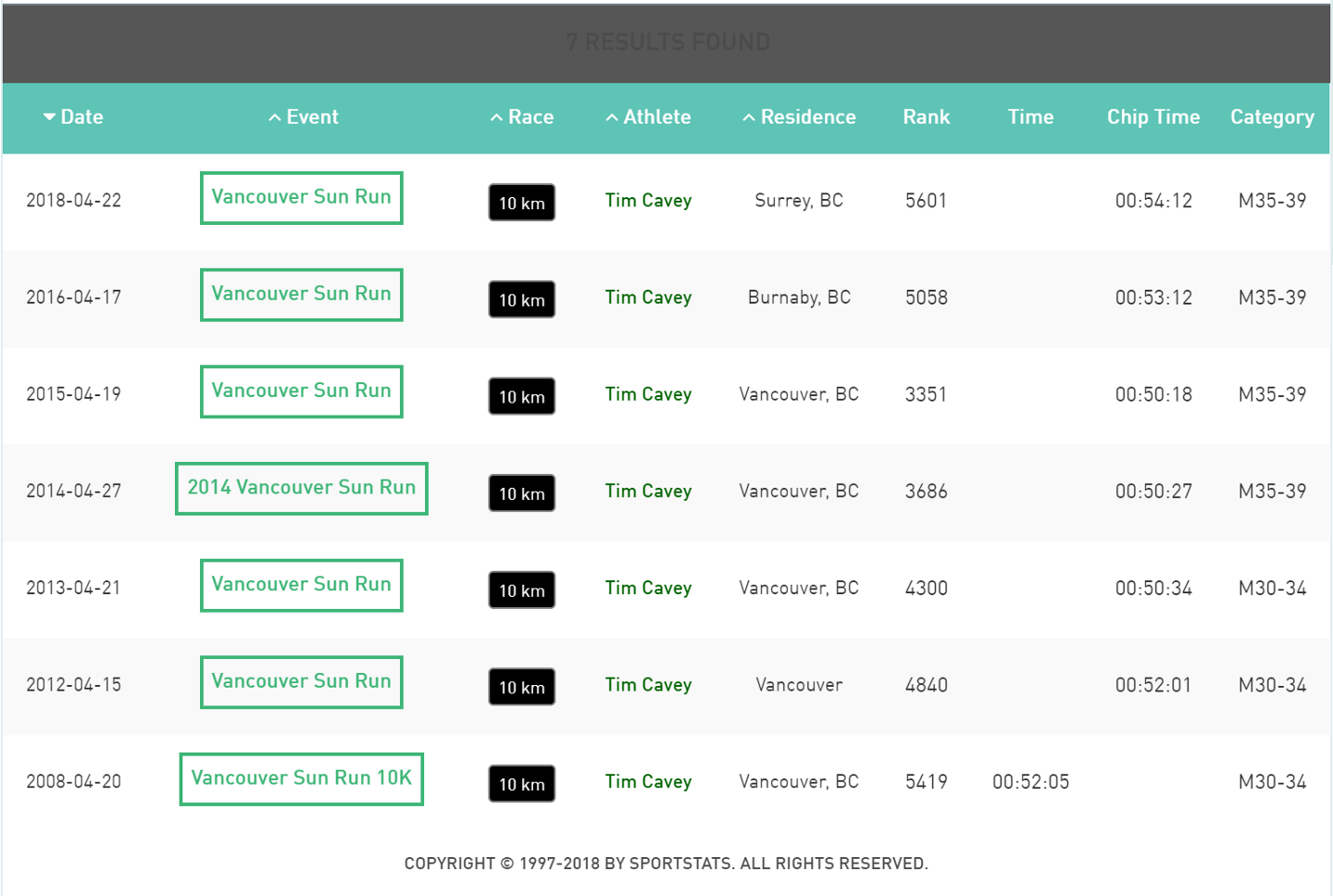
I’m going to try to finish the Vancouver Sun Run (10 km/6.2 miles) in <50 minutes.
My family eats dinner at the dining room table sans screens — not in front of the TV and not with phones present.
Find the Tipping Point
Of course, I’ve set a ton of other goals and made a ton of other decisions in terms of how I live my life, but I share these examples in particular because they each represent terrific battles. They’re not always things I want to do in the moment.
Mind over matter, spirit over flesh — each of these goals and decisions invites powerful opposition from a dark part of me that wants to settle, wants comfort, wants less struggle and more status quo.
And sometimes, that dark part of me speaks very loudly. When I’m BLASTed (Bored, Lonely, Angry, Stressed, or Tired), it’s hard to find the resolve to resist McDonald’s fries and run 3 miles instead.
But do you know what helps me win in every case? Public accountability.
I’ve literally told so many family members, friends, colleagues, and readers that I’m going to do X and not do Y that I paint myself into a corner.
I leave myself with no choice. Either I press onward, or my credibility takes a beating.
So call it pride. Call it dignity. But I want my word to mean something. I want to be a man that follows through. I want to be intentional and committed and reliable. And as a result, I press on.
As Dave Ramsey likes to say, “You can wander into debt, but you can’t wander out of it.” As it is with financial freedom, so it is with most of life’s wins.
But if you’re looking to make permanent changes, chart better courses, and realize bigger dreams, may I recommend embracing the power of accountability.
Take a look at the goals you wrote on that piece of scrap paper, and tell someone. Share your decision. Write about your plans.
Raise the stakes. You’ll be glad you did.
Because there’s excpetional power in public accountability.
My book reading goal for 2018 was 12, and to be fair, I came really close. By year’s end, I had finished 11, with probably a dozen more titles in various states of progress.
But without further ado, here is my look back at the 3,471 pages I read across 11 books in 2018. For each title, I’m sharing my reason for reading, a quick review, and a quote that captures something of the book’s message.
Animal Farm,by George Orwell (3 stars)
Why I read it: I thoroughly enjoyed 1984 by Orwell, so this book seemed like a good pick in terms of classic fiction. It’s required reading in many high schools, so as an English teacher this was a logical choice.
My Review: Animals on a farm form a revolution and run the farmer (read dictator) off his property. The initial ecstasy of freedom in the aftermath gradually gives way to sadness and oppression as the pigs slowly increase their dominance over the remaining animals. The story is a thinly veiled political allegory that resonates with coups and revolutions in modern history. The book was interesting and I’m glad I read it, but this plot won’t keep you on the edge of your seat.
Key Quote: “Somehow it seemed as though the farm had grown richer without making the animals themselves any richer — except, of course, for the pigs and the dogs.”
Crushing It, by Gary Vaynerchuk (4 stars)
Why I read it: Gary has been a huge source of inspiration in terms of the kinds of content that it is possible to create in today’s world.
My Review: The old gatekeepers on media (think publishers, cable networks, record labels) are losing their control in an age when absolutely anyone can create, publish, and promote their own creative content. Gary tells stories of entrepreneurs who showed enough creativity, determination, and vision to overcome adversity and win. He makes the case that we can crush it, too, and calls out our fears and hesitations. I consume a lot of what Gary puts out on podcasts and YouTube because he inspires me to take action and create. This was no different.
Key Quote: “Put your stuff out in public so you have to live up to it. As long as it’s valuable and you know it’s true, don’t judge it. Let the market show you whether you’re good or not. There’s always something new, and the only way to win is if it’s your truth. Just produce. Become that personality, and own it.”
Fahrenheit 451, by Ray Bradbury (4 stars)
Why I read it: Like Animal Farm, this was another fiction classic on my reading to-do list. This was an itch that I’d been waiting to scratch for the last 15 years, ever since Michael Moore’s Fahrenheit 911 was released in 2004 and I never quite understood the reference.
My Review: In a society of the future, ideas and books are considered dangerous. Any reports or sightings of books lead to a complete incineration of the property where they’re found. When the protagonist begins to question this rationale and pilfer a few titles for his own review, he becomes a wanted man. Bradbury’s predictions of the future are shockingly accurate, and I would recommend this read for that reason alone.
Key Quote: “School is shortened, discipline relaxed, philosophies, histories, languages dropped, English and spelling gradually neglected, finally almost completely ignored. Life is immediate, the job counts, pleasure lies all about after work. Why learn anything save pressing buttons, pulling switches, fitting nuts and bolts?”
For Whom the Bell Tolls, by Ernest Hemingway (4 stars)
Why I read it: Yet another classic on the list, this was a title I’ve seen and heard about for years by one of America’s greatest writers.
My Review: Robert Jordan is an American who somehow got involved in the Spanish Civil War. As he colludes with a ragtag bunch of rebels to destroy a bridge, he meets a girl and falls in love. Some thrilling combat scenes fill the late stages of the book as Jordan attempts to achieve his mission and escape Spain with Maria. Although a little slow at times, this was written with passion, imagination, and great character development. A great read.
Key Quote: “Instead of the surety of failure he felt confidence rising in him as a tire begins to fill with air from a slow pump. There was little difference at first, although there was a definite beginning, as when the pump starts and the rubber of the tube crawls a little, but it came now as steadily as a tide rising or the sap rising in a tree until he began to feel the first edge of that negation of apprehension that often turned into actual happiness before action.
The Hobbit, by J. R. R. Tolkien (3 stars)
Why I read it: I was looking for some new bedtime reading with my second stepson (aged 12). I had never read this classic, so it seemed about time.
My Review: A hobbit accompanies a wizard and some dwarves on a dangerous journey across mystical lands. Strange characters appear and threaten them at seemingly every turn. Spiritual analogies abound. Because I’m not a big fantasy fan, I had to work hard to keep my mind focused during Tolkien’s length descriptions.
Key Quote: “Where there’s life there’s hope.”
The Inconvenient Indian: A Curious Account of Native People in North America, by Thomas King (4 stars)
Why I read it: This title was on a list of optional readings for my MEdL program, and classmates spoke highly of King as an authority on the indigenous experience in North America. I also really enjoyed The Reason You Walk by Wab Kinew, and this was a natural follow-up.
My Review: This reads like no history book you’ve ever read, and that’s just the way King wants it. Although his telling of indigenous stories is far from linear or chronological, he weaves a sometimes sarcastic, sometimes funny, always authentic tale that puts it all into perspective. More importantly, King shows how Canadian and American histories of colonization have affected indigenous societies, and discusses the pathway forward.
Key Quote: “When we imagine history, we imagine a grand structure, a national chronicle, a closely organized and guarded record of agreed-upon events and interpretations, a bundle of “authenticities” and “truths” welded into a flexible, yet conservative narrative that explains how we got from there to here. It is a relationship we have with ourselves, a love affair we celebrate with flags and anthems, festivals and guns.
Leaders of Their Own Learning: Transforming Schools Through Student-Engaged Assessment, by Ron Berger, Leah Rugen, and Libby Woodfin (5 stars)
Why I read it: This was another optional title from my list of course readings for my MEdL program. When my first year studies started to look at the pedagogy of learning targets, a colleague recommended this work. I’m so thankful she did.
My Review: This book turned out to be one of the best education books I’ve ever read. In one thought, it shows how student agency, ownership, and metacognitive practices can dramatically improve student learning. It’s so good and so logical that any school could adopt this as a guidebook to better learning and teaching practices.
Key Quote: “Student-engaged assessment encompasses a wide array of practices that bring students into the process of assessing their growth and learning. They gain a deeper sense of their progress and ultimately become more independent learners. Through student-engaged assessment, students learn the language of standards and metacognition, set academic goals and monitor progress, identify patterns of strengths and weaknesses, become self-advocates, and assess their own work with a striking degree of honesty and accuracy.”
Lord of the Flies, by William Golding (5 stars)
Why I read it: I was looking for a book we could read in the car as a family, something to occupy those 25-minute drives to the beach. This was another story I’d missed in my childhood, and another title that comes up frequently as a reference in pop culture.
My Review: When a plane full of schoolboys goes down on a deserted island, the boys must figure out a new social order on their own. This book wrestles with ideas of empathy and cruelty, leadership and dominance, loyalty and betrayal. It’s an intriguing story and we were on the edges of our seats through a lot of it. Some of the lines from the story still ring in our ears.
Key Quote: ‘If I blow the conch and they don’t come back; then we’ve had it. We shan’t keep the fire going. We’ll be like animals. We’ll never be rescued.’
Money Rules: Rule Your Money, or Your Money Will Rule You, by Gail Vaz-Oxlade (3 stars)
Why I read it: As I’ve shared in past posts like this one, I’ve made more than my share of financial mistakes. With Gail I was looking more for motivation than know-how, although I always want to learn more about wise money management.
My Review: This book is a collection of financial rules listed one after the other in no apparent order, so don’t look for thematic chapters here. Gail writes with refreshing candour, and she isn’t afraid to call us out for our stupidity. Overall, it was an encouraging experience to read this one.
Key Quote: “If you don’t know what you want, if you don’t lay a plan for getting from one point in your life to another, you’re just wandering in the woods blindfolded.”
Teach Like a PIRATE: Increase Student Engagement, Boost Your Creativity, and Transform Your Life as an Educator, by Dave Burgess (5 stars)
Why I read it: If you engage with other educators in today’s professional learning networks for very long, you’ll hear about this legendary author and the movement he’s begun. After this title was recommended by multiple podcast guests and professional connections, I knew I had to see for myself what Teach Like a Pirate was all about.
My Review: Dave Burgess completely redefines what is possible in the classroom. He also discusses the idea of creativity a lot, pointing out that creative ideas come from work, sacrifice, and intention — there’s nothing magical about the creative process.
Key Quote: “Grow! Try new things and do those bucket-list items. Notice the world around you and treat it like the bountiful supply of creative ideas that it is. It’s not just good for your life…it’s great for your teaching. Exploring the world and your passions allows you to bring a new perspective and energy into the classroom. It allows you to become a powerful role model for your students. We always say we want them to be life-long learners, so we must show them what that looks like.”
This Present Darkness, by Frank E. Peretti (4 stars)
Why I read it: I was looking for a new bedtime story to read with my older stepson, and I decided to revisit a novel I enjoyed in my own childhood. Given the 25+ year gap between reads, it was almost like getting into it for the first time.
My Review: Peretti pulls back the curtains on the spiritual warfare happening in and all around the town of Ashton. The story bounces back and forth between the natural and the supernatural as forces of darkness and light battle in an epic struggle.
Key Quote: “Spirit, who are you?’ Andy demanded. Bobby remained silent, his entire body strained, his lips tightly together, his eyes bulging out. He was taking frantic, short breaths through his nose. His face was crimson.”
In Summary
That was it — my year of reading in 2018, including fiction classics, education, entrepreneurship, personal finance, and history. Some were awesome, some were okay, but all were interesting and instructive in their own ways.
Putting it bluntly, if your goals aren’t quantifiable, they’re a waste of time. And yes, the cliches apply. Goals like “eating healthier” don’t make it past the second week of January. They’re meaningless because the success criteria isn’t clearly defined.
So with quantities in mind, I’m looking for big results this year. I’m hoping that by sharing these targets, you might be encouraged and inspired, too!
Here are my 2019 goals, by the numbers.
Physical
Work out at Anytime Fitness 156+ times.
Run a total of 156+ km. Now that I have a weekly running partner, this one might get blown out of the water. But years of inconsistency in this area make me cautious.
Run the 10 km (6.2 miles) Vancouver Sun Run in <50 minutes with 40,000 other runners. The under-50 time has been an elusive goal for the last decade. I was 0:19 away in 2015.
Complete 42 push-ups in one set.
Complete 15 reps of 135 pounds on the bench press.
Continue diet of no French fries, chips, or non-alcoholic sugary drinks.
Monitor and maintain optimal blood pressure averages for 2018.
Complete 104+ morning reflection and prayer journal entries.
Financial
Pay off our HELOC (home equity line of credit) by an average of $500/month. This thing has been in existence since we purchased our home in 2015, and it’s time to make some serious progress.
Earn an average of $50/month or from Medium publishing and other online activities.
Give $5 more per month to charitable organizations. We currently donate above 10% of our net incomes but less than 10% of our gross. The plan right now is to continue increasing our giving by $5/month to continue nudging that upward. Ultimately this speaks to our intention to live more and more generously, holding on loosely to the resources we’ve been given.
Organize 10+ monthly father-son conference calls (I’m speaking here of my own father and three brothers.)
Complete a third annual father-son summer camping trip with one of my brothers and his son.
Meet 10+ times with a close friend and goals accountability partner. We’ll be talking about this very list each month and updating our progress.
Marital
Complete 36 Connect Times with my wife. Connect Time is what we call weekend meetings where we sit down together to complete a thorough review of our current spending, financial picture, calendars, event planning, pressing decisions, other discussion items, and the health of our relationship. Connect Time is agenda-driven and methodical, but once we’re finished these meetings we feel in sync and settled.
Write 12 handwritten notes (1/month) to my wife. By no means should this be the sum total of my romance, but a friend suggested this one and I like it.
Make love regularly. We do have numerical goals here, but that’s TMI. Ha!
There you have it — my goals for 2019. Again, I’m posting them here partly to channel the power of public accountability, and partly to encourage and inspire you in your own goal-setting.
DON’T use credit cards to finance vacations “while I’m still young.”
Relax. The travel window isn’t about to close for you any time soon. Sure, my cross-continent trips with friends were fun at the time, but the multi-thousand dollar credit card debt to follow was miserable. No one sets out in life to pay Visa and MasterCard thousands of dollars in interest, but that’s exactly what you’re choosing to do when you rack up 5-figure credit card debt on a small salary. Renowned financial consultant Dave Ramsey calls this kind of behavior stupid tax.
DO save a little money each month.
Whether it’s $250 or $25/month, the decision to save consistently over time will literally pay dividends down the road. A quote attributed to Albert Einstein says “Compound interest is the eighth wonder of the world. He who understands it, earns it. He who doesn’t, pays it.” Choose to be an interest earner, not a slave. Tax-free interest savings plans like Roth IRAs (USA) or TFSAs (Canada) make the effect of interest earnings even more amazing.
The 1998 Chevrolet Cavalier Z24
DON’T borrow money to buy a vehicle.
Little did I know that when I borrowed $12,500 to buy a 3-year-old car, it would ultimately cost me thousands more in repairs and take me several years to pay off completely. Always remember: buying a car is the single largest purchase of a depreciating asset that most people will ever make. Instead of thinking about features, think about limiting the financial damage by spending within your means for a vehicle that’s reliable.
DO purchase real estate as soon as possible.
Just as car debt is financially damaging, the decision to buy your first piece of real estate will prove to be one of the most important financial moves of your life. Among a host of other benefits, mortgage payments are a form of forced savings that will only give you better options and opportunities as the years go by. Don’t try to tell yourself that you’ll rent on the cheap and put a ton of money into savings and investments. You won’t.
Quick story on this point. As I mentioned, I borrowed a large sum of money at 21 years of age to buy a used vehicle. Around the same time and at the same age, my friend Brent bought a home for $29,000. Yes, it was a small home in a bad area and a depressed market. But predictably, his house appreciated well in the few years that followed. I believe he sold his home for about $90,000 about three years later and rolled that equity into a larger $150,000 home in a nicer area of town.
So, consider our two trajectories during this approximate five year window. I probably paid close to $20,000 in car payments, interest, and repairs, and was left with little to show for it. In contrast, Brent likely put about $5,000 down on his home and paid up to $2,500/year in mortgage payments, for a total of $17,500 in on his house before selling.
Although my numbers can’t be precise, our decisions created these divergent results:
Me: loss of $20,000 + “gain” of an unreliable vehicle
Brent: gain of $70,000 + growing equity and appreciation in a $150,000 property
If the numbers aren’t making it clear, just go with this: Don’t borrow money to buy things with engines. Buy real estate instead.
DON’T automatically accept the first job offer that comes your way.
Filled with idealism and sentiment for my would-be employer, I accepted a teaching position almost immediately after graduating from university with a bachelor’s degree. Yes, I built meaningful friendships and gained valuable experience during the six years that followed, but the starting salary of $24,000 (before taxes and deductions) with limited opportunity for advancement was a bad return on a 4-year university program. After making poor money decisions in other areas, earning less than $450/week was simply not enough income to create any kind of financial momentum.
DO be selective and explore all of your income options.
In some respects, you may never again have as much vocational freedom as you will in your twenties, something perhaps more true in the gig economy of today than it’s ever been true in human history. Find work that is spiritually satisfying, intellectually challenging, and complements your set of abilities and interests. And yes, find work that compensates you appropriately and offers avenues for advancement. Whether you find this in corporate America or as an entrepreneur, seize the opportunity to avoid the prospect of a financial flatline.
Going to movies, watching professional sports, and playing video games were all fun distractions, but they add nothing of value to your life and leave no lasting legacy. I’ll never get back the hours I spent wandering around Blockbuster Video stores looking for movies to rent — never mind the hours I spent actually watching the movies! Instead, focus on leisure activities that grow your skill set, leave lasting impact, and develop your leadership.
DO create content consistently.
Consistent content creation over time has a way of building permanent momentum, income, and opportunities. Every successful artist and creator from the blogosphere, Twitter, Medium, Youtube, or Instagram once began with zero followers and subscribers. Even the simple decision to write an article like this one once a week from the age of 21 would have set me on a completely different trajectory, and it’s certain that my writing style would have developed far more by following this simple habit.
Consistent content creation will make you more reflective, develop your mind, build your creativity, broaden your horizons, expand your networks, and create opportunities that you never thought possible. Be a constant creator. Whether it’s through writing, music, photography, or how-to videos on YouTube, create and contribute things of beauty and utility as a way of life.
Your early twenties. Those years are such a fantastic opportunity to work hard and save cash for things like cars, weddings, and homes — not necessities, by any means, but building blocks for a functioning life that will become more significant in the years and decades ahead. Treated with care, these years can set you on a course that will have you thanking yourself for decades.
So boys, learn from my errors. Observe the stupid taxes I paid. And make smarter decisions than I did. You’ll thank yourself for the rest of your life!
I love gaming. Whether they’re on my phone, my computer, or on gaming consoles made for TV, video games can be a fun, fantastic escape.
But at this point in my life, I don’t play them. At all.
Now, don’t get me wrong. This is not a self-congratulatory piece about how perfectly I spend my time. Like most of us, I have other vices — social media and Netflix being two of them.
So why the hard line on gaming?
First, let me take you on a nostalgic tour of some of my favorite gaming relationships from my distant and not-so-distant past.
Digger (1980s)
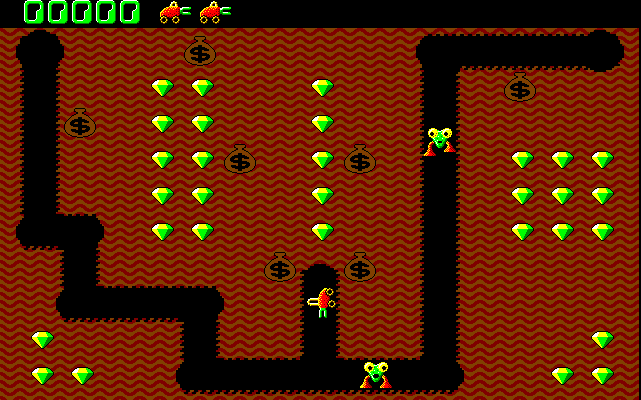
The earliest example of complete seduction by gaming that I can think of goes back to a computer game called Digger, released in 1983 by Windmill Software. I used to play it on so-called portable computers — much too large to be called laptops — that my dad brought home from work.
Digger was a Pacman-like game that involved collecting emeralds while avoiding goblins. Although simple in concept, the speed, difficulty, and intensity of the game grew with each passing level. Every time I lost my last Digger life, I began a new game with deepened resolve to improve on my best score and level.
Digger was released by Windmill Software in 1983
I could and would play Digger for hours if my parents allowed me to. 30 years after playing it, I remember the theme song and sounds of Digger like it was yesterday.
World of Warcraft (1990s)
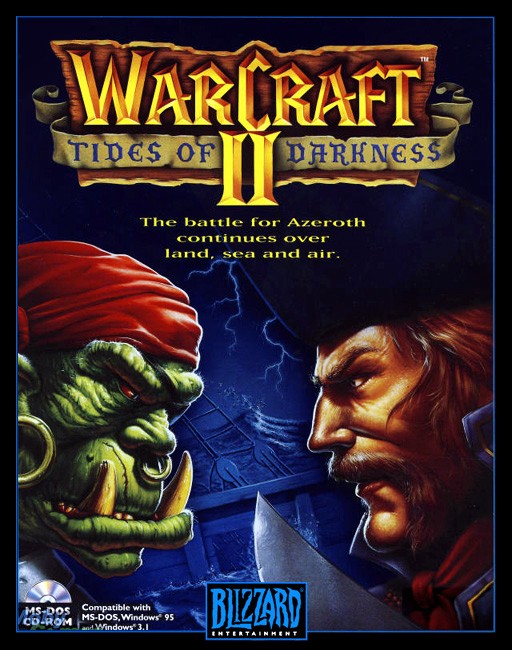
I remember playing World of Warcraft II on desktop computers in the late 90s, during my university years. Now over 20 years old, this game from Blizzard Entertainment was a leader for its time.
When I played World of Warcraft, I was completely and utterly immersed in the game. I mean, I didn’t move, I didn’t snack, I didn’t think about anything else. My eyes darted here and there across the blue screen for hours as the mouse clicked away with constant urgency. I was all in.
As I recall them, games lasted anywhere between 1–2 hours. Inevitably, my civilization would be destroyed by another, stronger force. Dismayed, but convinced I could avoid the strategic errors of the game before, I would often start a new game and repeat the same thing all over again.
On such occasions I would typically stay up too late, defer important work, and avoid the company of others just to keep playing Warcraft.
Clash of Clans and Clash Royale (2010s)
Even in recent years, gaming has pulled me briefly into its vortex, this time on my phone. I jumped on the Clash of Clans and Clash Royale games from Supercell and found them both tremendously entertaining. These games are free to download and offer intense, competitive gameplay.
I knew I had problems with each of these games when I began paying for in-app purchases (paying real money for upgrades in resources or levels). Even worse, I found myself retreating from human company so that I could play. I was even tempted to check in on my games while at work.
Games Aren’t The Same for Everyone
This piece is not to say that gaming is morally wrong or carries some sinister power in itself. I recognize that many people enjoy a healthy and measured relationship with gaming that doesn’t encroach on more important values and priorities. But for me, the accumulation of small warning signs makes a too-compelling case to avoid games altogether.
A Losing Deal
Here, then, are the main reasons why I don’t game today.
The addictive quality. For me, gaming can become all-consuming in ways that other screen-related vices can’t. Your experience may be very different, but even the few and fun examples I’ve shared here reveal the compulsive power of games for me. These compulsive behaviors are typically followed by denial, dishonesty, and random disappearances — all strong signals of personal dysfunction.
The emotional crash. Have you noticed the irritation you face when you try to pull a gamer away from their games? Gaming tends to have that effect: it offers a nice high of stimulation but is often followed by lingering dissatisfaction. Any parent that asks gaming children to put away devices and get ready for bed is familiar with the snarly reception that can follow. I know the emotional letdown of putting the games away because I’ve lived it many times myself. It’s something I am simply a better man without.
The terrible return on time. Even vices like Netflix can expand my thinking or inspire imagination, and social media interactions can positively contribute to authentic human relationships. But in my experience, gaming contributes absolutely nothing of value to my life. Maybe it’s just because I’m getting older, but ROT (return on time) has become more important to me. Gaming is simply a bad deal.
Create> Consume. Just over a year ago, I decided to create more content. To take more risks. To be more vulnerable. To read more, write more, record more, publish more. And it’s been an exciting, growing, learning, and life-giving experience to do exactly that.
In stark contrast, I see gaming as the antithesis of learning, growth, and content creation. Instead of creating, it only consumes. Instead of enlightening my mind, it immerses me in a meaningless fog. Instead of contribution to community, gaming demands infinite time, energy, and resources.
Today, the choice is simple. I just don’t game at all. It’s not the conclusion everyone will or should reach.
But it’s the right path for me.
How does my journey with gaming compare with yours? If you’ve ever felt the pull of gaming, I’d love to hear your thoughts in the comments below.
The term “sacred cow” comes from the sad reality that in some countries — India in particular — famine and hunger can run rampant through communities where cows graze undisturbed. Since Hinduism teaches a reverence for cows as a symbol of life, many Indians refuse to kill them. No matter how badly hunger beckons or how seriously malnutrition ravages their villages, these walking sources of beef are considered non-options.
That’s what we’ve come to call it when an obvious solution is unreasonably avoided due to beliefs, preference, or pride.
A sacred cow.
Spenders and Savers
Financial expert and consultant Dave Ramsey teaches that people are generally spenders or savers by nature. Sure, just about everyone enjoys both activities to an extent. But most people derive a discernibly greater sense of pleasure from either watching wealth accrue or experiencing its benefits.
My wife and I are both spenders. I mean, we talk a good savings and investments game. But when it comes right down to it, our budget numbers tell the true story. We really, really like the experiences that money can provide.
And restaurants. Do we ever love restaurants. What follows is our restaurant spending for this year:
January: $451
February: $227
March: $628
April: $781
May: $941
June: $1,175
July: $1,570
August: $1,296
September: $734
October: $471
November: $468
Restaurants add up very quickly, as anyone with a family can attest. Just one date night and one family dinner out can easily total $150. Repeat that pattern four weeks in a row, and you’re at $600/month. Add more meals out to the mix and watch those numbers skyrocket, as they did for us this summer.
Here’s a sad fact. My wife and I both enjoy decent incomes, but we have literally no cash. Instead of a large bank account, what we have is a line of credit. And that’s unacceptable.
For the first eight months of this year, we actually budgeted $200/month for restaurants. That would be laughable if it wasn’t so sad. I mean, it’s ridiculous when you look at how much we actually spent in comparison.
Our Sacred Cow
Our extravagant restaurant spending is serious. It’s serious because it exposes some ugly realities.
For one, we’re living in cognitive dissonance. We’re repeatedly saying we want one outcome (to spend less than we earn) and will make choices to that end. Then we’re repeatedly going out and making different choices, month after month after month.
Diagnosing the Problem
Why does it happen? Because there are always good reasons and excuses to cheat. Because it turns out that self-control and delayed gratification have never been easy. Because on some level, we’re telling ourselves that the overspending just doesn’t matter, that we’re somehow entitled to it.
We’ve both had long days at work.
We need some date time together.
It’s for the family.
We deserve this.
Gazelle Intensity Required
Dave Ramsey knows all about spending denial. He’s seen thousands of individuals, couples, and families lose the fight to control their spending and dig out of debt because they just can’t seem to find the ruthless resolve required to win. In his bestselling book, The Total Money Makeover, Dave calls this determination “gazelle intensity,” alluding to the sort of urgency you see from gazelles when they’re fleeing for their lives.
With a lion on their heels, gazelles don’t fool around or get distracted. Their focus is laser clear, and there really is only one mission: escape.
“You can walk into debt, but you can’t walk out of it,” Dave Ramsey likes to remind his listeners.
No, we can’t walk out of debt. And changes to our spending won’t happen by themselves. When it comes to restaurant spending, there really is only one solution.
This year, it’s time to get real about restaurants.
“… and all she did was stare at her phone the whole time!”
The vitriol can get pretty heated in some quarters, coming in dark looks and blasts of righteous fury that our grandparents’ media never received.
You’ve heard similar comments. Reading between the lines, they suggest that screen time is wasted time, that to use one’s phone is to be obsessed with nonsense or to be hopelessly oblivious to the real world. As people look into their black mirrors—be it a mobile device, tablet, laptop, or television — they’re trading down.
Don’t Misunderstand
Now don’t mishear me or assume you know where I’m going here. This piece is not an unqualified green light for screens at the expense of all human interaction and relationship.
I believe it’s critically important to be fully present and invested in the lives of the human beings around us. There are times to put phones away, and sensible boundaries must be drawn to protect relationships. My family observes device-free dinners, and I don’t take my phone into the bedroom at night. I’ve been known to leave my phone at home when headed out for a family time or date night.
We’re doing the next generation a great disservice if we model an always on, always connected, screens-over-people lifestyle.
The Digital World IS the World
That said, the fact is that the digital world has become our world. Our relationship with screens is not some passing fad — it’s here to stay. Those of us that rely on devices for work may interact intermittently with screens throughout most or all of our waking days. And as we move forward, screen time will only continue to grow in ways that we cannot fully imagine or understand today.
Some of the apps that I spend the most time on each day, like Google Drive and Docs, are only a dozen years old. Where will we be in another dozen years? None of us can predict with certainty. What we do know with certainty is that digital technology and the infrastructure that supports it keeps improving. Your next phone will likely live on a 5G network, for example.
But wait — I’m not done.
Not Acceptance by Inevitability
The point here is not to simply throw our hands in the air and accept the onslaught of screens saying “See, we had no choice!” This is not a message of resigned acceptance by inevitability.
The deeper point to be made here is that screen time is more complex, more nuanced than we would like it to be.
By nature, we gravitate toward simple explanations of life. That’s why black and white dichotomies are so popular.
Here’s one you’ve heard: book time = good, screen time = bad.
Put under closer scrutiny, that rule just doesn’t hold any water. Reading a book can be a wonderful, intellectually stimulating act. Yet it can also be socially isolating and strictly consumptive. Depending on the content (as online), the effect can also be as morally corrupting or mind-numbing as any other medium (think Mein Kampf).
Is reading a book time well spent? As it turns out, the answer depends on context and content.
Screen Complexity
And so it is with screen time. It comes in many shades and varieties of value and virtue. Creation is different than consumption, interaction is different than isolation, and function is different than addiction. But all can happen on screens.
In any given day, I use screens to journal, set goals, check calendar events, read scripture, evaluate student work, plan lessons, write articles, edit audio recordings, publish podcasts, engage with other educators, message family and friends, read and write emails, manage shopping lists, order coffee, book reservations, record great quotes, take and share notes, listen to podcasts, manage finances, track my fitness, FaceTime my parents, follow the news, record photos and video, enjoy movies with my family, read books, and on and on I could go.
I’ve got to be real with you here. Even as I browsed my devices to compile that list, I had to fight the screen guilt. Which is kind of funny, but not.
Because when I scan that list of activities — far from an inclusive list, mind you — there’s nothing there that I would change. There’s nothing on that list that’s addictive, destructive, or damaging. It’s just what my life looks like in 2018. In fact, many of those activities actually facilitate some of my life’s most meaningful moments, achievements, and relationships.
Screen time conversations are never easy. As spouses, parents, friends, educators, and leaders, we must make thoughtful decisions around technology — for ourselves and often for others — on a daily basis.
Screen Guilt is Not the Solution
Whatever choices we make, living in a constantly conflicted state of guilt about screen time cannot be the solution. Instead, it’s about using screens strategically: creating more than consuming, connecting more than isolating, educating more than entertaining. It’s about deploying technology to strengthen our communities instead of weakening them, and building relationships instead of destroying.
It’s about living with screens judiciously. Transparently. Unapologetically.
Because it’s not about screen shame. It’s about screen sense.
With a world of options available to today’s investor, it can be hard to know what will produce the greatest bang for your buck. What follows are the reasons why, in my opinion, real estate is still the investment champ.
1. Real estate offers a significant human service.
Shelter is one of humanity’s most basic needs. As a landlord, it’s an honor to provide a safe, secure, and dry space for others to live and love and work and build relationships. Showing genuine care for tenants, taking pride in a property, and maintaining it with dignity can create great satisfaction.
2. The demand for real estate is permanent.
People will always need a place to live or work, meaning your investment property will always have interested renters or buyers. Housing is not a fad, land will always have value, and the demand for real estate will not go away.
3. Real estate offers a measure of control.
As an investor, you have the power to set rental rates, screen renters, determine upgrades, and even choose the paint color. You can physically see and touch your investment, inspecting it as you wish. Other investment classes, such as the stock market or venture capital, offer limited control and transparency — sometimes almost none at all.
4. Real estate investments create passive streams of income.
To acquire a desirable property is to acquire a (generally) permanent and ongoing flow of passive income. Even if you don’t net a dime of positive cash flow in the short term — meaning all you’re doing is breaking even on expenses each month — the payments made against the mortgage principal mean you’re steadily building equity. The more you replicate this activity, the more equity gained, even if your chequing account looks as tight as ever.
5. Market appreciation is reliable over the long term.
Sometimes the market is hot, like three years ago when our Pacific northwest home appreciated over 30% in one year. Sometimes it’s cold, like this year and for the foreseeable future as rising interest rates lower the purchasing power of buyers, and the market predictably sags.
But regardless of the ebbs and flows, North American real estate shows a steady appreciation over time. Choose any 10-year window in any market and you’ll find measurable appreciation. In real estate hot spots where mountains, ocean, international boundaries and other factors combine to limit the growth of new development, market appreciation is even more of a guarantee. And when the market explodes forward as it did in the Lower Mainland of BC in 2015, the equity gains can make anything in the stock market pale by comparison.
6. Investment property improvements are tax-deductible.
Let’s say you invest $20,000 to upgrade your kitchen in your own home. It looks great, and you love the upgrade, and it may even add market value to your home — but there’s no tax advantage to be realized there. On the other hand, when you make similar improvements on a rental property, those investments count against any taxes that you would normally pay on your rental income.
Governments set these policies to encourage landlords to maintain their properties and provide better quality housing for their renters — a great example of humane public policy. As a landlord, you gain by adding value to your investment property while rightly avoiding taxes at the same time. Win-win.
7. Real estate investments produce incredible leveraging power that other asset classes can’t match.
This point may just be the best of them all, and it’s one that your stock market friends forget about. Think of it this way.
Let’s say your pension fund is worth $500,000. Can you visit your local lender and ask her to use your pension funds as collateral for a $100,000 loan? Absolutely not. But trade that $500,000 bundle of investments for a property with equity of $500,000 in it, and the bank would be only too happy to issue the $100,000 loan (using the property as collateral).
As your real estate investments appreciate and gain equity over time, banks and other lenders will allow you to borrow against those properties (usually up to 70–80% of the equity in the property, depending on the lender). And to make this dynamic even sweeter, there’s an accumulating effect.
Imagine this scenario. Let’s say you invest in Property A. After a few years of payments on the mortgage principal + market appreciation there is significant equity growth in that property. You could then borrow against that equity to invest in Property B. The cycle repeats itself, although slightly faster this time, because now there is equity growth in not one but two properties. A few years later, you visit the bank again to borrow against A and B, and you purchase property C. And so on, and so on.
Other investment classes don’t allow you to borrow against them in this same way. And so that cumulative or multiplying effect is lost.
Some Admissions
There are a few points I’ve oversimplified here for the sake of argument. Yes, it’s possible to overpay for dilapidated properties. Yes, it’s possible to purchase properties in remote areas with dubious potential for appreciation. Yes, it’s possible to purchase properties in overpriced markets that can’t hope to generate sufficient rental incomes to cash flow positively. Other risks, including bad tenants who may inflict significant damage on properties, certainly exist as well.
In Summary
All of these disclaimers aside, I’m supremely confident in the power of this asset class to win the day. Done right, real estate offers permanent value, good control and visibility, steady income, reliable appreciation, tax advantages, and a multiplying effect that other assets can’t match. I’ve seen what it can do in the past, and I intend to see what else it can do in the future.
Have you got a strong yay or nay response to my thesis that real estate is still the best investment class? Throw your hat in this discussion by commenting below, and thanks for reading.















 Tim Cavey