Categories
Career Content Creation Education Finances Goal Setting Productivity Self-Actualization

27 Goals for 2019

My targets are clear, quantified, and higher than ever.

Photo credit: @Alexanderredl

Last year I made the case for setting New Year’s goals and resolutions, explaining that most critiques or dismissals of goal-setting amount to a failure to recognize that goals must be measurable.

Putting it bluntly, if your goals aren’t quantifiable, they’re a waste of time. And yes, the cliches apply. Goals like “eating healthier” don’t make it past the second week of January. They’re meaningless because the success criteria isn’t clearly defined.

So with quantities in mind, I’m looking for big results this year. I’m hoping that by sharing these targets, you might be encouraged and inspired, too!

Here are my 2019 goals, by the numbers.

Physical

  • Work out at Anytime Fitness 156+ times.
  • Run a total of 156+ km. Now that I have a weekly running partner, this one might get blown out of the water. But years of inconsistency in this area make me cautious.
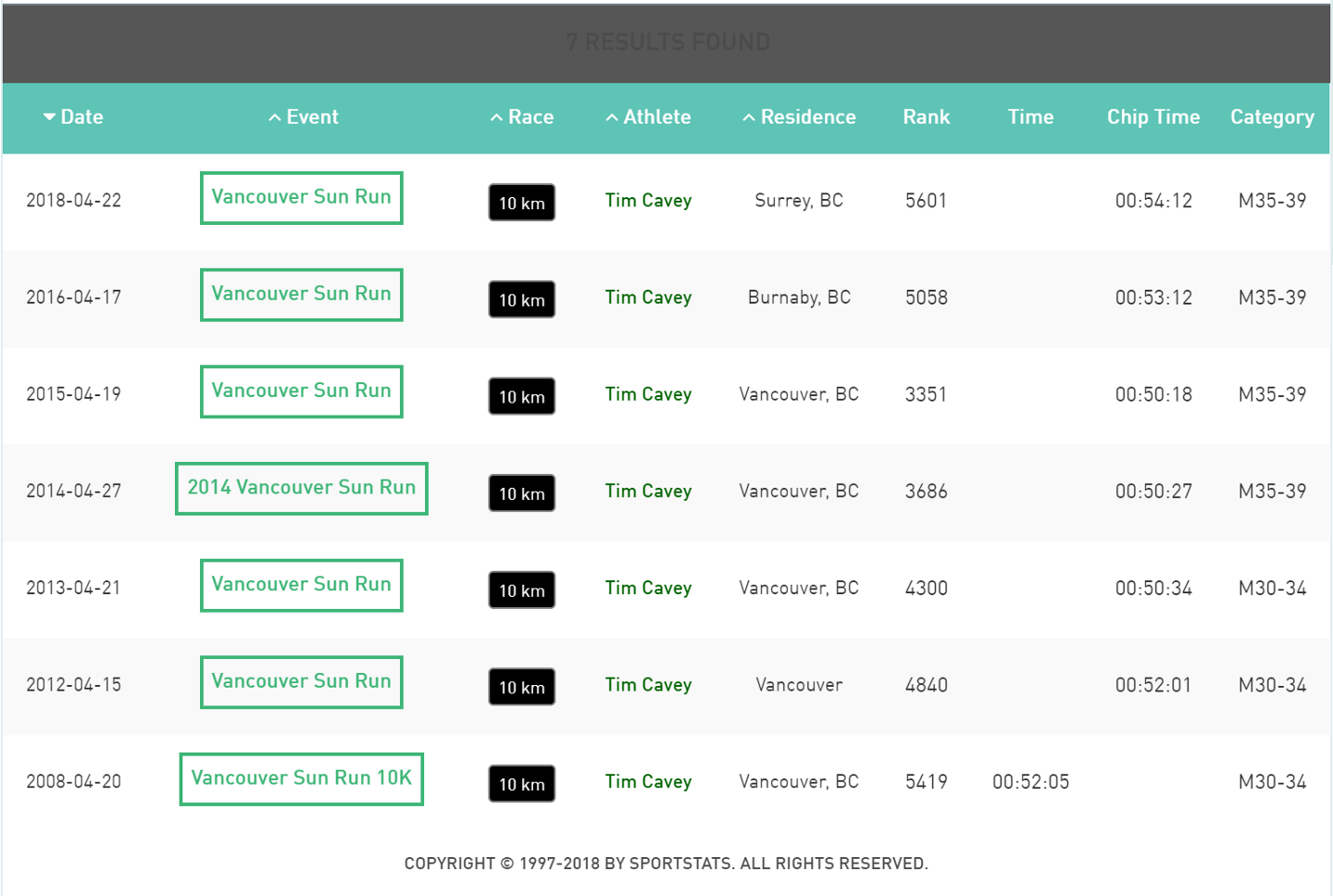
  • Run the 10 km (6.2 miles) Vancouver Sun Run in <50 minutes with 40,000 other runners. The under-50 time has been an elusive goal for the last decade. I was 0:19 away in 2015.
  • Complete 42 push-ups in one set.
  • Complete 15 reps of 135 pounds on the bench press.
  • Continue diet of no French fries, chips, or non-alcoholic sugary drinks.
  • Monitor and maintain optimal blood pressure averages for 2018.
  • End 2019 at 179 lbs (I’m currently 188).

Self-Improvement

  • Read 15 books on my Kindle. Connect with me on Goodreads to see what I’m reading!
  • Write 104+ blog posts.
  • Purge 1+ clothing item/week.
  • Complete 104+ bedtime journal entries (handwritten).
  • Complete 104+ morning reflection and prayer journal entries.

Financial

  • Pay off our HELOC (home equity line of credit) by an average of $500/month. This thing has been in existence since we purchased our home in 2015, and it’s time to make some serious progress.
  • Earn an average of $50/month or from Medium publishing and other online activities.
  • Give $5 more per month to charitable organizations. We currently donate above 10% of our net incomes but less than 10% of our gross. The plan right now is to continue increasing our giving by $5/month to continue nudging that upward. Ultimately this speaks to our intention to live more and more generously, holding on loosely to the resources we’ve been given.

Paternal

  • Read with the boys one night/week before bed.
  • Complete monthly stepdad-stepson date nights.
  • Enjoy 36+ Friday Family Fun Nights.

Professional

  • Complete M. Ed. degree.
  • Grow the Teachers on Fire podcast to 500+ downloads/episode.

Social/Relational

  • Organize 10+ monthly father-son conference calls (I’m speaking here of my own father and three brothers.)
  • Complete a third annual father-son summer camping trip with one of my brothers and his son.
  • Meet 10+ times with a close friend and goals accountability partner. We’ll be talking about this very list each month and updating our progress.

Marital

  • Complete 36 Connect Times with my wife. Connect Time is what we call weekend meetings where we sit down together to complete a thorough review of our current spending, financial picture, calendars, event planning, pressing decisions, other discussion items, and the health of our relationship. Connect Time is agenda-driven and methodical, but once we’re finished these meetings we feel in sync and settled.
  • Write 12 handwritten notes (1/month) to my wife. By no means should this be the sum total of my romance, but a friend suggested this one and I like it.
  • Make love regularly. We do have numerical goals here, but that’s TMI. Ha!

There you have it — my goals for 2019. Again, I’m posting them here partly to channel the power of public accountability, and partly to encourage and inspire you in your own goal-setting.

Photo by Pablo Heimplatz on Unsplash

It’s 2019, people. Don’t wait for life to happen to you — make the decision to happen to life!

Let’s do this.

Categories
Career Finances Goal Setting Investing Productivity

Financial Advice for My 21-Year-Old Sons

Boys, you’ve just entered your teens … but 21 is just around the corner. Learn from my mistakes to set yourself on an early path to financial freedom.

Photo by rawpixel on Unsplash

DON’T use credit cards to finance vacations “while I’m still young.”

Relax. The travel window isn’t about to close for you any time soon. Sure, my cross-continent trips with friends were fun at the time, but the multi-thousand dollar credit card debt to follow was miserable. No one sets out in life to pay Visa and MasterCard thousands of dollars in interest, but that’s exactly what you’re choosing to do when you rack up 5-figure credit card debt on a small salary. Renowned financial consultant Dave Ramsey calls this kind of behavior stupid tax.

DO save a little money each month.

Whether it’s $250 or $25/month, the decision to save consistently over time will literally pay dividends down the road. A quote attributed to Albert Einstein says “Compound interest is the eighth wonder of the world. He who understands it, earns it. He who doesn’t, pays it.” Choose to be an interest earner, not a slave. Tax-free interest savings plans like Roth IRAs (USA) or TFSAs (Canada) make the effect of interest earnings even more amazing.

The 1998 Chevrolet Cavalier Z24

DON’T borrow money to buy a vehicle.

Little did I know that when I borrowed $12,500 to buy a 3-year-old car, it would ultimately cost me thousands more in repairs and take me several years to pay off completely. Always remember: buying a car is the single largest purchase of a depreciating asset that most people will ever make. Instead of thinking about features, think about limiting the financial damage by spending within your means for a vehicle that’s reliable.

DO purchase real estate as soon as possible.

Just as car debt is financially damaging, the decision to buy your first piece of real estate will prove to be one of the most important financial moves of your life. Among a host of other benefits, mortgage payments are a form of forced savings that will only give you better options and opportunities as the years go by. Don’t try to tell yourself that you’ll rent on the cheap and put a ton of money into savings and investments. You won’t.

Quick story on this point. As I mentioned, I borrowed a large sum of money at 21 years of age to buy a used vehicle. Around the same time and at the same age, my friend Brent bought a home for $29,000. Yes, it was a small home in a bad area and a depressed market. But predictably, his house appreciated well in the few years that followed. I believe he sold his home for about $90,000 about three years later and rolled that equity into a larger $150,000 home in a nicer area of town.

So, consider our two trajectories during this approximate five year window. I probably paid close to $20,000 in car payments, interest, and repairs, and was left with little to show for it. In contrast, Brent likely put about $5,000 down on his home and paid up to $2,500/year in mortgage payments, for a total of $17,500 in on his house before selling.

Although my numbers can’t be precise, our decisions created these divergent results:

  • Me: loss of $20,000 + “gain” of an unreliable vehicle
  • Brent: gain of $70,000 + growing equity and appreciation in a $150,000 property

If the numbers aren’t making it clear, just go with this: Don’t borrow money to buy things with engines. Buy real estate instead.

Photo by rawpixel on Unsplash

DON’T automatically accept the first job offer that comes your way.

Filled with idealism and sentiment for my would-be employer, I accepted a teaching position almost immediately after graduating from university with a bachelor’s degree. Yes, I built meaningful friendships and gained valuable experience during the six years that followed, but the starting salary of $24,000 (before taxes and deductions) with limited opportunity for advancement was a bad return on a 4-year university program. After making poor money decisions in other areas, earning less than $450/week was simply not enough income to create any kind of financial momentum.

DO be selective and explore all of your income options.

In some respects, you may never again have as much vocational freedom as you will in your twenties, something perhaps more true in the gig economy of today than it’s ever been true in human history. Find work that is spiritually satisfying, intellectually challenging, and complements your set of abilities and interests. And yes, find work that compensates you appropriately and offers avenues for advancement. Whether you find this in corporate America or as an entrepreneur, seize the opportunity to avoid the prospect of a financial flatline.

Photo by Krists Luhaers on Unsplash

DON’T consume much entertainment.

Going to movies, watching professional sports, and playing video games were all fun distractions, but they add nothing of value to your life and leave no lasting legacy. I’ll never get back the hours I spent wandering around Blockbuster Video stores looking for movies to rent — never mind the hours I spent actually watching the movies! Instead, focus on leisure activities that grow your skill set, leave lasting impact, and develop your leadership.

DO create content consistently.

Consistent content creation over time has a way of building permanent momentum, income, and opportunities. Every successful artist and creator from the blogosphere, Twitter, Medium, Youtube, or Instagram once began with zero followers and subscribers. Even the simple decision to write an article like this one once a week from the age of 21 would have set me on a completely different trajectory, and it’s certain that my writing style would have developed far more by following this simple habit.

Consistent content creation will make you more reflective, develop your mind, build your creativity, broaden your horizons, expand your networks, and create opportunities that you never thought possible. Be a constant creator. Whether it’s through writing, music, photography, or how-to videos on YouTube, create and contribute things of beauty and utility as a way of life.

Photo by frank mckenna on Unsplash

In Summary

Your early twenties. Those years are such a fantastic opportunity to work hard and save cash for things like cars, weddings, and homes — not necessities, by any means, but building blocks for a functioning life that will become more significant in the years and decades ahead. Treated with care, these years can set you on a course that will have you thanking yourself for decades.

So boys, learn from my errors. Observe the stupid taxes I paid. And make smarter decisions than I did. You’ll thank yourself for the rest of your life!

Categories
Career Entrepreneurship Gig Economy Goals

Why I Won’t Tell My Sons to Just Follow Their Passions

IMG_7449

Ignore the money and just follow your passions.

This is the career advice offered to students by some teachers today. It’s an appealing and romantic message, and these educators mean well.

What they mean is this. Don’t allow yourself to be pushed into a professional track not of your choosing. Don’t enroll in a 5-year university program and take on the burden of student debt due to the dictates of society. Don’t enter the proverbial rat race of corporate America for some vague promises of security and stability. Just because your parents want you to become a doctor or lawyer doesn’t mean that’s the path for you. Instead, identify the areas that you feel most passionate about and work in those spaces.

Fulfilling Work

I agree with all of those sentiments. And I agree that the most fulfilling work we can do as human beings is the work that doesn’t feel like work. The most fulfilling work is that which best aligns with our natural curiosity, competencies, and interests. This is work that adds value to the lives of others and energizes our own souls in that process.

An Economy of Opportunity

It should also be said here that I’m also quite in favor of no “job” at all — at least, not in the traditional sense of working for an employer. Though I’m not living entirely in this space myself, I’m a big admirer of entrepreneurship, self-employment, and creative work. Unlike some of my peers across K-12 education, I’ll actually defend and support a student’s ambition to adopt “professional YouTuber” as their career track of choice — keeping in mind the tremendous amount of hard work and sacrifice required to bring dreams of that sort to fruition. It’s the 21st century and a global internet economy, after all. The secure career jobs of yesteryear are vanishing in the wake of a rapidly evolving and responsive marketplace. Work is free for the taking and creating more than any time in history.

Meaningful Learning

So yes: explore and develop natural passions and inclinations. It is precisely this ideology that is at the heart of some of the most exciting trends in education today, including inquiry-based and project-based learning. These are practices that produce deeper and more meaningful learning because students are freed to direct the focus of their own learning activities instead of merely following traditionally narrow parameters as prescribed by the teacher. Education is rightly becoming more and more about following curiosities and exploring natural interests — learning to learn instead of memorizing large bodies of content of very dubious long-term value.

Dollars Matter

What I’m not a fan of is the idea that as educators we should coach our students to completely ignore dollars. Because in a world of expenses, dollars matter. They just do.

As our young learners mature and progress through the system, I believe we owe it to them to offer them some frank advice about the financial implications of the work they choose to pursue. That’s a controversial suggestion in some circles, but I stand by it.

My Story

I graduated from university in 2001. Fresh-eyed and full of ideals, I signed my first contract at an independent school in an urban area of a large city. Tuition was intentionally low so that lower class families could attend, and as a result, my first salary was a whopping $24,000.

The mission and vision of the school shaped its culture, its tuition, and therefore its salaries, and I was completely on board. But the reality was that after deductions, my bi-weekly paychecks ran in the mid-$800s. Working hard into the evenings as a rookie teacher, I was hard-pressed just to spend within my means — let alone pay off my $12,000 of car debt or start to put any savings away. I worked at that school for the first six years of my teaching career, and although my salary grew incrementally each year, the marginal increases weren’t significant enough to alter my financial picture very much.

In today’s world of rising housing costs, gas costs, and grocery costs, I would be a little concerned if one of my two stepsons took a job paying $24,000 annually at 21 years old. That’s just not the kind of income that will allow them to save up to buy a car, a ring, a wedding, a property, provide for children, or attempt any number of other rites of adulthood that we might hope for them in terms of building a future for themselves and their families.

If we’re being honest, $24,000 a year is much closer to a recipe for living cheque to cheque and serving the masters of Visa and MasterCard. That’s not an automatic scenario, by any means — disciplined financial stewardship should happen at any income level. But incomes below the poverty line trend in the direction of very challenging financial realities.

Money Isn’t Everything

Don’t hear me extolling the glories of money too highly here. Money is simply a medium of exchange. It doesn’t have the power to produce happiness — and happiness can certainly be found outside of the American Dream. Money doesn’t have the power to create passion for work activities where that passion didn’t exist before. But it does have the power to create options. To reject that reality is intellectual laziness.

Free to Chart Their Own Course

Ultimately, my stepsons will still be free to choose their own career tracks. And their parents won’t be pressuring them in any one direction. The reality is that one of them may choose to work for an NGO that builds sewer systems in Haiti, with a subsistence income similar to my first teaching salary. My wife and I wouldn’t shut that down — we’d be genuinely proud of their attitude of service and their contributions to our world.

A Call for Some Coaching

What I do intend to do is simply coach them along the journey. Help them to think about the implications of their work and career choices. Recognize that the financial decisions that they make in their 20s will reverberate in some ways for the rest of their lives.

Here’s the summary of my message — my advice to my stepsons and any high school student who will listen. Dream big dreams for your life. Yes, explore and develop your creative passions. Find fulfilling work.

But in that process, keep an eye on the dollars. Because dollars do matter.