Putting it bluntly, if your goals aren’t quantifiable, they’re a waste of time. And yes, the cliches apply. Goals like “eating healthier” don’t make it past the second week of January. They’re meaningless because the success criteria isn’t clearly defined.
So with quantities in mind, I’m looking for big results this year. I’m hoping that by sharing these targets, you might be encouraged and inspired, too!
Here are my 2019 goals, by the numbers.
Physical
Work out at Anytime Fitness 156+ times.
Run a total of 156+ km. Now that I have a weekly running partner, this one might get blown out of the water. But years of inconsistency in this area make me cautious.
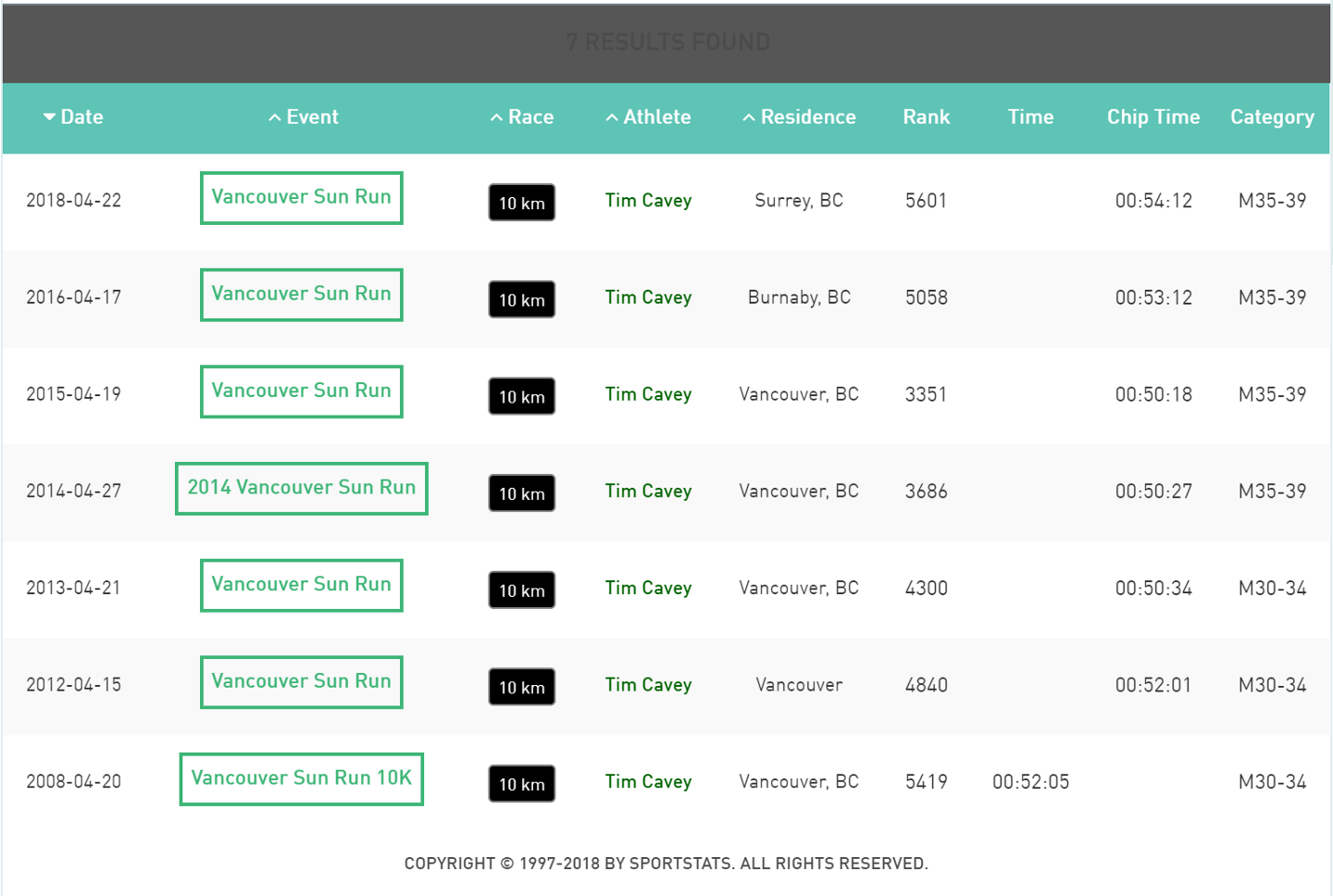
Run the 10 km (6.2 miles) Vancouver Sun Run in <50 minutes with 40,000 other runners. The under-50 time has been an elusive goal for the last decade. I was 0:19 away in 2015.
Complete 42 push-ups in one set.
Complete 15 reps of 135 pounds on the bench press.
Continue diet of no French fries, chips, or non-alcoholic sugary drinks.
Monitor and maintain optimal blood pressure averages for 2018.
Complete 104+ morning reflection and prayer journal entries.
Financial
Pay off our HELOC (home equity line of credit) by an average of $500/month. This thing has been in existence since we purchased our home in 2015, and it’s time to make some serious progress.
Earn an average of $50/month or from Medium publishing and other online activities.
Give $5 more per month to charitable organizations. We currently donate above 10% of our net incomes but less than 10% of our gross. The plan right now is to continue increasing our giving by $5/month to continue nudging that upward. Ultimately this speaks to our intention to live more and more generously, holding on loosely to the resources we’ve been given.
Organize 10+ monthly father-son conference calls (I’m speaking here of my own father and three brothers.)
Complete a third annual father-son summer camping trip with one of my brothers and his son.
Meet 10+ times with a close friend and goals accountability partner. We’ll be talking about this very list each month and updating our progress.
Marital
Complete 36 Connect Times with my wife. Connect Time is what we call weekend meetings where we sit down together to complete a thorough review of our current spending, financial picture, calendars, event planning, pressing decisions, other discussion items, and the health of our relationship. Connect Time is agenda-driven and methodical, but once we’re finished these meetings we feel in sync and settled.
Write 12 handwritten notes (1/month) to my wife. By no means should this be the sum total of my romance, but a friend suggested this one and I like it.
Make love regularly. We do have numerical goals here, but that’s TMI. Ha!
There you have it — my goals for 2019. Again, I’m posting them here partly to channel the power of public accountability, and partly to encourage and inspire you in your own goal-setting.
During the ten months of the school year, my teaching position consumes at least 50 hours a week (that’s eight hours at school plus at least two hours split before and after work each weekday). Throw in a little more time spent in the evenings and weekends, especially during weeks with special events or reporting seasons, and I’m closer to 60 hours/week.
I’m definitely not crying about this situation. I’m fully aware that a ton of professionals and entrepreneurs spend far north of 60 hours per week.
I’m just calling things as they are.
Both my wife and I are very thankful for our current jobs, which allow us incredible opportunities to build relationships, serve others, grow, learn, and utilize our skills. My job in particular allows me the amazing honor and privilege of pouring love, life, and hope into dozens of young adults every day. It facilitates the formation of meaningful friendships with other like-minded professionals with whom I share significant ideals, values, and passions. Every staff team at every school I’ve served with has felt, to some degree, like a family. These are monumental blessings for which I am truly and deeply grateful.
All of that said, I can’t help but notice the ways the world has changed in the last ten years. I can’t help but notice the economic opportunities that technology has produced. I can’t help but notice that online marketplaces reward creativity, passion, and consistency over time. And it’s fun to dream, periodically — however silly our dreams might be — about the possibility of completely flipping the script of our current work lives and working from our laptops.
Rest assured, we’re nowhere near making the leap today, this year, or even next year. We’re well aware that a leap of this magnitude would likely take a year or two (at minimum) to properly set up and plan. Until then, we’re only dreaming.
But How Would You Replace Your Current Incomes?
We’re not exactly sure. Most likely, the laptop lifestyle formula would include some mix of income streams from online sales, marketing services, online courses, book writing, and content creation. How much of the pie each of those slices would make up would likely be determined by the response of the market vs. the passion and time we invest into each. Along the journey, there may be other streams that we discover, too. But those five would likely factor into the mix in some form or fashion for the foreseeable future.
Still just dreaming here … but what follows is a little thinking aloud about the pros and cons of the laptop lifestyle. By now, maybe I’ve lost you — the concept is so ridiculous and laughable that the only reason you’re still reading is to see how deep this madness can possibly go. But maybe you’ve had similar thoughts: like me, you’re not close to making the laptop leap, but a spirit of entrepreneurship tugs at you as well.
If that’s you, consider these pros and cons.
What’s the Draw? Some Pros of the (Successful) Laptop Lifestyle
Freedom of location. Working from home, Starbucks, oceanside cafes, or even in foreign cities would become everyday options. Our workspaces would be limited only by our access to internet.
Freedom of activities. This is a joy of entrepreneurship — the right to choose your own work and align your productive activities with your creative talents and passions. Come on — that’s a big deal.
Freedom of time allocation. The laptop lifestyle wouldn’t necessarily free up more discretionary time — in fact, it might even cost us more hours than we currently work. But it would produce greater freedom and control in terms of how and when our time is allocated.
A higher income ceiling. Don’t misunderstand me. I harbor no romantic delusions regarding the ease or size of incomes that our new laptop lifestyle would generate in the short term. But the salary grids that my wife and I are currently paid on? Gone.
Online work is scalable. If you make canoes or quilts, your sales are ultimately limited by your health, energy, and time. But most online work is scalable, meaning it has the potential for limitless growth and reverberating benefits. Digital products, in particular, can generate incomes for years after their creation. That’s an upside worth considering.
New challenges, new growth. I’m a big believer in the power of the growth mindset. New adversity, obstacles, and opportunities would require skill acquisition and development. It would require some trailblazing. And we’d learn and grow — however uncomfortably — every step of the way.
Being able to work together. Call us sappy, but even after four years of marriage, my wife and I still love each other’s company. The freedom to work in the same physical spaces would be really, really cool. Sure, entrepreneurship would test us in new ways. But I have no doubt that our relationship would grow stronger than ever.
Cons of the Laptop Lifestyle
Loss of community. As I said earlier, my wife and I enjoy the relationships formed in both of our current organizations, and those relationships would be sorely missed. By contrast, entrepreneurship can be a lonely and isolating venture.
Loss of defined mission and purpose. Both of our current organizations also serve people well. Like really, really well. Service is an integral part of their missions, identities, and cultures. It’s worth acknowledging that we’d have to work very intentionally to embrace a similar ethic and avenues of service to others. That would be a spiritual necessity.
Loss of external accountability. Sure, maybe this one could go in the pros list, stated as ‘not having a boss.’ But there’s something to be said for the work we produce and the hours we keep when we’re working under the accountability and direction of others. With those accountability structures removed, it would be up to us to engage in productive activities in timely and market-appropriate ways.
Loss of predictable incomes and benefits. Let’s end with the obvious. We both currently enjoy good incomes, generous health benefits, and dependable retirement contributions. Those would all go bye bye with a leap to the laptop lifestyle, obviously, and all the usual costs of living would be immediately thrust upon us. Not only that, we’d be permanently accepting the uncertainty of variable income streams. Not a big deal for couples already in sales, for example, but a very big departure for us.
The laptop lifestyle is an interesting conversation, and if nothing else, this post was worth writing just to arrange my thoughts a little more clearly. For now, our $4,000/month housing costs mean that “little matter” of financial insecurity on our cons list is a big enough deal that we can’t take our dreams too seriously. But the appeal of the laptop lifestyle is there, nonetheless, and it feels good to acknowledge it. It may not be a reality in two years, three years, or ever … but we want to continue to dream and remain open to possibilities.
Have you ever had thoughts about jumping from a guaranteed income into entrepreneurship or the laptop lifestyle? I’d love to hear and learn from your thought process — please share in the comments below.
I enjoy Netflix as much as the next person. There’s nothing like settling in at the end of a long day to the drama of Narcos or the amusement of The Office. My affection for the world’s greatest video streaming service hasn’t gone away, and there will always be a time and place.
But I don’t watch Netflix as much as I used to.
Last spring I made a personal commitment to create more and consume less. It was a significant shift, and I’m happy to say it’s stuck.
Since then, I’ve come to view my time differently. Among other things, I’ve reordered my days to go to bed earlier (ie. less Netflix) and get up earlier (ie. more creative time).
The results have been transformative.
This isn’t a dump on streaming video services. I’ll always save some room in my schedule for entertainment experiences — particularly those shared and enjoyed with family. But my priorities and management of time have permanently changed. Now, when scraps of discretionary minutes emerge, consuming media is no longer one of my first thoughts. Instead, it’s creation.
What I mean by creative work
For some, creation looks like cooking or gardening. For others, it’s vlogging, composing music, or building boats. For my wife, it’s carpentry. Creation takes many forms.
For me, creative work has taken the forms of writing and podcasting. Over the last year, these two activities in particular have energized me, inspired me, and redefined my ideals. I’ve created more content than ever, and I feel like I’m just getting started.
Create > Consume
I’m an eighth grade teacher, and one of the signs on my classroom door reads “Create> Consume.” It’s become my mantra and a regular rant. Our digital natives are keen on consuming, but what are they creating? That’s the challenge I put to them regularly.
Lately I’ve started the business of unpacking the motivation that now drives me to create first and consume later. Why do I spend valuable minutes crafting sentences and recording interviews instead of watching the next episodes of Black Mirror?
6 Reasons why ‘Create> Consume’ has become my paradigm
Creation is cathartic. For me, writing is my jam. It’s rejuvenating — a deeply enjoyable deconstruction of all those fleeting wonders, regrets, and ruminations that appear randomly in my consciousness but don’t have the chance to take full form, definition, and expression on their own. It’s a process that helps me look squarely at life experiences, critically reexamine my positions, and thoughtfully clarify my intentions. It’s an experience that helps me know and understand myself. At the completion of every written piece or journal entry, I feel a sense of satisfaction and renewal. Whether you’re writing a song, planting flowers, or building a coffee table, there’s something cathartic about pouring an authentic part of yourself into a product.
Creative work makes the world a better place. Creative activities contribute things of beauty and utility to our world. If consumption is an act of taking, creation is an act of giving. Sure, by watching The Office for the fifth time I’m not harming anyone — I’m simply enjoying the creative labours of others. But how can I actually add value to the world around me? How can I help, inspire, teach, amuse, or positively provoke others to action? Creative actions offer the power of betterment.
Creation builds impact and legacy. Gary Vaynerchuk talks about how legacy is currency — how he measures the impact of his life not by how much money he makes but by how many people come to his funeral. Creation is not about earning cheap applause or padding one’s ego before death, but it is about making a dent in the universe. Creative activities have the power to change the environment and — if we create with persistence and excellence — leave a lasting positive impact. Brendon Burchard sums up our mandate this way: live, love, and matter. I like Netflix, but I don’t want my viewing to be part of my legacy.
Creativity has become a critical skill. Our evolving economy has less need for automatons, more need for creativity, innovation, and problem-solving. Progressive school curriculums across the planet are shifting from content acquisition to skills development, from memorization to mindset. Design thinking and makerspace movements are pushing young learners toward cycles of ideating, prototyping, testing, and making that will guide them throughout life. It’s never too late to start developing the skills and habits of mind that make us more relevant, helpful in service, and valuable in the marketplace.
Creative work produces personal growth, expertise, and self-actualization. When we shift our minds and energies from ‘entertain me’ mode to creation mode, we tap into our true talents and strengths. We connect with our life’s purpose and our deepest passions. We engage in activities of personal meaning and significance. We face our deepest fears, challenge our intellect, embrace uncertainty, and take calculated risks. We reinforce previous abilities and — through repetition, adaptation, and improvisation — we refine our craft and create with stronger proficiency over time.If 10,000 hours is the measure of a master, every minute invested on that formative journey is well-spent. The creative process helps us feel alive.
Creative work builds new relationships and broadens opportunities.Writing and podcasting have connected me with people around the world that I never imagined possible just a year ago. Because most creative work takes us into the marketplace of ideas, we’re drawn out of our comfortable silos and into new relationship with others. The internet age allows us to connect with like-minded makers, creatives, and audiences the world over, and those relationships connect us exponentially with new learning and opportunities.
“Creativity is not a ‘talent,’ like the ability to run fast. Creativity is what makes us human. Creativity is what makes us happy. And creativity is something you can nurture, expand, grow, and learn.” — from Intention: Critical Creativity in the Classroom, by Amy Burvall and Dan Ryder
Creative work isn’t always easy, or safe, or comfortable. But it’s worth it. It’s in our design, our destiny. We were made to create. So get started.
What creative activity or project have you been dreaming about but have yet to put into action? I’d love to hear about it. Please comment below.
I published my first podcast episode in March of 2018. It was a rocky beginning, but it followed months of dreaming, thinking, and deliberation. I was finally taking action, and it was an exciting start.
I’ve published new episodes every week since. In some ways it’s been more of a challenging experience than I would have ever imagined. But I’m learning, improving my craft, and enjoying the process.
Why start a podcast based on interviews with educators?
One reason I began the podcast was to address what I saw as a hole in the education podcast space. There are many education podcasts currently available, but few that I found personally stimulating. I just wasn’t finding many real stories of real educators working in the trenches, partnering with their students, sharing the ecstasy of victories and learning from the agony of defeats. These stories were hard to find, and they weren’t being told in compelling ways.
I was also interested to find out what other educators are reading, listening to, connecting with, and depending on in their classrooms. What voices and resources are inspiring great practice? I continue to believe that I can bring these stories and testimonials to the education world in a way that will invigorate educators and lead to improved learning outcomes.
K-12 education is at an incredible place right now. Within the last decade, professional learning and networking has absolutely exploded, thanks largely to social media platforms like Twitter and Instagram. Today’s teachers, administrators, and influencers now have incredible opportunities to plug into rich, real-time pipelines of best practices, ideas, and exemplars from schools across North America and around the world. I’m energized by the idea that I might be able to play a useful role in building these networks of learning.
Another reason that I began the podcast was the powerful motivation I took from entrepreneurship thought leaders like Gary Vaynerchuk, John Lee Dumas, and Pat Flynn. Months of listening to these three voices in particular (and several other great podcasts) convinced me of two foundational ideas.
It is still possible to create content of value and significance. It’s easy to feel that in the the din of noise and distraction we hear and see online, there’s no opportunity or reason to add your voice. But the truth is that we all have content to offer, content that can add value to the marketplace of ideas.
Audio is about to get a lot, lot bigger. Although podcasts have been around for about 15 years, they’ve only started to go mainstream in the last five or so. In addition, the confluence of smart home devices (Google Home, Amazon Echo), rapid improvements in voice-to-text smartphone technology (Siri, Bixby, Cortana), and a societal shift toward on-demand infotainment (Netflix, YouTube) are all pointing to exponential growth in podcasting and audio publications in the very near future. It’s a good time to get in.
What I knew at the start
I didn’t know much about podcasting in the beginning. My primary resource was the hundreds of hours I’d spent listening to podcasts over the last ten years. I knew what I liked, what worked well, and what didn’t. I also watched a few how-to tutorials on YouTube to get a sense of what went into good interviewing and podcasting.
I had recently heard of a new app called Anchor. Anchor is a free podcasting platform that allows you to record and publish audio content in a matter of minutes. Unbelievably, Anchor also distributes your content across most podcast distribution platforms, including iTunes — all for free. Anchor looked like a good place to begin my audio publishing career.
One thing I didn’t have was a lot of expensive equipment. I had an iPhone 8 with earbuds, a Surface Pro computer with Adobe Audition, and a low-end microphone called a Blue Snowball. That was it.
I could have waited around before launching to gain more proficiency and acquire more knowledge and better resources. But I was keenly aware that many creators never actually create because they get caught in overthinking the process. Paralysis by analysis. And so I decided to just do this thing and learn as I went.
7 things I’ve learned from podcasting
Embrace failures. Right from my very first episode, I’ve experienced more technical problems and glitches than I would have thought possible. At times, the Anchor app has crashed mid-interview, requiring me to reconnect with guests and ask them to repeat their last comments. Another phone-to-phone recording service has rendered in poor quality, and a laptop-to-laptop recording service has delivered inconsistent results as well. Every crash and recording glitch is discouraging and tempts me to pack it all in. But instead of quitting, I’ve learned to double down and stay the course.
Always learn the craft. When I began this journey, I didn’t know the first thing about Adobe Audition — audio software I’d long owned but never used. The controls seemed overwhelming, and I wasn’t even sure how to import my audio — let alone edit it. But little by little, I’m learning and improving. By trial, error, and YouTube tutorials, I’m gaining confidence and expertise every time I edit an episode. Although the challenges don’t always feel good in the moment, it’s gratifying to look back and see how far I’ve come.
Forgive yourself quickly. I’ve learned that after virtually every single interview, I’m going to have regrets. Why did I say that? Why didn’t I ask the guest this question? Why did I laugh so awkwardly? And on and on it goes. It’s important to recognize that regret and self-doubt can paralyze if we allow them to. I have to force myself to try to take something from my mistakes, shake them off, and move forward.
Twitter is incredibly powerful. Professionals of any sort stand to benefit enormously from plugging into a vibrant professional learning network, and to that end, Twitter is king. In my first eleven months on Twitter as @TeachersOnFire, I connected with over 1,100 educators across the United States, Canada, Asia, and elsewhere. Many of my interviews have come from those connections. And I’m just getting started.
Be content with incremental growth. Even though I get more listens and subscriptions to my podcast each week, growth is slow. I’ve learned not to expect the hockey stick curve and exponential growth rates that I experienced with my very first posts on Medium. And that’s okay. As long as growth continues, that means my ceiling is still an unknown quantity. And that’s motivation enough.
People are generous. I’ve been amazed by the willingness of other education professionals to partner with me to prepare for and give a great interview. My requests are almost never declined — all it takes is an honest, humble, and respectful ask. Part of that might be a credit to the network-ability of the education community, but I suspect it’s also a function of human nature. You’ve just got to put yourself out there and ask.
Real people and real stories make the best content. At the outset of the podcast, I had to choose between formats: monologue, interview, or a mix of both. It turns out that the interview format takes more work pre and post-production than one might think, but the content is exceptional. Guests offer a rich variety of experiences, perspectives, and suggestions — far more than I could possibly conjure up on my own. Best of all, every interview stimulates my own thinking and takes my learning in new directions. I’m directly benefiting from the process.
Podcasting hasn’t been all fun. Between contacting potential interviewees, scheduling and conducting interviews, editing audio, writing show notes, publishing, and promoting, each episode adds at least six hours a week for this little passion project — no small sacrifice.
But podcasting has been a fantastically positive journey. Every new episode and guest represents new things learned and a new relationship formed. I’m offering value to the education community and improving my own practice. Last but not least, I’m putting myself in uncomfortable spaces that force me to grow as a person.
Whether you’re investing in a serious side hustle, playing with a personal passion project, or building a small business, turn your commute into a daily motivation seminar by tuning in to these fantastic podcasts. Here are ten shows that I’ve come to know and love:
Entrepreneurs on Fire. John Lee Dumas is the consummate host, interviewer, and teacher as he interviews business leaders and entrepreneurs on a daily basis. With a polished delivery, great sense of humour, and applicable strategies, every episode brings valuable insights and encouragement. JLD offers a host of free resources through his website and posts a new 20-minute episode every day.
The Gary Vee Audio Experience. This guy comes with a serious language warning, but nobody matches Gary Vaynerchuk for sheer drive, intensity, and motivation. Extolling the virtues of patience, gratitude, and the still-underrated power of internet platforms, Gary reminds his audience that there has never been a better time in human history to build a scalable business and thrive. Length and style of content varies widely, from random 8-minute raw conversations to 50-minute conference addresses. New content is posted daily.
The Fizzle Show. With weekly episodes coming out every Tuesday, hosts Chase Reeves, Corbett Barr, and Steph Crowder bring common sense perspectives and advice to the matters of building a successful side hustle or small business. Reeves brings the energy and humour, Crowder chips in with thoughtful perspectives, and Barr brings authoritative insights born from years of start-up experience. Listen to this trio for long and you can’t help but love them.
The Tim Ferriss Show. Although not strictly limited to creative-entrepreneurship themes, no top ten list in this space would be complete without mentioning the Tim Ferriss Show. Tim is still one of the world’s top podcasters, publishing wide-ranging weekly interview content that consistently touches on business and entrepreneurship. Although I’ve learned to skip through the first five minutes of ads, Tim has a methodical interview style, speaks well, and draws applicable conclusions with legendary finesse.
Growth Everywhere. Host Eric Siu runs a slightly less polished version of Entrepreneurs on Fire. He keeps his interview show moving quickly, and guests share about the highs and lows of building successful companies — mostly in the tech sector. New episodes are posted daily.
The Brendan Show. Brendon Burchard spins nothing but positive energy healing, and self-improvement. With a mix of positive rants, excerpts from High Performance Habits, and clips from speaking events, this author and speaker brings fresh perspective and energy to every stage of business and creative activity. While parts of his content might strike some as fluffy, I like his brand of practical, forward-thinking optimism.
The Smart Passive Income Podcast. Pat Flynn is another friendly voice in the same space and style as John Lee Dumas and Eric Siu. As the title suggests, his focus is on the strategies necessary to build passive online revenue streams through blogs, ebooks, online courses, and other forms of scalable content. New podcast episodes appear weekly.
The Brian Buffini Show. With 45-minute episodes released weekly, Brian and Dermot Buffini offer a mix of high-profile interviews and well-prepared content related to building a successful business. As Brian Buffini likes to remind his audience, his personal story includes going from a young immigrant $200,000 in medical debt to building the largest real estate coaching company in the world. Like Gary Vee, this immigrant to America says there’s never been a better time to build a business.
The Blog Millionaire. Host Brandon Gaille delivers short, well-prepared and smoothly delivered content related to building a successful blog. Tips are right to the point and extremely practical: search engine optimization, how to build great headlines, and how to assemble great content efficiently. Gaille also shares honestly about the struggles he’s encountered in his business and personal life, and how he’s overcome them to build a blog with over 1M unique visitors per month.
Side Hustle School. Chris Guillebeau delivers daily stories of side hustle successes — passion projects that cash flow positively and grow to become significant sources of revenue. What this podcast lacks in exciting delivery it makes up for in the tales of people who are finding innovative ways to earn money doing things they love to do.
If you listen to junk radio during your daily commute as I did for many years, try changing things up. Trade the sports news and crappy radio commercials for the kind of quality content that will expand your perspective and give legs to your dreams. If you’re new to podcasting, start exploring the Podcast app (in iOS) or download the Podcast Addict app (in Android) to get started. If you’ve been sitting on a creative dream for a while, it’s time to get started.





 Tim Cavey