Putting it bluntly, if your goals aren’t quantifiable, they’re a waste of time. And yes, the cliches apply. Goals like “eating healthier” don’t make it past the second week of January. They’re meaningless because the success criteria isn’t clearly defined.
So with quantities in mind, I’m looking for big results this year. I’m hoping that by sharing these targets, you might be encouraged and inspired, too!
Here are my 2019 goals, by the numbers.
Physical
Work out at Anytime Fitness 156+ times.
Run a total of 156+ km. Now that I have a weekly running partner, this one might get blown out of the water. But years of inconsistency in this area make me cautious.
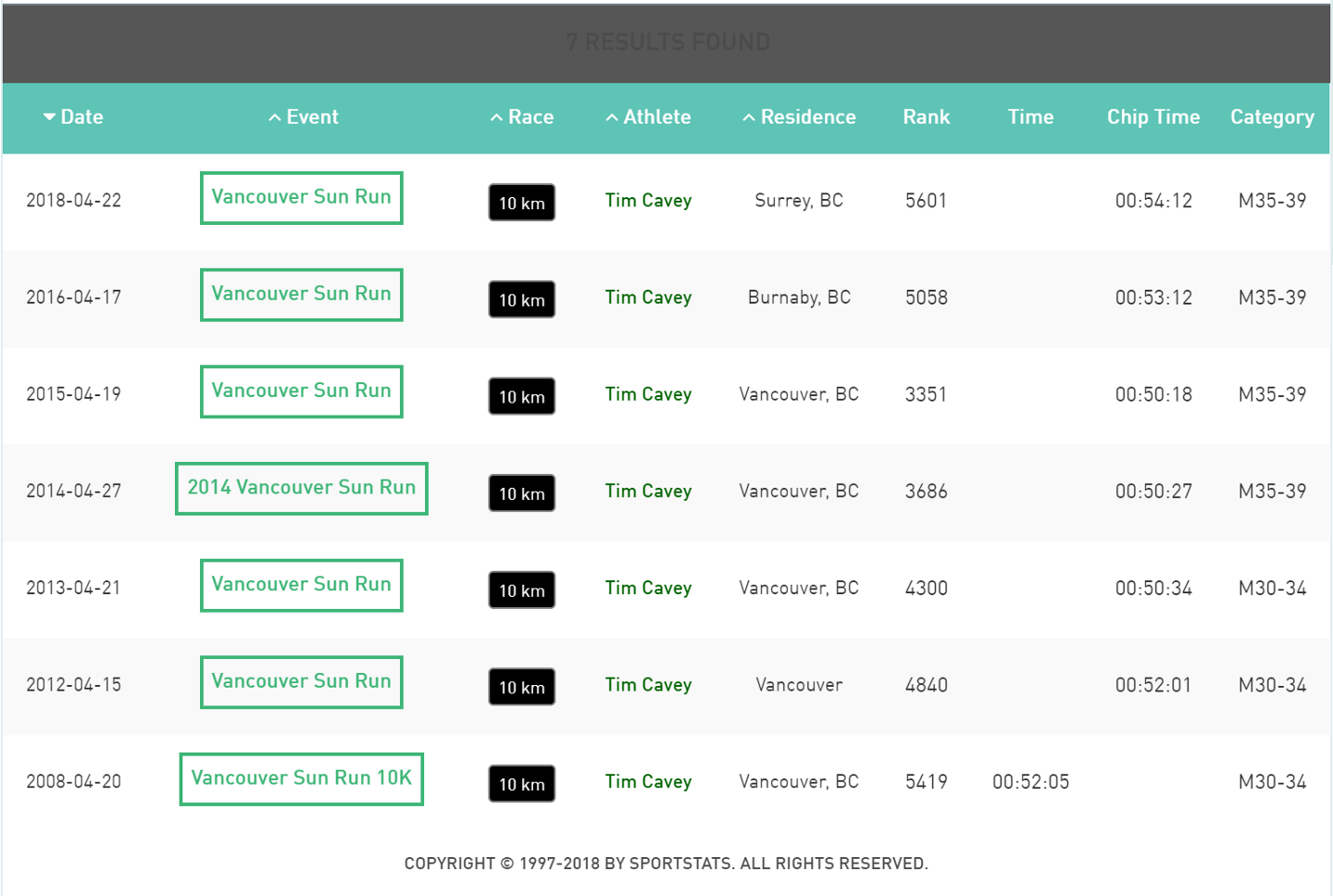
Run the 10 km (6.2 miles) Vancouver Sun Run in <50 minutes with 40,000 other runners. The under-50 time has been an elusive goal for the last decade. I was 0:19 away in 2015.
Complete 42 push-ups in one set.
Complete 15 reps of 135 pounds on the bench press.
Continue diet of no French fries, chips, or non-alcoholic sugary drinks.
Monitor and maintain optimal blood pressure averages for 2018.
Complete 104+ morning reflection and prayer journal entries.
Financial
Pay off our HELOC (home equity line of credit) by an average of $500/month. This thing has been in existence since we purchased our home in 2015, and it’s time to make some serious progress.
Earn an average of $50/month or from Medium publishing and other online activities.
Give $5 more per month to charitable organizations. We currently donate above 10% of our net incomes but less than 10% of our gross. The plan right now is to continue increasing our giving by $5/month to continue nudging that upward. Ultimately this speaks to our intention to live more and more generously, holding on loosely to the resources we’ve been given.
Organize 10+ monthly father-son conference calls (I’m speaking here of my own father and three brothers.)
Complete a third annual father-son summer camping trip with one of my brothers and his son.
Meet 10+ times with a close friend and goals accountability partner. We’ll be talking about this very list each month and updating our progress.
Marital
Complete 36 Connect Times with my wife. Connect Time is what we call weekend meetings where we sit down together to complete a thorough review of our current spending, financial picture, calendars, event planning, pressing decisions, other discussion items, and the health of our relationship. Connect Time is agenda-driven and methodical, but once we’re finished these meetings we feel in sync and settled.
Write 12 handwritten notes (1/month) to my wife. By no means should this be the sum total of my romance, but a friend suggested this one and I like it.
Make love regularly. We do have numerical goals here, but that’s TMI. Ha!
There you have it — my goals for 2019. Again, I’m posting them here partly to channel the power of public accountability, and partly to encourage and inspire you in your own goal-setting.
Looking back on a year of transformative experiences.
What follows is a look back at some of the key moments and experiences that taught me, shaped me, and propelled me forward in 2018.
Experience 1: A Breakthrough on Medium.
On January 7, 2018, I published 7 Keys to Winning the Morning on Medium. This was only my second piece on this platform, and the focus of the article was on my ideal weekday morning routine. Simple.
The post performed unbelievably well. To date, it’s received 3,800 views, 235 fans, a 55% read rate, and earned $192.
I was stunned.
For the first time in my life, my writing had actually earned significant engagement and even a monetary reward. Keep in mind that I’ve been writing sporadically for most of my adult life. Up to that point, most of those pieces had received little to no engagement.
Twenty years of crickets. And then this.
My Takeaway: More than anything, this experience put a wrecking ball to my writer’s imposter syndrome. It confirmed value in my writing, and cemented my resolve to write more often.
Experience 2: The Teachers on Fire Podcast.
On Saturday, March 24, 2018, I published my first episode of the Teachers on Fire podcast.
This came after months of dreaming and deliberation. It followed hours and hours spent listening to education thought leaders and amazing entrepreneurs like Pat Flynn, Gary Vaynerchuk, and John Lee Dumas. As I listened to their podcasts on my daily commute, I slowly started to believe that I could bring the same sort of value to the education space. Over spring break, that’s what I set out to do.
Truthfully, it was a rocky beginning, and my first recordings were technical nightmares. But I’ve kept with it, and since that day, I’ve slowly become a better podcaster. In May, I published 7 Things I’ve Learned from Podcasting, and my growth has continued since.
The mission of the Teachers on Fire podcast is to profile agents of growth and transformation in K-12 education. On my show, I interview education leaders from across North America and around the world. I ask these education leaders to share their highs and lows, their passions and goals, and the voices and resources that inspire their practice today.
Despite some difficult challenges and stressful moments, the podcast has been an incredibly rewarding experience. I now receive encouraging testimonials after every episode, and my listenership grows every week. Each guest stimulates my own thinking and practice, and I learn something from every conversation. There’s a lot to celebrate and a lot to look forward to.
My Takeaway: When it comes to trying something new, it’s not always the right move to wait until you have it all figured out. My first episodes were rough, and I had a ton of learning to do around equipment, applications, recording techniques, publishing, workflow, and promotion.
But I was taking action. I was experimenting, failing, improving, and learning. I refused to let fear of failure stop me. And that’s the takeaway that I want to pass on to my boys and students.
Experience 3: Five Weeks Away.
In July, I spent five weeks (Monday through Friday) studying at Vancouver Island University. I’m in the middle of a Master’s program there, and the program hosted some on-campus courses during those weeks. My MEdL will open all kinds of career opportunities for me, and it’s something I should have completed a decade ago.
The five weeks spent away from home were not easy. Yes, I love learning and love engagement, and I loved seeing more of my brother and his family (they graciously put me up in his home for the entire five weeks). The in-class learning was amazing and the collegial relationships were rich during these five weeks.
But it was tough to be separated from my family for this period. I missed my wife and stepsons a lot. And I missed our typical summer adventures of swimming, hiking, paddleboarding, and canoeing. Although we did our best to fit these activities in where we could throughout the summer, the reality was that the best weather weeks of the year were sacrificed in the name of my degree.
My Takeaway: When a partner and parent decides to pursue further education, the whole family sacrifices to make it happen. Count the cost before you build the tower.
Experience 4: A Mountaintop Moment
Sleeping bags set up on top of the Stawamus Chief
On Tuesday, August 14, I convinced my family to climb a local mountain and camp out overnight. The conditions weren’t perfect: forest fires throughout the region were obscuring the normally glorious views. But the timing was right, and with no end of fire haze in sight, we decided to go for it.
It turned out to be an absolute blast. Our boys conquered the climb like nobody’s business, leaving me and their mom far behind at times. Bugs and wildlife weren’t a factor, other than some friendly chipmunks in the morning. Even with heavy smoke in the air, the views at the top were majestic.
We had the mountain to ourselves for the whole evening. With boulders for beds and stars for our ceiling, we spent the night in sleeping bags, talking ourselves to sleep.
It was one of my favorite family memories of the year.
My Takeaway: In the busy seasons of life, make sure to carve out some mountaintop moments — the stuff of memories and stories for years to come. Although we all love our home time, nothing beats getting out of the house and enjoying screen-free adventures together. Don’t let the busy seasons keep you off the mountain.
Experience 5: A New School
In September, I took a new teaching position at a large school close to my home. This change came after eleven years spent at my previous school, a place that I had come to love and one where I had built many meaningful relationships.
The new position came with a few surprises. For one, I now teach more students and prepare lessons for more courses than ever before. Great teachers that I expected to partner with this year decided to serve with other schools instead. And of course with any new school comes new expectations, and in some cases, that means saying goodbye to freedoms that I’ve enjoyed for many years.
There’s a lot to celebrate in my new workplace, though. My school has a great reputation and a high commitment to excellence. The community is strong, progressive, missional, and enjoys solid parent support. Professional engagement around Twitter, YouTube, edublogs, and books is by far the strongest of any team I’ve ever served with. Administrators have been gracious, encouraging, and open-minded. My colleagues are positive, supportive, keen to improve their practice, and I already love them dearly. It’s a place where I can grow, thrive, and contribute.
A good friend once told me that he believes educators need a change in scenery every seven years or so. Work in a different environment, take on some new challenges, learn new curriculum. Whatever the change looks like, the key is to keep it fresh, to keep growing, learning, and evolving.
I agree. And that’s what’s happening here.
My Takeaway: Professional growth often requires professional change. Don’t get so comfortable in one environment that your own learning starts to stagnate. Sometimes keeping it real means moving on and redefining the journey.
Experience 6: Turning 40.
I finished my fourth decade in October. 40 years is obviously a pretty big milestone — one that gets a lot of attention in our culture.
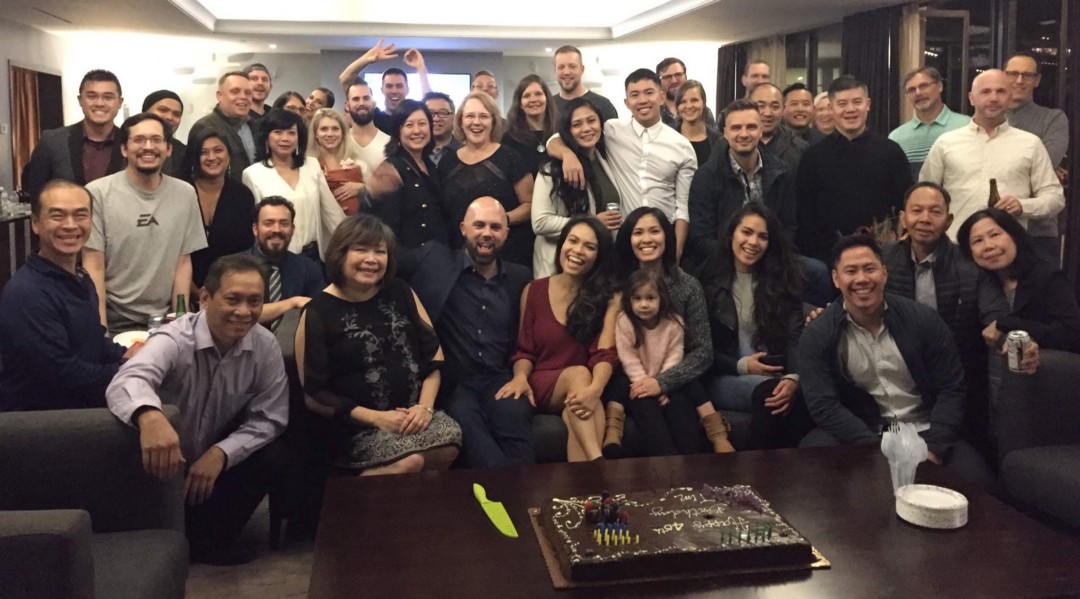
My wife planned an amazing evening of celebration for it. We got an incredible deal on a very large suite in a 5-star hotel, and we partied with family, relatives, and friends from every corner and circle of my life. Best of all, two of my three out-of-town brothers were able to join me.
I don’t think of myself as a big one for celebrations. In the past, I’ve let my birthdays slip by without so much as a stir.
But my dear Filipina wife was having none of it this time. She made it a big deal, invited a ton of people, and I’m so glad she did.
It was an incredible evening shared with most of my favorite people on the planet. It was a night to soak up the love, and that’s exactly what I did.
My Takeaway: Like them or not, celebrations are an important part of the rhythm of life. Savor them when they come. Enjoy the milestones and practise gratefulness for the meaningful relationships you enjoy. Because people are the stuff of life.
Experience 7: Bracing for Impact.
In October, my family got braces. All four of us accepted the prospect of various bits of metal and plastic in our mouths for the next 1–2 years.
I’ve had a bad overbite my whole life, and my bottom teeth also have crowding issues that show up right at the centre of my smile.
Braces have been a long, long time in coming for me. With two robust health benefit plans now in the family, it was finally time to take action.
The first few days were horrible. The Invisalign braces weren’t painful as much as they were simply uncomfortable. My mouth had been invaded by foreign objects. It was harder to speak and snacking was suddenly awkward.
Since that first week, however, the experience has gotten a lot better. Strangely, I now look forward to putting the next new teeth trays in my mouth each week. The tension I feel on my teeth at the beginning of the week reminds me that my smile is incrementally improving.
My Takeaway: Besides giving me newfound empathy for all my middle school students with braces, my journey with braces is building character: patience, consistency, and perseverance. As I wear these things for the next year and a half, I can’t take days or chunks of hours off. These teeth have to stay with me through thick and thin, no matter what. The payoff doesn’t happen if I slack off.
2018: A Year of Transformative Experiences
A breakthrough on Medium. The Teachers on Fire podcast. Five weeks away. A mountaintop moment. A new school. Turning 40. Bracing for impact.
These are the events that shaped my 2018. Together, they transformed me as a person, an educator, and leader. There was some pain, but a whole lot of gain. I am not the same person I was a year ago.
I published my first podcast episode in March of 2018. It was a rocky beginning, but it followed months of dreaming, thinking, and deliberation. I was finally taking action, and it was an exciting start.
I’ve published new episodes every week since. In some ways it’s been more of a challenging experience than I would have ever imagined. But I’m learning, improving my craft, and enjoying the process.
Why start a podcast based on interviews with educators?
One reason I began the podcast was to address what I saw as a hole in the education podcast space. There are many education podcasts currently available, but few that I found personally stimulating. I just wasn’t finding many real stories of real educators working in the trenches, partnering with their students, sharing the ecstasy of victories and learning from the agony of defeats. These stories were hard to find, and they weren’t being told in compelling ways.
I was also interested to find out what other educators are reading, listening to, connecting with, and depending on in their classrooms. What voices and resources are inspiring great practice? I continue to believe that I can bring these stories and testimonials to the education world in a way that will invigorate educators and lead to improved learning outcomes.
K-12 education is at an incredible place right now. Within the last decade, professional learning and networking has absolutely exploded, thanks largely to social media platforms like Twitter and Instagram. Today’s teachers, administrators, and influencers now have incredible opportunities to plug into rich, real-time pipelines of best practices, ideas, and exemplars from schools across North America and around the world. I’m energized by the idea that I might be able to play a useful role in building these networks of learning.
Another reason that I began the podcast was the powerful motivation I took from entrepreneurship thought leaders like Gary Vaynerchuk, John Lee Dumas, and Pat Flynn. Months of listening to these three voices in particular (and several other great podcasts) convinced me of two foundational ideas.
It is still possible to create content of value and significance. It’s easy to feel that in the the din of noise and distraction we hear and see online, there’s no opportunity or reason to add your voice. But the truth is that we all have content to offer, content that can add value to the marketplace of ideas.
Audio is about to get a lot, lot bigger. Although podcasts have been around for about 15 years, they’ve only started to go mainstream in the last five or so. In addition, the confluence of smart home devices (Google Home, Amazon Echo), rapid improvements in voice-to-text smartphone technology (Siri, Bixby, Cortana), and a societal shift toward on-demand infotainment (Netflix, YouTube) are all pointing to exponential growth in podcasting and audio publications in the very near future. It’s a good time to get in.
What I knew at the start
I didn’t know much about podcasting in the beginning. My primary resource was the hundreds of hours I’d spent listening to podcasts over the last ten years. I knew what I liked, what worked well, and what didn’t. I also watched a few how-to tutorials on YouTube to get a sense of what went into good interviewing and podcasting.
I had recently heard of a new app called Anchor. Anchor is a free podcasting platform that allows you to record and publish audio content in a matter of minutes. Unbelievably, Anchor also distributes your content across most podcast distribution platforms, including iTunes — all for free. Anchor looked like a good place to begin my audio publishing career.
One thing I didn’t have was a lot of expensive equipment. I had an iPhone 8 with earbuds, a Surface Pro computer with Adobe Audition, and a low-end microphone called a Blue Snowball. That was it.
I could have waited around before launching to gain more proficiency and acquire more knowledge and better resources. But I was keenly aware that many creators never actually create because they get caught in overthinking the process. Paralysis by analysis. And so I decided to just do this thing and learn as I went.
7 things I’ve learned from podcasting
Embrace failures. Right from my very first episode, I’ve experienced more technical problems and glitches than I would have thought possible. At times, the Anchor app has crashed mid-interview, requiring me to reconnect with guests and ask them to repeat their last comments. Another phone-to-phone recording service has rendered in poor quality, and a laptop-to-laptop recording service has delivered inconsistent results as well. Every crash and recording glitch is discouraging and tempts me to pack it all in. But instead of quitting, I’ve learned to double down and stay the course.
Always learn the craft. When I began this journey, I didn’t know the first thing about Adobe Audition — audio software I’d long owned but never used. The controls seemed overwhelming, and I wasn’t even sure how to import my audio — let alone edit it. But little by little, I’m learning and improving. By trial, error, and YouTube tutorials, I’m gaining confidence and expertise every time I edit an episode. Although the challenges don’t always feel good in the moment, it’s gratifying to look back and see how far I’ve come.
Forgive yourself quickly. I’ve learned that after virtually every single interview, I’m going to have regrets. Why did I say that? Why didn’t I ask the guest this question? Why did I laugh so awkwardly? And on and on it goes. It’s important to recognize that regret and self-doubt can paralyze if we allow them to. I have to force myself to try to take something from my mistakes, shake them off, and move forward.
Twitter is incredibly powerful. Professionals of any sort stand to benefit enormously from plugging into a vibrant professional learning network, and to that end, Twitter is king. In my first eleven months on Twitter as @TeachersOnFire, I connected with over 1,100 educators across the United States, Canada, Asia, and elsewhere. Many of my interviews have come from those connections. And I’m just getting started.
Be content with incremental growth. Even though I get more listens and subscriptions to my podcast each week, growth is slow. I’ve learned not to expect the hockey stick curve and exponential growth rates that I experienced with my very first posts on Medium. And that’s okay. As long as growth continues, that means my ceiling is still an unknown quantity. And that’s motivation enough.
People are generous. I’ve been amazed by the willingness of other education professionals to partner with me to prepare for and give a great interview. My requests are almost never declined — all it takes is an honest, humble, and respectful ask. Part of that might be a credit to the network-ability of the education community, but I suspect it’s also a function of human nature. You’ve just got to put yourself out there and ask.
Real people and real stories make the best content. At the outset of the podcast, I had to choose between formats: monologue, interview, or a mix of both. It turns out that the interview format takes more work pre and post-production than one might think, but the content is exceptional. Guests offer a rich variety of experiences, perspectives, and suggestions — far more than I could possibly conjure up on my own. Best of all, every interview stimulates my own thinking and takes my learning in new directions. I’m directly benefiting from the process.
Podcasting hasn’t been all fun. Between contacting potential interviewees, scheduling and conducting interviews, editing audio, writing show notes, publishing, and promoting, each episode adds at least six hours a week for this little passion project — no small sacrifice.
But podcasting has been a fantastically positive journey. Every new episode and guest represents new things learned and a new relationship formed. I’m offering value to the education community and improving my own practice. Last but not least, I’m putting myself in uncomfortable spaces that force me to grow as a person.
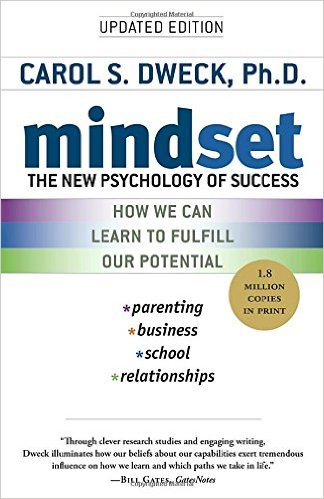
Mindset is one of those books that has the power to powerfully change all of your most important beliefs and perspectives: the way you view yourself, others, and what is possible. Although the concepts around growth mindset are especially relevant to educators, we are called to be learners and we all have the potential to grow. This book has permanently changed the way I view myself and I believe it might do the same for you. I definitely recommend it.
From the 2016 updated edition, here are (what I believe are) the 29 most significant highlights from Carol Dweck’s Mindset: The New Psychology of Success.
“The view you adopt for yourself profoundly affects the way you live your life.” (p.6)
“This growth mindset is based on the belief that your basic qualities are things you can cultivate through your efforts, your strategies, and help from others. Although people may differ in every which way – in their initial talents and aptitudes, interests, or temperaments – everyone can change and grow through application and experience.” (p.7)
“You can see how the belief that cherished qualities can be developed creates a passion for learning. Why waste time proving over and over how great you are, when you could be getting better? Why hide deficiencies instead of overcoming them? Why look for friends or partners who will just shore up your self-esteem instead of ones who will also challenge you to grow? And why seek out the tried and true, instead of experiences that will stretch you? The passion for stretching yourself and sticking to it, even (or especially) when it’s not going well, is the hallmark of the growth mindset. This is the mindset that allows people to thrive during some of the most challenging times in their lives.” (p.7)
“In one world, effort is a bad thing. It, like failure, means you’re not smart or talented. If you were, you wouldn’t need effort. In the other world, effort is what makes you smart or talented.” (p.16)
“People in a growth mindset don’t just seek challenge, they thrive on it. The bigger the challenge, the more they stretch.” (p.21)
“When do people with the fixed mindset thrive? When things are safely within their grasp. If things get too challenging – when they’re not feeling smart or talented – they lose interest.” (p.22)
“In the growth mindset, it’s almost inconceivable to want something badly, to think you have a chance to achieve it, and then do nothing about it.” (p.44)
“You can look back and say, “I could have been …,” polishing your unused endowments like trophies. Or you can look back and say, “I gave my all for the things I valued.” Think about what you want to look back and say. Then choose your mindset.
“… even when you think you’re not good at something, you can still plunge into it wholeheartedly and stick to it. Actually, sometimes you plunge into something because you’re not good at it. This is a wonderful feature of the growth mindset. You don’t have to think you’re already great at something to want to do it and to enjoy doing it.” (p.53)
“People are all born with a love of learning, but the fixed mindset can undo it. Think of a time when you were enjoying something – doing a crossword puzzle, playing a sport, learning a new dance. Then it became hard and you wanted out. Maybe you suddenly felt tired, dizzy, bored, or hungry. Next time this happens, don’t fool yourself. It’s the fixed mindset. Put yourself in a growth mindset. Picture your brain forming new connections as you meet the challenge and learn. Keep on going.” (p.53)
“The students with growth mindset completely took charge of their learning and motivation. Instead of plunging into unthinking memorization of the course material, they said: “I looked for themes and underlying principles across lectures,” and “I went over mistakes until I was certain I understood them.” They were studying to learn, not just to ace the test. And, actually, this was why they got higher grades – not because they were smarter or had a better background in science.” (p.61)
“Just because some people can do something with little or no training, it doesn’t mean that others can’t do it (and sometimes do it even better) with training. This is so important, because many, many people with the fixed mindset think that someone’s early performance tells you all you need to know about their talent and their future.” (p.70)
“Do you label your kids? This one is the artist and that one is the scientist. Next time, remember that you’re not helping them – even though you may be praising them … Find a growth-mindset way to compliment them.” (p.81)
“Those with the growth mindset found setbacks motivating. They’re informative. They’re a wake-up call.” (p.99)
“If the wrong kinds of praise lead kids down the path of entitlement, dependence, and fragility, maybe the right kinds of praise can lead them down the path of hard work and greater hardiness.” (p.137)
“Parents think they can hand children permanent confidence – like a gift – by praising their brains and talent. It doesn’t work, and in fact has the opposite effect. It makes children doubt themselves as soon as anything is hard or anything goes wrong. If parents want to give their children a gift, the best thing they can do is to teach their children to love challenges, be intrigued by mistakes, enjoy effort, seek new strategies, and keep on learning. That way, their children don’t have to be slaves of praise. They will have a lifelong way to build and repair their own confidence.” (p.179-180)
“One more thing about praise. When we say to children, “Wow, you did that so quickly!” or “Look, you didn’t make any mistakes!” what messages are we sending? We are telling them that what we prize are speed and perfection. Speed and perfection are the enemy of difficult learning: “If you think I’m smart when I’m fast and perfect, I’d better not take on anything challenging.” (p.182)
“Many educators think that lowering their standards will give students success experiences, boost their self-esteem, and raise their achievement. It comes from the same philosophy as the overpraising of students’ intelligence. Well, it doesn’t work. Lowering standards just leads to poorly educated students who feel entitled to easy work and lavish praise.” (p.196)
“The great teachers believe in the growth of the intellect and talent, and they are fascinated with the process of learning.” (p.197)
“Great teachers set high standards for all their students, not just the ones who are already achieving.” (p.200)
“When students don’t know how to do something and others do, the gap seems unbridgeable. Some educators try to reassure their students that they’re fine just as they are. Growth-minded teachers tell students the truth and then give them the tools to close the gap.” (p.203)
“So, are great teachers born or made? … It starts with the growth mindset – about yourself and about children. Not just lip service to the idea that all children can learn, but a deep desire to reach in and ignite the mind of every child.” (p.205)
“A growth mindset is about believing people can develop their abilities. It’s that simple.” (p.215)
“Let’s be totally clear here. We as educators must take seriously our responsibility to create growth-mindset-friendly environments – where kids feel safe from judgment, where they understand that we believe in their potential to grow, and where they know that we are totally dedicated to collaborating with them on their learning. We are in the business of helping kids thrive, not finding reasons why they can’t.” (p.217)
“It’s the parents who respond to their children’s setbacks with interest and treat them as opportunities for learning who are transmitting a growth mindset to their children. These parents think setbacks are good things that should be embraced, and that setbacks should be used as a platform for learning.” (p.219)
“People with a growth mindset are also constantly monitoring what’s going on, but their internal monologue is not about judging themselves and others in this way. Certainly they’re sensitive to positive and negative information, but they’re attuned to its implications for learning and constructive action: What can I learn from this? How can I improve? How can I help my partner do this better?” (p.225)
“Maggie’s internal monologue used to say: Don’t do it. Don’t take a writing class. Don’t share your writing with others. It’s not worth the risk. Your dream could be destroyed. Protect it.” (p.227)
“Instead of being held captive by some intimidating fantasy about the Great Writer, the Great Athlete, or the Great Genius, the growth mindset gave them the courage to embrace their own goals and dreams. And more important, it gave them a way to work toward making them real.” (p.228)
“Mindset change is not about picking up a few pointers here and there. It’s about seeing things in a new way. When people – couples, coaches and athletes, managers and workers, parents and children, teachers and students – change to a growth mindset, they change from a judge-and-be-judged framework to a learn-and-help-learn framework. Their commitment is to growth, and growth takes plenty of time, effort, and mutual support to achieve and maintain.” (p.254)









 Tim Cavey