Categories
Entrepreneurship Gig Economy Growth Mindset Legacy Self-Actualization

The Courage to Show Up

“The courage to be vulnerable is not about winning or losing, it’s about the courage to show up when you can’t predict or control the outcome.” — Brene Brown in Dare to Lead

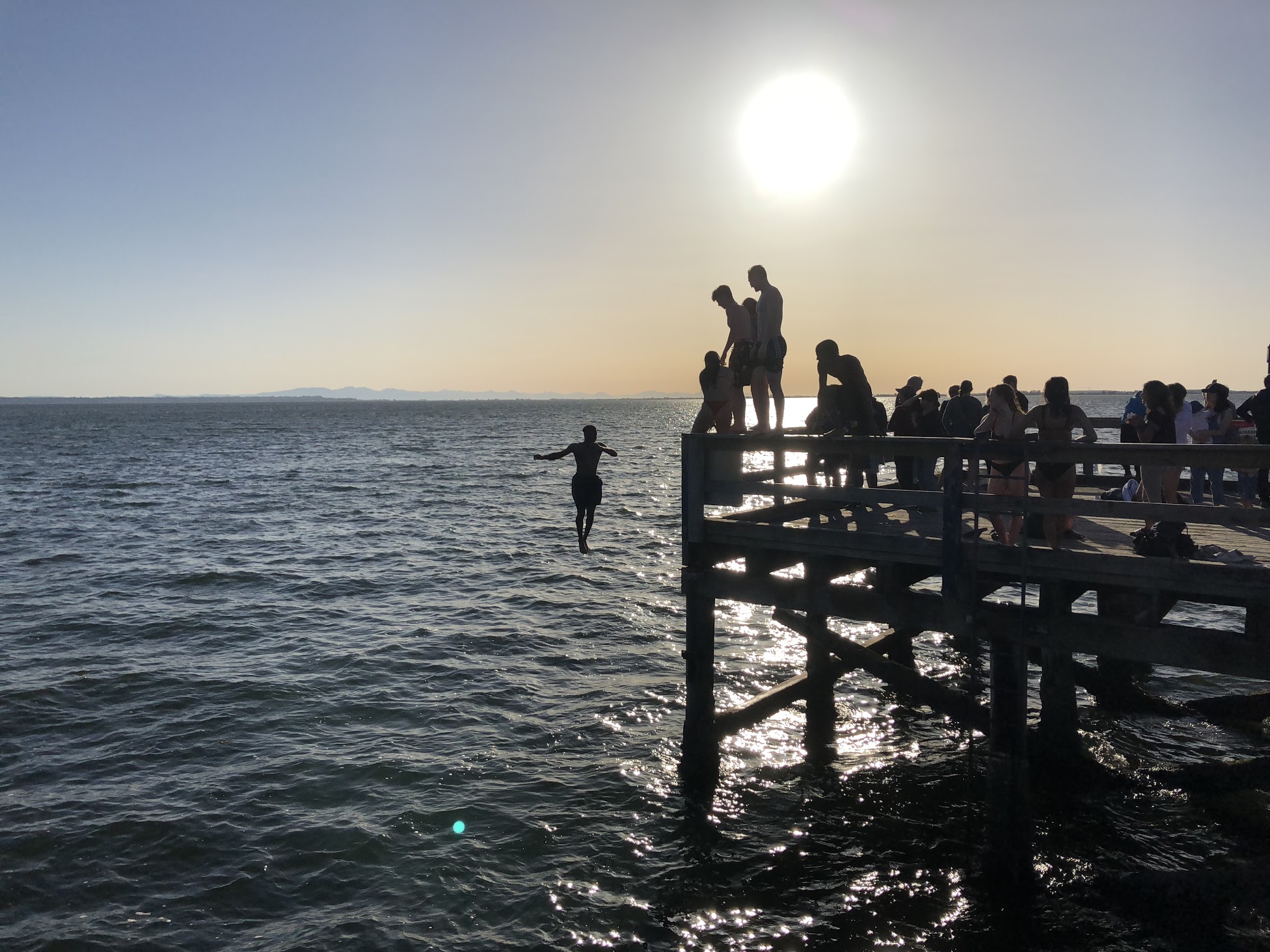
Image for post
Photo by Andreas Fidler on Unsplash

Human beings are creatures of control.

We crave certainty. Where certainty doesn’t exist, we’ll accept probability. As a rule, we like to know the outcome before we start.

It’s why people tend to stay in jobs that make them unhappy for years and even decades. They make a calculated trade of happiness and self-actualization in exchange for certainty.

Golden handcuffs.

Just tell me my job is secure and my wages are guaranteed, the thinking goes. Give me good benefits, a strong pension at 65, and I’ll serve you for life.

That’s how highly we value certainty and stability.

The safe life.

Sure, we all entertain dreams from time to time. Dreams of doing the extraordinary. Of making a bigger impact. Of making greater contributions in the lives of others. Of attempting the bold and ostentatious, whatever that looks like in our world.

We dream of showing up in a big way. But as long as it remains a dream, the outcome is certain — zero chance.

If All We Had to Do Was Dream

I mean, the dreaming part is fun. Put a guaranteed road map in front of me, and my willingness to show up for the extraordinary shoots way, way up.

  • Tell me that if I launch a small business, it’ll be instantly successful and cash flow positively within its first year.
  • Tell me that if I buy an investment property, I’ll be able to find fantastic tenants and the property will appreciate steadily over time.
  • Tell me that if I launch an NGO, it’ll seize the imagination of thousands and make life-changing impact in a developing country.
  • Tell me that if I become a realtor I’ll be able to sell multiple listings per month from the outset.
  • Tell me that if I start working on a Youtube channel today, I’ll have 1M subscribers in five years.
  • Tell me that if I study for the LSAT, I’ll pass the exam and be accepted into law school.
  • Tell me that if I do the research and work to write a book, it’ll become a bestseller.

Of course, none of us have those sorts of guarantees. Sure, there are principles of hard work and investment that we can rely on to a certain extent. But no guarantees.

And so we tend to be a little cagey about showing up for risky ventures. About sacrificing to make big changes. About actually showing up when outcomes are uncertain.

So we hedge our bets.

The Many Fears of Failure

The fear of failure looms large. Unpack the fear of failure, and we find other fears.

  • Fears of rejection.
  • Fears of appearing foolish or naive in the eyes of others.
  • Fears of forever losing the time, energy, and capital required.
  • Fears of social judgment — “Who do you think you are, anyway?”
  • Fears of what we would have to say to ourselves if we were forced to admit defeat.

YouTube: A Case Study

I remember when our 14-year-old was 12. For a while, he was intensely interested in editing videos. He was dramatic, creative, and enjoyed performing.

He launched a YouTube channel at the time and dabbled for a while. But I saw his concern about going all in — say, committing to weekly publishing.

The fear of low views and poor response was real. What would it say about him if he went to all this work and there was little to no positive response? Could that result be even worse than never trying anything at all?

Those questions don’t go away in adulthood. They only get louder.

Fear is Something to be Dealt With

One quote that made a big impression on me last year was this one from Elizabeth Gilbert, who writes about risk-taking in her book, Creative Living Beyond Fear:

“Fear is always triggered by creativity, because creativity asks you to enter into realms of uncertain outcome.

This is nothing to be ashamed of. It is, however, something to be dealt with.”

In 2019 I applied for a job that I really had no business getting. I lacked the appropriate experience, and the responsibilities would have been somewhat over my head, at least at the outset. But I knew the interview would be a good step, a good stretch for me. And sitting around the table with five people, thinking on my feet, analyzing my own strengths, weaknesses, ambitions, and vision was a valuable process.

I showed up. And I’m proud of that, because that’s the person that I want to be.

But I’m not finished. There’s still a ton of sacred safety in my life — spaces where I have yet to step out, take more risks, and embrace more uncertainty.

I have more showing up to do.

What it Looks Like to Show Up When Outcomes Are Uncertain

When I think about what showing up in uncertainty can look like, I think of some great people:

  • my brother Peter and his wife Shannon, now in the process of acquiring their fourth business by the age of 35,
  • my cousin-in-law, PJ, whose online startup continues to win big contracts,
  • my friend Karalee, who recently moved away from a secure job to launch a new business in a completely different field,
  • Trevor, a teacher, who designed and patented a new sport and recently wrote a novel on the side,
  • Chris, who is starting a new career in real estate at the age of 40, and
  • Jen Rao, who left a well-paying job and sold her home to live a life of mobility and remote work.

I could share more examples. But to me, this is what it can look like to step out and show up in big ways, even when outcomes are completely uncertain.

I salute this group.

What Might Have Been

It’s been said that the most common regrets of the dying are not the things they did but the things they didn’t do. The things they didn’t have the courage to try.

What might have been.

Let us not be those people. Let us not live our lives wondering what might have happened. Let’s go for it, even when the outcome is uncertain.

It doesn’t require quitting your job. But it does require facing your fears.

It requires showing up — even without a guarantee of success.

“It is not the critic who counts; not the man who points out how the strong man stumbles, or where the doer of deeds could have done them better. The credit belongs to the man who is actually in the arena, whose face is marred by dust and sweat and blood; who strives valiantly; who errs, who comes short again and again … who at the best knows in the end the triumph of high achievement, and who at the worst, if he fails, at least fails while daring greatly.

– Theodore Roosevelt

Categories
Business Entrepreneurship Investing Lifestyle Real Estate

7 Reasons Why Real Estate is Still the Best Place to Invest

Even as borrowing rates rise, real estate wins. Here’s why.

Photo credit: Scott Webb

With a world of options available to today’s investor, it can be hard to know what will produce the greatest bang for your buck. What follows are the reasons why, in my opinion, real estate is still the investment champ.

1. Real estate offers a significant human service.

Shelter is one of humanity’s most basic needs. As a landlord, it’s an honor to provide a safe, secure, and dry space for others to live and love and work and build relationships. Showing genuine care for tenants, taking pride in a property, and maintaining it with dignity can create great satisfaction.

2. The demand for real estate is permanent.

People will always need a place to live or work, meaning your investment property will always have interested renters or buyers. Housing is not a fad, land will always have value, and the demand for real estate will not go away.

3. Real estate offers a measure of control.

As an investor, you have the power to set rental rates, screen renters, determine upgrades, and even choose the paint color. You can physically see and touch your investment, inspecting it as you wish. Other investment classes, such as the stock market or venture capital, offer limited control and transparency — sometimes almost none at all.

4. Real estate investments create passive streams of income.

To acquire a desirable property is to acquire a (generally) permanent and ongoing flow of passive income. Even if you don’t net a dime of positive cash flow in the short term — meaning all you’re doing is breaking even on expenses each month — the payments made against the mortgage principal mean you’re steadily building equity. The more you replicate this activity, the more equity gained, even if your chequing account looks as tight as ever.

5. Market appreciation is reliable over the long term.

Sometimes the market is hot, like three years ago when our Pacific northwest home appreciated over 30% in one year. Sometimes it’s cold, like this year and for the foreseeable future as rising interest rates lower the purchasing power of buyers, and the market predictably sags.

But regardless of the ebbs and flows, North American real estate shows a steady appreciation over time. Choose any 10-year window in any market and you’ll find measurable appreciation. In real estate hot spots where mountains, ocean, international boundaries and other factors combine to limit the growth of new development, market appreciation is even more of a guarantee. And when the market explodes forward as it did in the Lower Mainland of BC in 2015, the equity gains can make anything in the stock market pale by comparison.

6. Investment property improvements are tax-deductible.

Let’s say you invest $20,000 to upgrade your kitchen in your own home. It looks great, and you love the upgrade, and it may even add market value to your home — but there’s no tax advantage to be realized there. On the other hand, when you make similar improvements on a rental property, those investments count against any taxes that you would normally pay on your rental income.

Governments set these policies to encourage landlords to maintain their properties and provide better quality housing for their renters — a great example of humane public policy. As a landlord, you gain by adding value to your investment property while rightly avoiding taxes at the same time. Win-win.

7. Real estate investments produce incredible leveraging power that other asset classes can’t match.

This point may just be the best of them all, and it’s one that your stock market friends forget about. Think of it this way.

Let’s say your pension fund is worth $500,000. Can you visit your local lender and ask her to use your pension funds as collateral for a $100,000 loan? Absolutely not. But trade that $500,000 bundle of investments for a property with equity of $500,000 in it, and the bank would be only too happy to issue the $100,000 loan (using the property as collateral).

As your real estate investments appreciate and gain equity over time, banks and other lenders will allow you to borrow against those properties (usually up to 70–80% of the equity in the property, depending on the lender). And to make this dynamic even sweeter, there’s an accumulating effect.

Imagine this scenario. Let’s say you invest in Property A. After a few years of payments on the mortgage principal + market appreciation there is significant equity growth in that property. You could then borrow against that equity to invest in Property B. The cycle repeats itself, although slightly faster this time, because now there is equity growth in not one but two properties. A few years later, you visit the bank again to borrow against A and B, and you purchase property C. And so on, and so on.

Other investment classes don’t allow you to borrow against them in this same way. And so that cumulative or multiplying effect is lost.

Some Admissions

There are a few points I’ve oversimplified here for the sake of argument. Yes, it’s possible to overpay for dilapidated properties. Yes, it’s possible to purchase properties in remote areas with dubious potential for appreciation. Yes, it’s possible to purchase properties in overpriced markets that can’t hope to generate sufficient rental incomes to cash flow positively. Other risks, including bad tenants who may inflict significant damage on properties, certainly exist as well.

In Summary

All of these disclaimers aside, I’m supremely confident in the power of this asset class to win the day. Done right, real estate offers permanent value, good control and visibility, steady income, reliable appreciation, tax advantages, and a multiplying effect that other assets can’t match. I’ve seen what it can do in the past, and I intend to see what else it can do in the future.

Have you got a strong yay or nay response to my thesis that real estate is still the best investment class? Throw your hat in this discussion by commenting below, and thanks for reading.

Categories
Content Creation Entrepreneurship Gig Economy Lifestyle

Indulging Dreams of the Laptop Lifestyle

“What if next year we just quit our jobs and worked from home?” I asked my wife. She stared back, her eyes trying to gauge exactly how serious I was.

Photo Credit: @RawPixel

My wife and I both work full time.

During the ten months of the school year, my teaching position consumes at least 50 hours a week (that’s eight hours at school plus at least two hours split before and after work each weekday). Throw in a little more time spent in the evenings and weekends, especially during weeks with special events or reporting seasons, and I’m closer to 60 hours/week.

I’m definitely not crying about this situation. I’m fully aware that a ton of professionals and entrepreneurs spend far north of 60 hours per week.

I’m just calling things as they are.

Both my wife and I are very thankful for our current jobs, which allow us incredible opportunities to build relationships, serve others, grow, learn, and utilize our skills. My job in particular allows me the amazing honor and privilege of pouring love, life, and hope into dozens of young adults every day. It facilitates the formation of meaningful friendships with other like-minded professionals with whom I share significant ideals, values, and passions. Every staff team at every school I’ve served with has felt, to some degree, like a family. These are monumental blessings for which I am truly and deeply grateful.

All of that said, I can’t help but notice the ways the world has changed in the last ten years. I can’t help but notice the economic opportunities that technology has produced. I can’t help but notice that online marketplaces reward creativity, passion, and consistency over time. And it’s fun to dream, periodically — however silly our dreams might be — about the possibility of completely flipping the script of our current work lives and working from our laptops.

Rest assured, we’re nowhere near making the leap today, this year, or even next year. We’re well aware that a leap of this magnitude would likely take a year or two (at minimum) to properly set up and plan. Until then, we’re only dreaming.

But How Would You Replace Your Current Incomes?

We’re not exactly sure. Most likely, the laptop lifestyle formula would include some mix of income streams from online sales, marketing services, online courses, book writing, and content creation. How much of the pie each of those slices would make up would likely be determined by the response of the market vs. the passion and time we invest into each. Along the journey, there may be other streams that we discover, too. But those five would likely factor into the mix in some form or fashion for the foreseeable future.

Still just dreaming here … but what follows is a little thinking aloud about the pros and cons of the laptop lifestyle. By now, maybe I’ve lost you — the concept is so ridiculous and laughable that the only reason you’re still reading is to see how deep this madness can possibly go. But maybe you’ve had similar thoughts: like me, you’re not close to making the laptop leap, but a spirit of entrepreneurship tugs at you as well.

If that’s you, consider these pros and cons.

What’s the Draw? Some Pros of the (Successful) Laptop Lifestyle

  • Freedom of location. Working from home, Starbucks, oceanside cafes, or even in foreign cities would become everyday options. Our workspaces would be limited only by our access to internet.
  • Freedom of activities. This is a joy of entrepreneurship — the right to choose your own work and align your productive activities with your creative talents and passions. Come on — that’s a big deal.
  • Freedom of time allocation. The laptop lifestyle wouldn’t necessarily free up more discretionary time — in fact, it might even cost us more hours than we currently work. But it would produce greater freedom and control in terms of how and when our time is allocated.
  • A higher income ceiling. Don’t misunderstand me. I harbor no romantic delusions regarding the ease or size of incomes that our new laptop lifestyle would generate in the short term. But the salary grids that my wife and I are currently paid on? Gone.
  • Online work is scalable. If you make canoes or quilts, your sales are ultimately limited by your health, energy, and time. But most online work is scalable, meaning it has the potential for limitless growth and reverberating benefits. Digital products, in particular, can generate incomes for years after their creation. That’s an upside worth considering.
  • New challenges, new growth. I’m a big believer in the power of the growth mindset. New adversity, obstacles, and opportunities would require skill acquisition and development. It would require some trailblazing. And we’d learn and grow — however uncomfortably — every step of the way.
  • Being able to work together. Call us sappy, but even after four years of marriage, my wife and I still love each other’s company. The freedom to work in the same physical spaces would be really, really cool. Sure, entrepreneurship would test us in new ways. But I have no doubt that our relationship would grow stronger than ever.

Cons of the Laptop Lifestyle

  • Loss of community. As I said earlier, my wife and I enjoy the relationships formed in both of our current organizations, and those relationships would be sorely missed. By contrast, entrepreneurship can be a lonely and isolating venture.
  • Loss of defined mission and purpose. Both of our current organizations also serve people well. Like really, really well. Service is an integral part of their missions, identities, and cultures. It’s worth acknowledging that we’d have to work very intentionally to embrace a similar ethic and avenues of service to others. That would be a spiritual necessity.
  • Loss of external accountability. Sure, maybe this one could go in the pros list, stated as ‘not having a boss.’ But there’s something to be said for the work we produce and the hours we keep when we’re working under the accountability and direction of others. With those accountability structures removed, it would be up to us to engage in productive activities in timely and market-appropriate ways.
  • Loss of predictable incomes and benefits. Let’s end with the obvious. We both currently enjoy good incomes, generous health benefits, and dependable retirement contributions. Those would all go bye bye with a leap to the laptop lifestyle, obviously, and all the usual costs of living would be immediately thrust upon us. Not only that, we’d be permanently accepting the uncertainty of variable income streams. Not a big deal for couples already in sales, for example, but a very big departure for us.

The laptop lifestyle is an interesting conversation, and if nothing else, this post was worth writing just to arrange my thoughts a little more clearly. For now, our $4,000/month housing costs mean that “little matter” of financial insecurity on our cons list is a big enough deal that we can’t take our dreams too seriously. But the appeal of the laptop lifestyle is there, nonetheless, and it feels good to acknowledge it. It may not be a reality in two years, three years, or ever … but we want to continue to dream and remain open to possibilities.


Have you ever had thoughts about jumping from a guaranteed income into entrepreneurship or the laptop lifestyle? I’d love to hear and learn from your thought process — please share in the comments below.

Categories
Business Communication Entrepreneurship Productivity Smartphones Social Media Technology Twitter

5 Reasons to Niche Down on Twitter

Why multiple Twitter accounts will actually simplify your life and improve your focus.

Photo credit: rawpixel on Unsplash

You like Twitter, but you’re using one account for news, politics, sports, humor, inspiration, and work. You can do better — a lot better. To fully optimize your Twitter experience, you need to create niche accounts. Confused or unconvinced? Here’s the what, how, and why.

What I Mean

What I’m recommending is that you create multiple Twitter accounts — preferably one for every major domain in your personal and professional life. Start with two or three and then consider adding from there. Here’s why.

5 Reasons Why You Need to Niche Down on Twitter

It lets you stay in one headspace at a time.

I’m a teacher. When I want to look for education inspiration, I open my teacher Twitter account. I don’t want to see sports headlines or the latest comments from Donald Trump. I want to read education gold that will continue to inspire and transform my practice. By only following committed educators in this account, I set parameters for the content I see in my feed.

You’ll tweet to an audience who cares.

My sports fan network doesn’t care about the latest big ideas from my teachers’ conference, and my education network doesn’t want to hear about how my favorite team is doing in their big game. Misdirected tweets will only irritate your audience and cost you followers. Instead, add value to your network by tweeting the right content to the right audience.

It supports intentionality on social media. 

I have a handful of accounts at the moment, but I’m only checking a few on a regular basis. Other accounts are for occasional amusement and take up little of my attention. Since my Twitter time is limited throughout the day, I want to be able to make thoughtful and discriminatory choices about which content I’m consuming and where I’m engaging.

It facilitates professional networking. 

I use my professional and podcasting Twitter accounts to reach out to other educators via direct message. That works very well when I use niche professional accounts that make it very clear who I am and what I’m all about. I suspect that wouldn’t work as well coming from my sporting account.

It’s convenient. 

Despite what you might expect, it’s not much of a hassle to flip back and forth between accounts. The Twitter app makes it quick and easy, so don’t let the hassle factor discourage you.

Nothing but Wins

It’s been a few years since I split my Twitter presence, and I absolutely love it for all the reasons listed here. My content, engagement, and feeds have never been richer or more focused.

If you’re looking to get more out of Twitter, it might be time to niche down.

Categories
Career Entrepreneurship Gig Economy Goals

Why I Won’t Tell My Sons to Just Follow Their Passions

IMG_7449

Ignore the money and just follow your passions.

This is the career advice offered to students by some teachers today. It’s an appealing and romantic message, and these educators mean well.

What they mean is this. Don’t allow yourself to be pushed into a professional track not of your choosing. Don’t enroll in a 5-year university program and take on the burden of student debt due to the dictates of society. Don’t enter the proverbial rat race of corporate America for some vague promises of security and stability. Just because your parents want you to become a doctor or lawyer doesn’t mean that’s the path for you. Instead, identify the areas that you feel most passionate about and work in those spaces.

Fulfilling Work

I agree with all of those sentiments. And I agree that the most fulfilling work we can do as human beings is the work that doesn’t feel like work. The most fulfilling work is that which best aligns with our natural curiosity, competencies, and interests. This is work that adds value to the lives of others and energizes our own souls in that process.

An Economy of Opportunity

It should also be said here that I’m also quite in favor of no “job” at all — at least, not in the traditional sense of working for an employer. Though I’m not living entirely in this space myself, I’m a big admirer of entrepreneurship, self-employment, and creative work. Unlike some of my peers across K-12 education, I’ll actually defend and support a student’s ambition to adopt “professional YouTuber” as their career track of choice — keeping in mind the tremendous amount of hard work and sacrifice required to bring dreams of that sort to fruition. It’s the 21st century and a global internet economy, after all. The secure career jobs of yesteryear are vanishing in the wake of a rapidly evolving and responsive marketplace. Work is free for the taking and creating more than any time in history.

Meaningful Learning

So yes: explore and develop natural passions and inclinations. It is precisely this ideology that is at the heart of some of the most exciting trends in education today, including inquiry-based and project-based learning. These are practices that produce deeper and more meaningful learning because students are freed to direct the focus of their own learning activities instead of merely following traditionally narrow parameters as prescribed by the teacher. Education is rightly becoming more and more about following curiosities and exploring natural interests — learning to learn instead of memorizing large bodies of content of very dubious long-term value.

Dollars Matter

What I’m not a fan of is the idea that as educators we should coach our students to completely ignore dollars. Because in a world of expenses, dollars matter. They just do.

As our young learners mature and progress through the system, I believe we owe it to them to offer them some frank advice about the financial implications of the work they choose to pursue. That’s a controversial suggestion in some circles, but I stand by it.

My Story

I graduated from university in 2001. Fresh-eyed and full of ideals, I signed my first contract at an independent school in an urban area of a large city. Tuition was intentionally low so that lower class families could attend, and as a result, my first salary was a whopping $24,000.

The mission and vision of the school shaped its culture, its tuition, and therefore its salaries, and I was completely on board. But the reality was that after deductions, my bi-weekly paychecks ran in the mid-$800s. Working hard into the evenings as a rookie teacher, I was hard-pressed just to spend within my means — let alone pay off my $12,000 of car debt or start to put any savings away. I worked at that school for the first six years of my teaching career, and although my salary grew incrementally each year, the marginal increases weren’t significant enough to alter my financial picture very much.

In today’s world of rising housing costs, gas costs, and grocery costs, I would be a little concerned if one of my two stepsons took a job paying $24,000 annually at 21 years old. That’s just not the kind of income that will allow them to save up to buy a car, a ring, a wedding, a property, provide for children, or attempt any number of other rites of adulthood that we might hope for them in terms of building a future for themselves and their families.

If we’re being honest, $24,000 a year is much closer to a recipe for living cheque to cheque and serving the masters of Visa and MasterCard. That’s not an automatic scenario, by any means — disciplined financial stewardship should happen at any income level. But incomes below the poverty line trend in the direction of very challenging financial realities.

Money Isn’t Everything

Don’t hear me extolling the glories of money too highly here. Money is simply a medium of exchange. It doesn’t have the power to produce happiness — and happiness can certainly be found outside of the American Dream. Money doesn’t have the power to create passion for work activities where that passion didn’t exist before. But it does have the power to create options. To reject that reality is intellectual laziness.

Free to Chart Their Own Course

Ultimately, my stepsons will still be free to choose their own career tracks. And their parents won’t be pressuring them in any one direction. The reality is that one of them may choose to work for an NGO that builds sewer systems in Haiti, with a subsistence income similar to my first teaching salary. My wife and I wouldn’t shut that down — we’d be genuinely proud of their attitude of service and their contributions to our world.

A Call for Some Coaching

What I do intend to do is simply coach them along the journey. Help them to think about the implications of their work and career choices. Recognize that the financial decisions that they make in their 20s will reverberate in some ways for the rest of their lives.

Here’s the summary of my message — my advice to my stepsons and any high school student who will listen. Dream big dreams for your life. Yes, explore and develop your creative passions. Find fulfilling work.

But in that process, keep an eye on the dollars. Because dollars do matter.

Categories
Content Creation Education Entrepreneurship Growth Mindset Podcasts

7 Things I’ve Learned from Podcasting

photo-1485579149621-3123dd979885
Photo Credit: Matt Bosford

I published my first podcast episode in March of 2018. It was a rocky beginning, but it followed months of dreaming, thinking, and deliberation. I was finally taking action, and it was an exciting start.

I’ve published new episodes every week since. In some ways it’s been more of a challenging experience than I would have ever imagined. But I’m learning, improving my craft, and enjoying the process.

Why start a podcast based on interviews with educators?

One reason I began the podcast was to address what I saw as a hole in the education podcast space. There are many education podcasts currently available, but few that I found personally stimulating. I just wasn’t finding many real stories of real educators working in the trenches, partnering with their students, sharing the ecstasy of victories and learning from the agony of defeats. These stories were hard to find, and they weren’t being told in compelling ways.

I was also interested to find out what other educators are reading, listening to, connecting with, and depending on in their classrooms. What voices and resources are inspiring great practice? I continue to believe that I can bring these stories and testimonials to the education world in a way that will invigorate educators and lead to improved learning outcomes.

K-12 education is at an incredible place right now. Within the last decade, professional learning and networking has absolutely exploded, thanks largely to social media platforms like Twitter and Instagram. Today’s teachers, administrators, and influencers now have incredible opportunities to plug into rich, real-time pipelines of best practices, ideas, and exemplars from schools across North America and around the world. I’m energized by the idea that I might be able to play a useful role in building these networks of learning.

Another reason that I began the podcast was the powerful motivation I took from entrepreneurship thought leaders like Gary Vaynerchuk, John Lee Dumas, and Pat Flynn. Months of listening to these three voices in particular (and several other great podcasts) convinced me of two foundational ideas.

  • It is still possible to create content of value and significance. It’s easy to feel that in the the din of noise and distraction we hear and see online, there’s no opportunity or reason to add your voice. But the truth is that we all have content to offer, content that can add value to the marketplace of ideas.
  • Audio is about to get a lot, lot bigger. Although podcasts have been around for about 15 years, they’ve only started to go mainstream in the last five or so. In addition, the confluence of smart home devices (Google Home, Amazon Echo), rapid improvements in voice-to-text smartphone technology (Siri, Bixby, Cortana), and a societal shift toward on-demand infotainment (Netflix, YouTube) are all pointing to exponential growth in podcasting and audio publications in the very near future. It’s a good time to get in.

What I knew at the start

I didn’t know much about podcasting in the beginning. My primary resource was the hundreds of hours I’d spent listening to podcasts over the last ten years. I knew what I liked, what worked well, and what didn’t. I also watched a few how-to tutorials on YouTube to get a sense of what went into good interviewing and podcasting.

I had recently heard of a new app called Anchor. Anchor is a free podcasting platform that allows you to record and publish audio content in a matter of minutes. Unbelievably, Anchor also distributes your content across most podcast distribution platforms, including iTunes — all for free. Anchor looked like a good place to begin my audio publishing career.

One thing I didn’t have was a lot of expensive equipment. I had an iPhone 8 with earbuds, a Surface Pro computer with Adobe Audition, and a low-end microphone called a Blue Snowball. That was it.

I could have waited around before launching to gain more proficiency and acquire more knowledge and better resources. But I was keenly aware that many creators never actually create because they get caught in overthinking the process. Paralysis by analysis. And so I decided to just do this thing and learn as I went.

7 things I’ve learned from podcasting

  1. Embrace failures. Right from my very first episode, I’ve experienced more technical problems and glitches than I would have thought possible. At times, the Anchor app has crashed mid-interview, requiring me to reconnect with guests and ask them to repeat their last comments. Another phone-to-phone recording service has rendered in poor quality, and a laptop-to-laptop recording service has delivered inconsistent results as well. Every crash and recording glitch is discouraging and tempts me to pack it all in. But instead of quitting, I’ve learned to double down and stay the course.
  2. Always learn the craft. When I began this journey, I didn’t know the first thing about Adobe Audition — audio software I’d long owned but never used. The controls seemed overwhelming, and I wasn’t even sure how to import my audio — let alone edit it. But little by little, I’m learning and improving. By trial, error, and YouTube tutorials, I’m gaining confidence and expertise every time I edit an episode. Although the challenges don’t always feel good in the moment, it’s gratifying to look back and see how far I’ve come.
  3. Forgive yourself quickly. I’ve learned that after virtually every single interview, I’m going to have regrets. Why did I say that? Why didn’t I ask the guest this question? Why did I laugh so awkwardly? And on and on it goes. It’s important to recognize that regret and self-doubt can paralyze if we allow them to. I have to force myself to try to take something from my mistakes, shake them off, and move forward.
  4. Twitter is incredibly powerful. Professionals of any sort stand to benefit enormously from plugging into a vibrant professional learning network, and to that end, Twitter is king. In my first eleven months on Twitter as @TeachersOnFire, I connected with over 1,100 educators across the United States, Canada, Asia, and elsewhere. Many of my interviews have come from those connections. And I’m just getting started.
  5. Be content with incremental growth. Even though I get more listens and subscriptions to my podcast each week, growth is slow. I’ve learned not to expect the hockey stick curve and exponential growth rates that I experienced with my very first posts on Medium. And that’s okay. As long as growth continues, that means my ceiling is still an unknown quantity. And that’s motivation enough.
  6. People are generous. I’ve been amazed by the willingness of other education professionals to partner with me to prepare for and give a great interview. My requests are almost never declined — all it takes is an honest, humble, and respectful ask. Part of that might be a credit to the network-ability of the education community, but I suspect it’s also a function of human nature. You’ve just got to put yourself out there and ask.
  7. Real people and real stories make the best content. At the outset of the podcast, I had to choose between formats: monologue, interview, or a mix of both. It turns out that the interview format takes more work pre and post-production than one might think, but the content is exceptional. Guests offer a rich variety of experiences, perspectives, and suggestions — far more than I could possibly conjure up on my own. Best of all, every interview stimulates my own thinking and takes my learning in new directions. I’m directly benefiting from the process.

Podcasting hasn’t been all fun. Between contacting potential interviewees, scheduling and conducting interviews, editing audio, writing show notes, publishing, and promoting, each episode adds at least six hours a week for this little passion project — no small sacrifice.

But podcasting has been a fantastically positive journey. Every new episode and guest represents new things learned and a new relationship formed. I’m offering value to the education community and improving my own practice. Last but not least, I’m putting myself in uncomfortable spaces that force me to grow as a person.

And that’s reason enough to continue.

Categories
Business Content Creation Entrepreneurship Podcasts Productivity

10 Creative-Entrepreneurship Podcasts That You Should Be Listening To

Whether you’re investing in a serious side hustle, playing with a personal passion project, or building a small business, turn your commute into a daily motivation seminar by tuning in to these fantastic podcasts. Here are ten shows that I’ve come to know and love:

  1. Entrepreneurs on Fire. John Lee Dumas is the consummate host, interviewer, and teacher as he interviews business leaders and entrepreneurs on a daily basis. With a polished delivery, great sense of humour, and applicable strategies, every episode brings valuable insights and encouragement. JLD offers a host of free resources through his website and posts a new 20-minute episode every day.
  2. The Gary Vee Audio Experience. This guy comes with a serious language warning, but nobody matches Gary Vaynerchuk for sheer drive, intensity, and motivation. Extolling the virtues of patience, gratitude, and the still-underrated power of internet platforms, Gary reminds his audience that there has never been a better time in human history to build a scalable business and thrive. Length and style of content varies widely, from random 8-minute raw conversations to 50-minute conference addresses. New content is posted daily.
  3. The Fizzle Show. With weekly episodes coming out every Tuesday, hosts Chase Reeves, Corbett Barr, and Steph Crowder bring common sense perspectives and advice to the matters of building a successful side hustle or small business. Reeves brings the energy and humour, Crowder chips in with thoughtful perspectives, and Barr brings authoritative insights born from years of start-up experience. Listen to this trio for long and you can’t help but love them.
  4. The Tim Ferriss Show. Although not strictly limited to creative-entrepreneurship themes, no top ten list in this space would be complete without mentioning the Tim Ferriss Show. Tim is still one of the world’s top podcasters, publishing wide-ranging weekly interview content that consistently touches on business and entrepreneurship. Although I’ve learned to skip through the first five minutes of ads, Tim has a methodical interview style, speaks well, and draws applicable conclusions with legendary finesse.
  5. Growth Everywhere. Host Eric Siu runs a slightly less polished version of Entrepreneurs on Fire. He keeps his interview show moving quickly, and guests share about the highs and lows of building successful companies — mostly in the tech sector. New episodes are posted daily.
  6. The Brendan Show. Brendon Burchard spins nothing but positive energy healing, and self-improvement. With a mix of positive rants, excerpts from High Performance Habits, and clips from speaking events, this author and speaker brings fresh perspective and energy to every stage of business and creative activity. While parts of his content might strike some as fluffy, I like his brand of practical, forward-thinking optimism.
  7. The Smart Passive Income Podcast. Pat Flynn is another friendly voice in the same space and style as John Lee Dumas and Eric Siu. As the title suggests, his focus is on the strategies necessary to build passive online revenue streams through blogs, ebooks, online courses, and other forms of scalable content. New podcast episodes appear weekly.
  8. The Brian Buffini Show. With 45-minute episodes released weekly, Brian and Dermot Buffini offer a mix of high-profile interviews and well-prepared content related to building a successful business. As Brian Buffini likes to remind his audience, his personal story includes going from a young immigrant $200,000 in medical debt to building the largest real estate coaching company in the world. Like Gary Vee, this immigrant to America says there’s never been a better time to build a business.
  9. The Blog Millionaire. Host Brandon Gaille delivers short, well-prepared and smoothly delivered content related to building a successful blog. Tips are right to the point and extremely practical: search engine optimization, how to build great headlines, and how to assemble great content efficiently. Gaille also shares honestly about the struggles he’s encountered in his business and personal life, and how he’s overcome them to build a blog with over 1M unique visitors per month.
  10. Side Hustle School. Chris Guillebeau delivers daily stories of side hustle successes — passion projects that cash flow positively and grow to become significant sources of revenue. What this podcast lacks in exciting delivery it makes up for in the tales of people who are finding innovative ways to earn money doing things they love to do.

If you listen to junk radio during your daily commute as I did for many years, try changing things up. Trade the sports news and crappy radio commercials for the kind of quality content that will expand your perspective and give legs to your dreams. If you’re new to podcasting, start exploring the Podcast app (in iOS) or download the Podcast Addict app (in Android) to get started. If you’ve been sitting on a creative dream for a while, it’s time to get started.