We’re undervaluing the legacy possibilities of digital media.
Bert and Eileen Cavey, my paternal grandparents
I miss my grandparents — all four of them.
On my dad’s side were Bert (1998) and Eileen (2009) Cavey, and on my mom’s, Jim (2003) and June (1991) McAlpine. I loved these four to the extent that a kid can love his grandparents when separated by 2,100 kilometres.
All four have been gone for a while now, but I’m old enough to remember warm memories and exchanges with each of them. I treasure those random slices of personal history, even as they blur and fade with each passing year.
I wish so much that they were still around. What would it be like to sit down and discuss life with each of them today? I’d love for them to meet my wife and my stepsons, to see my home, to visit the place where I teach.
There’d be a shift from amazement to horror, no doubt, when I tell them the market value — and then the principal owing — on my Vancouver-area home. No doubt they would each have some sage advice for my family life, my career, and the career choices of my wife and stepsons.
They’d be mystified by the hours we spend interacting with screens today, I’m sure. But both my grandfathers would also be secretly impressed, I’d like to think, by the frank level of dialogue that holds forth at our device-free family dinners.
They’d probably be bothered by the improprieties of our non-denominational church, but hopefully they’d also be pleased by the warmth of community and quality of relationships that we experience there as well.
Silent Memories
Thinking about my grandparents makes me wish that I could consume their content. I wish I could bring up their channel on YouTube and peruse their videos for the hundredth time. I wish I could scroll their Instagram feeds — stretching back to WWII. I wish I could explore their blog posts, and read their articles, and listen to their podcasts.
I mean, just to have the opportunity, the chance, the choice … to go for a drive today and play an audio selection from my Grandpa. From the cloud to my phone — quick and easy. That’d be pretty awesome.
Of course I can’t do that today, and neither can you. Because this internet thing is still, remarkably, only 25 years old.
Today’s incredible ease of access to the internet gives us new options. Unlike our grandparents’ generation, we possess all the platforms and tools to let our voice be virtually heard for years and generations to come. We are free to create, design, photograph, perform, speak, and record video in ways that can be enjoyed and interpreted in perpetuity, rendered in digital qualities that withstand the degrading ravages of time.
We have the choice, the means, the power to craft and preserve meaningful digital legacies.
Many of us will say that we don’t want to. We might feel reluctant to step up to the stage, to grab the mic, to pick up the pen, to type some thoughts and hit publish.
We feel as though we have nothing to say, that we have nothing of importance or value to add to this world.
But I say that we do — we all have something to say, to create, to express. Because it’s not really about the striking quality of your ideas, so much as it is about their origin.
It’s about YOU.
Think of your grandparents. Did they feel a similar shyness about expressing their voice? They may have, and yet how amazing would it be today to explore their videos, to relive their joys and passions, to get a sense of their goals and dreams, to understand their heart and concern for others in the world around them.
It would be amazing to understand them better, and in that journey, to understand ourselves better, too.
That. THAT is the gift that the internet offers us and our descendants today. Let’s not let it pass us by.
I noticed we were short on breakfast food supplies, so I headed off to our local grocery store with my younger stepson in tow.
While there, I stocked up on my breakfast staples: eggs, milk, bacon, eggs. I also grabbed a few quick and easy snacks that I know the boys like: a box of Kraft Dinner, a couple packs of cheap instant noodles, a block of marble cheese, three boxes of cereal, and a discounted birthday cake.
Not a big deal.
Frosty Reception
But it WAS a big deal.
We returned home with our booty, and Kristine wasn’t in the mood to celebrate. You know my beliefs around nutrition, she protested. Why are you choosing to poison our family?
Poison. Surely you’re hyperbolizing. Right?
Nope. My wife has some strong beliefs around food, and she felt that I was ignoring them.
It was time for a summit.
Separating Positions and Interests
It’s been 20 years since I took Introduction to Conflict Resolution in my undergrad, but I still remember the importance of the distinction between positions and interests.
In this case, our positions were obvious. I like to buy basically whatever food works — with three notable exceptions: pop, fries, and chips. My wife adheres to much stricter food doctrines.
Moments of tension between our positions was inevitable. But what were our underlying interests?
Before I go there, let me clarify Kristine’s position a little better.
Kristine’s food conscience has been gradually sharpening for years, but her convictions found new heights in June of 2016. At the time, key catalysts included Netflix documentaries that you’ve likely seen or heard of: What the Health, What’s with Wheat, and Hungry for Change, among others.
These films, along with some serious research and reading, led her to the conclusion that the Paleo Diet was the only path forward. What is Paleo, you ask?
Paleo is short for paleolithic, a reference to ancestral hunters and gatherers. The idea is that if you can’t hunt or gather it in a natural setting — don’t eat it. Even wheat that is grown as a strict monoculture doesn’t make the cut.
In practical terms, the Paleo Diet means no grains, dairy, or processed foods — especially foods containing high sugar, trans fats, sulfates, and nitrates. Meat is a go, as long as it hasn’t been processed. Think steaks and chicken, but no deli meats. Paleo Leap is a helpful resource.
Much to my chagrin, the Paleo Diet rules out a ton of my personal favorites, including milk, bagels, bread, pasta, cereal, minute rice, pizza, hot dogs, burgers, and seasoned chicken wings. Although there is much I admire about the Paleo Diet, I just can’t go all in.
We Actually Share Interests
Although our positions seemed to be pure opposites, our interests are actually not too far apart.
I actually do care about nutrition. I want all of us to be fit, healthy, and cancer-free. I don’t want our boys eating instant noodles every day. But I also put high value on convenience and taste.
Kristine cares about taste and convenience as well. Like me, she works full time and doesn’t have unlimited hours to spend in the kitchen each day. But she places higher value on nutritional principles, and by extension, the consequences of ignoring those principles.
We have other common ground, as well. Kristine is willing to occasionally make Paleo exceptions for a few special items, like her favorite ice cream. There are chinks in that armor that give me hope.
Negotiating a Food Agreement
As I’ve written here previously, I believe most marital friction happens because of miscommunication around expectations. Couples don’t always have to agree, but they do need to understand common rules of the game and have clarity around expectations of the other.
With that in mind, Kristine and I sat down to have a loving and thoughtful discussion about our family’s food.
We knew we wouldn’t see eye to eye on every point. But as long as we could build some common understandings, we knew we could live happily in the tension.
Our Family Food Agreement
And we did it. We crafted a family food agreement that we can both live by. It’s on a shared Google Doc, of course, and it starts with a nutrition mission statement:
As a family, we will eat foods that nourish our bodies, provide the foundation for a healthy lifestyle, prevent illness and disease, and allow for occasional moments of convenience, celebration, and pleasure.
That last part was from me.
Our agreement goes on to break our food into three classes:
Class 1:Green Light. Appropriately green, these are wonderful go-to snack foods that have Mom’s full approval, foods that we’ll continue to keep stocked as often as possible. Any time we’re hungry, these are the recommended snack selections.
Class 2: Yellow Light. These are foods that Kristine agrees to tolerate — as long as they’re only eaten occasionally (ideally once a week or less). I and the boys got some key bargaining wins here: passes on KD, noodles, cereal, bagels, and the like. (To Kristine’s credit, she’d prefer that all of the above were not allowed at all.)
Class 3: Red Light. These are items that we can both agree will never enter our kitchen: potato chips, pop, juice (*100% pure orange juice excepted), canola oil, and vegetable oil. These items are already on my no-go list, so these were easy to agree on.
Finding Harmony in the Tension
Food is emotional. Some couples may be blessed to find themselves on precisely the same page in this area. We’re not one of them.
But it’s okay, because great marriages don’t thrive on unanimity — they thrive on love, care, trust, respect, and communication. And as with everything else in life, that’s our goal with food.
The boys and I will continue to eat cereal on occasion, and Kristine will still eat incomprehensible amounts of kale and avocado. But we will continue to love each other and share great food in the middle spaces.
Because families that eat together stay together. And that’s the most important interest of all.
We don’t agree completely on food, and we probably never will. But with caring communication and clear expectations of each other, we have a plan that will work for our family.
“We really need to have a conversation about this.”
“I really wish I was spending more time with my family.”
“Hey, it was great to run into you! Let’s meet for coffee some time soon.”
They’re all touching expressions of interest, and they’re often heartfelt. But they simply don’t materialize.
Days pass into weeks, and weeks pass into months. Old patterns resume. And like a receding fog, hopes and wishes slip away into the oblivion of time.
You know what they say — the road to hell is paved with good intentions. And when it comes to relationships that matter, wishes are usually not enough.
The good news? Your calendar just may be the solution.
5 Calendar Tips and Strategies to Consider
Okay, so up to this point you’ve largely ignored the calendars in your phone. You’ve added a few birthdays, and maybe your cousin’s wedding.
But you’ve never really used your calendar to actually do life.
Here’s where I would start.
1. Share your calendar with your partner.
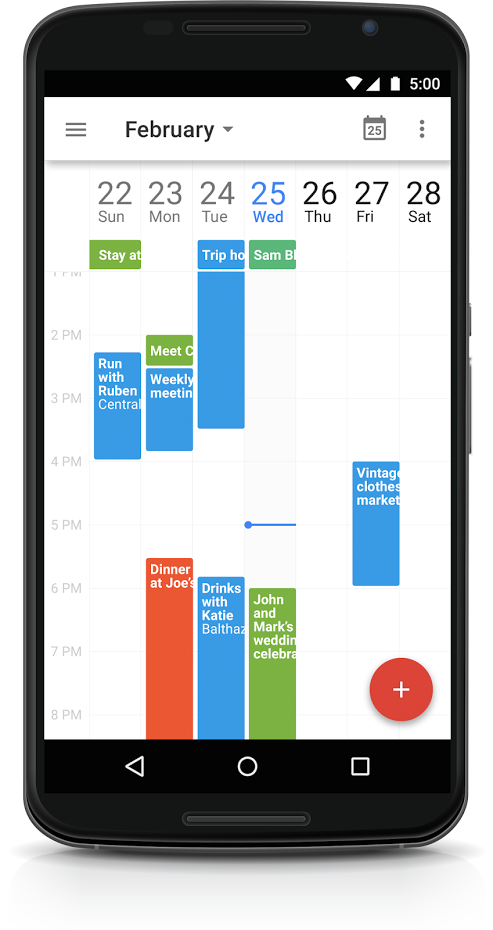
“Google Calendar saved our marriage,” my friend Julia once told me. And I completely get it.
It’s never fun to be surprised by your partner’s activities or obligations during the week, which is why Kristine and I share Google calendars. We also make it a point to sit down together every weekend to talk through the week ahead.
I’ve even taken the additional step of turning on email notifications on for my wife’s calendar, which produces an email notification every time she adds or changes an event. Some might curse the number of emails that generates, but that’s how much I value the life synchronization.
You’re planning on meeting your girlfriends on Sunday? Got it. I’ll need to pick up the boys on Wednesday night? No problem. We’ve got a family celebration across town all Saturday afternoon? Cool.
Just don’t tell me these things at the last minute. That’s all I ask.
I believe most of marital harmony is really just communication about expectations. Seriously.
So eliminate surprises. Communicate often, share your calendars, and get in sync.
2. Actually respect your scheduled events.
When I was first warming up to my Google Calendar, I’d pencil in my good intentions — only to ignore them or push them quickly aside if something better came along.
Don’t do that. Instead, be intentional. If it’s an important ritual or practice, pencil it in and try hard to respect it.
If it’s not important, or you find yourself ignoring an event repeatedly, have that real conversation with yourself about whether the relationship is actually something that you want to invest in.
3. Share the event with the people involved.
There are a ton of reasons to do this. For one, it serves as information central regarding time and location, avoiding the plethora of “Hey, what time are we meeting?” texts.
Everyone can check the event, and because it’s a living document, everyone sees the same info in real time.
Not only that, Google Calendar gives you the option of sending an additional notification every time an event is modified. New restaurant location? Send the notice with a click.
Another reason to share the event with the people involved is that everyone can see everyone else’s attendance status. Wondering who’s coming? The event makes it pretty clear.
4. RSVP.
On that last note … actually RSVP.
When sharing an event with others, I try to keep my own attendance intentions as clear and current as possible.
Let’s say that my friend declines our weekly run — regularly scheduled for this evening. When he goes to the effort of declining the (shared) event on his calendar, I don’t have to wonder about his status or try to find his last text message. It’s right there on the event. He’s not going.
5. Email directly from the event.
Another reason to share the event with the people involved is the ability to email people directly from the event. Thinking about making a change to an event three months away?
An email sent directly from the event gives all parties quick and direct access to the event info. No back and forth required.
Weekly Commitments: for the People Who Matter Most
For the relationships and rituals that matter most, make sure they’re happening at least once a week. I find that weekly meetings and routines offer a rhythm steady enough to keep these relationships vibrant and strong.
It’s easy to set these events in motion. Just pencil the slot into your Google Calendar and set it to repeat weekly. Be thoughtful about the time window and avoid designating it as an all-day event if possible. Add notes, comments, location, and relevant links or Docs.
One example of a weekly commitment I’ve made is reading to my two stepsons at bedtime. I read for about twenty minutes with each boy on Tuesday evenings.
My friend Steve reads to his girls virtually every night. That’s amazing, but I’m not out to match him. I have to do what works for our family and my schedule. And weekly works.
Weekly bedtime readings give us a frequency that is memorable, meaningful, and allows us to follow the plot from week to week. It’s something we all look forward to.
Here are other weekly commitments on my calendar that strengthen important relationships:
Monday evenings: family board game night (about 30 minutes after dinner)
Tuesday evenings: bedtime readings with the boys
Wednesday mornings: weekly run on treadmill
Thursday evenings: small group meetings
Friday evenings: Friday Family Fun Nights
Saturday mornings: family walk to Starbucks
Saturday evenings: Date Night
Sunday mornings: church with the family
Because these are all penciled in permanently, deviations are rare and we can be pretty intentional about making them happen. When we’re asked if we’re available during these times, that’s usually a short conversation. NO.
I won’t pretend to follow these routines perfectly, because I don’t. But having them on shared calendars is a pretty big step towards consistency.
Monthly Commitments: Checking In
There are other relationships that are important, but it’s simply not practical to maintain them every single week. For some of those, I set auto-repeating monthly meetings.
Some examples of monthly meetings that auto-repeat in my Google Calendar:
phone call with an out-of-town brother
evening meeting with three teacher friends
Pop & Boys Night — an agenda-driven heart-to-heart update-on-life conversation with my stepsons, including “How can I be a better parent?”
conference call with my Dad and three brothers
Saturday morning breakfast with an uncle and cousin in another city
By setting these events to auto-repeat for the same day of each month, I keep these relationships on the radar and add some intentionality that could otherwise be lost to the distractions of life.
Your Calendar Can Strengthen Your Relationships
Sometimes it’s a relationship you’d like to cultivate. Other times, it’s a critical decision kind of conversation that you need to have with your partner (before the mental fog of sleep).
Whatever it is, your calendar can help. Make the decision to leverage the tool well, and you’ll experience the benefits of a structured, intentional life.
Because if it’s a relationship that matters, it won’t grow by itself.
My parents have always been careful stewards of resources, and it allowed them to do something incredibly important in my life.
In 2006, they gave me a financial gift — one in the low five-figure range — as a down payment on a house. I was 27 at the time.
The house was not great. It was over 100 years old and situated in a run-down neighborhood. Regular drug transactions took place in the back alley.
But it was a house. And my name was on the title.
In 2015, after a move to the west coast, a refinanced mortgage, a failed marriage, nine years of semi-successful long-distance landlording, and a recent wedding, I finally sold the home.
Once the dust had settled and I paid all related expenses, the sale netted me and my bride about $40,000. Not a huge profit, by any stretch.
But using this little chunk of change and an unsecured line of credit, we were able to squeeze our way into a detached home in suburbia.
At the outset, our equity position was awful — we actually owed more to lenders than the entire purchase price of the home. I break down those figures further in House Poor and Loving Life.
But the point is that we were in a home. We knew that with two steady incomes, we could begin the process of chipping away at our enormous mortgage while market appreciation did its work.
What this meant for us was that instead of spending the $2,000+/month that families our size spend to rent, my parents’ financial assistance was allowing us to actually build equity by paying down a mortgage instead. And in that sense, it put us on a completely different financial trajectory.
My Parents Made the Difference
What strikes me about my story is that my wife and I aren’t special. Both of us earn modest five-figure incomes, which puts us in the same company as most couples our age.
What separates our story from that of many couples is that 2006 gift from my parents. Again, we aren’t talking Donald Trump money here — we’re talking low five figures. But that act of assistance was an absolute game-changer in my life.
I’ll be grateful for it for as long as I live.
The Down Payment Savings Struggle is Real
Today, the reality for most middle-class millennials is that putting aside enough money for even a 5–10% down payment (plus associated purchasing costs) in today’s market is a daunting challenge. Even at a steady rate of $1,000/month or $12,000/year in savings, these couples are looking at consecutive years of disciplined saving in order to put even a small down payment together.
And let’s face it — with high rental prices, student loans, car payments, rising gas and grocery costs, the costs of raising children, etc. — most millennials and gen-x couples aren’t banking $1,000 month over month. Even with no-fluff, scorched earth budgets, those savings aren’t easy. To make matters worse, market prices are unpredictable and prone to sudden increases.
Some Parents May Not Realize Their Ability to Help
One person’s housing crisis is another person’s equity windfall. In markets that have experienced rapid appreciation, long-time homeowners enjoy the benefits.
Of course the tricky thing about market appreciation is that it doesn’t affect cash flow whatsoever. A $1M gain in property value doesn’t translate into any more money for groceries.
And it’s for that reason that I think many parents — and to be clear, I’m not thinking of my own parents or my in-laws here — simply don’t realize the incredible power to help that they hold.
They don’t feel rich. And in a practical, everyday kind of sense, they may not be.
But thanks to the equity in their properties, they have tremendous power to be game-changers.
The Power of a HELOC
HELOCs, or home equity lines of credit, mean that baby boomers can borrow large sums at low interest by using their own home as security.
Let’s take a fictional Bob, his wife Shirley, and their daughter Jenny as examples.
Bob and Shirley purchased a home in 1990 for $300,000. In the years since, they raised a daughter that they love very much. As little Jenny grew from toddler into young professional, Bob and Shirley used their modest incomes to pay their mortgage faithfully. Today, their mortgage principal is at $50,000.
Their home has appreciated well over the last decade. Though the numbers don’t make any sense to Bob and Shirley, the local tax assessment assigns their home a market value of $1.1M.
Bob and Shirley are sitting on over $1M in equity, but they definitely don’t feel very rich. As prices rise, they continue to spend frugally throughout the year in order to maintain a modest lifestyle and remain on a track of responsible savings and investment for retirement. These are wise and responsible goals.
What Bob and Shirley fail to see is the power of a home equity line of credit. They miss the fact that a bank would gladly lend them $30,000 at 4%, or just $1,200 in interest per year.
For just $100/month, they could give or lend $30,000 to their daughter, Jenny. And that $30k would be enough for Jenny to purchase a condo.
Not a grand place. But a toe in the market. A place to call her own.
Heck, Jenny could even pay the interest on her parents’ HELOC herself, meaning the loan wouldn’t cost Bob and Shirley anything at all. By the time she sells her first property to upgrade to her second, Jenny should net enough from the sale to pay her parents back in full.
Think about that for a second, because this is the point I’m trying hard to make.
For no cost at all, these parents could completely change the financial trajectory of their daughter’s life.
Don’t Hear Entitlement
This piece is a bold argument to make, and some will hear millennial or gen-x entitlement here (I fall into either generation category, depending on the source you go by).
Please don’t hear entitlement. I fully recognize that not every parent is in a position to do what my parents did for me. In my case, I’ll be forever and humbly grateful.
Far be it from me to tell any other person — of any age or status — how to manage their hard-earned money.
Instead, I write this piece out of a place of genuine care. Out of a genuine belief that there are families who could be multiplying their wealth generationally, but don’t understand how to do it.
I write out of the knowledge that there are professional couples out there whose parents are sitting on the means to absolutely transform the financial futures of their children at little to no cost at all. They just don’t realize it.
A Legacy Move
Of course the best part about my parents’ financial help is that one day, my wife and I will be able to help our boys out in the very same way. That makes me smile.
The help may not be a lot. And like the Jenny scenario I described above, it may be a loan instead of an outright gift.
But it will be enough to help them get into the market, something that will help not only them but their families as well.
The gift that my parents gave back in 2006 will continue to give for years and even decades to come. And that’s a powerful thought.
It makes their gift a legacy move. One that changed a family tree for generations to come.
When it comes to today’s real estate, baby boomers can be game-changers.
A group of friends were at our home, and we were ten minutes away from turning the calendar. I called everyone into the TV room to watch the replayed broadcast from Times Square in NYC.
But as soon as I turned on the TV and the cable connection, I saw error messages.
Whoops. I had to laugh, suddenly remembering that my wife had called our cable provider to cancel the service earlier that same day. Impeccable timing, babe!
Not to worry. I logged into our TV’s YouTube app and quickly found a livestream of the countdown from nearby Seattle on NBC’s King 5 channel.
And that story says a lot about the state of entertainment media today.
TV’s Final Stand: Live Sporting Events
The slow death of cable TV is nothing new. It’s a prospect that we’ve seen coming for the last decade. But what’s always held me back from pulling the plug on cable are the live events.
Sports. Election night coverage. New Year’s Eve countdowns.
Okay, maybe it was always really only about the sports.
And therein lay the problem. I just wasn’t watching any. The monthly bill we were paying for our cable package was getting harder and harder to rationalize.
The Rise of Streaming Alternatives
In my mind, the final nail in the coffin of cable TV was the improvement and expansion of choices available in streaming sports packages.
The licensed ones, I mean. Pirated sports broadcasts — in all their pixelated glory — have been around for over a decade.
But after doing a little shopping, my wife and I confirmed that I could watch my favorite teams on a monthly subscription that cost a fraction of our old cable bill. I found it assuring to confirm that such options existed.
A Change in Time Priorities
Still, it’s been seven months since we made the fateful decision to cut the cable. And I have yet to feel much desire to activate an online sports package as a replacement.
I guess I want to hold out for a while. To see how long I can go without watching pro sports at all. To see how much I’ll actually miss it.
This is far from a hate-on for sports. I love pro sports — unapologetically so.
It’s simply an acknowledgment that I actually don’t have a lot of time to watch sports during the week.
As a husband and stepdad, it’s already challenging enough to carve out quality non-screen times with the family. As an educator, I always have more planning to do, assignments to assess, and emails to write. As a student, I have articles and books to read, forums to contribute to, and papers to complete. As a creative writer and podcaster, I’m trying to set aside time for reflection and content creation each week as well.
So the idea of sitting back on the couch and watching more than an hour of sports with a drink in hand just isn’t my reality today. It hasn’t been for a long time. And I can’t really say that I want it to be.
The Next Gen Perspective
Ask my two stepsons, 12 and 14, to name their favorite TV channels or shows and you won’t get much. The Amazing Race, maybe. Or American Ninja Warriors.
They only know those shows because we’ve made them family events in the past. Even then, the shows were always pre-recorded so that we could skip the commercials. And it’s worth noting that just like sporting events, these shows are available over streaming services, too.
My boys don’t care much TV or anything on it, but if that’s the only screen available, they’ll watch YouTube. For them, channels like Dude Perfect, FailArmy, TheOdd1sOut, or a host of others provide much more interesting and entertaining content than anything the cable networks can offer.
The late shows of cable TV capture the evolution of TV-to-internet as well as any video content in the marketplace today.
For a genre born entirely on the TVs of America’s living rooms, they’ve done well to adapt in recent years to the online shift in viewership. Jimmy Fallon (19M subscribers), Jimmy Kimmel (13M), and my personal favorite — Stephen Colbert (5.6M) — all earn millions of views daily.
On YouTube, their content is easy to find, doesn’t require pre-scheduled recording, caters to any bedtime, and can be watched in short bursts — like when I’m munching on an evening snack.
Just as importantly, the show clips are easy to post, share, and embed in other content. YouTube offers a virality and a binge-ability that conventional cable TV can’t match.
Not surprisingly, all the major professional sports leagues are all building their presence on YouTube as well.
Predicting the Future
What will the media landscape look like a decade from now? No one knows for sure — despite the fantastic scenarios conjured in Black Mirror.
The way things are trending, we can expect more on-demand offerings, more niche subscription services, improved TV apps, faster internet, and more powerful devices.
Will cable TV survive as we know it today? I doubt it.
But I can tell you this. I don’t miss it. My wife never cared about it. And to put it in middle school terms, my boys think it sucks.
As a fairly typical middle class family, that’s about as strong a signal about the future of media as you’re about to see.
We’ve cut the cable. And I doubt we’ll ever go back.
The term “sacred cow” comes from the sad reality that in some countries — India in particular — famine and hunger can run rampant through communities where cows graze undisturbed. Since Hinduism teaches a reverence for cows as a symbol of life, many Indians refuse to kill them. No matter how badly hunger beckons or how seriously malnutrition ravages their villages, these walking sources of beef are considered non-options.
That’s what we’ve come to call it when an obvious solution is unreasonably avoided due to beliefs, preference, or pride.
A sacred cow.
Spenders and Savers
Financial expert and consultant Dave Ramsey teaches that people are generally spenders or savers by nature. Sure, just about everyone enjoys both activities to an extent. But most people derive a discernibly greater sense of pleasure from either watching wealth accrue or experiencing its benefits.
My wife and I are both spenders. I mean, we talk a good savings and investments game. But when it comes right down to it, our budget numbers tell the true story. We really, really like the experiences that money can provide.
And restaurants. Do we ever love restaurants. What follows is our restaurant spending for this year:
January: $451
February: $227
March: $628
April: $781
May: $941
June: $1,175
July: $1,570
August: $1,296
September: $734
October: $471
November: $468
Restaurants add up very quickly, as anyone with a family can attest. Just one date night and one family dinner out can easily total $150. Repeat that pattern four weeks in a row, and you’re at $600/month. Add more meals out to the mix and watch those numbers skyrocket, as they did for us this summer.
Here’s a sad fact. My wife and I both enjoy decent incomes, but we have literally no cash. Instead of a large bank account, what we have is a line of credit. And that’s unacceptable.
For the first eight months of this year, we actually budgeted $200/month for restaurants. That would be laughable if it wasn’t so sad. I mean, it’s ridiculous when you look at how much we actually spent in comparison.
Our Sacred Cow
Our extravagant restaurant spending is serious. It’s serious because it exposes some ugly realities.
For one, we’re living in cognitive dissonance. We’re repeatedly saying we want one outcome (to spend less than we earn) and will make choices to that end. Then we’re repeatedly going out and making different choices, month after month after month.
Diagnosing the Problem
Why does it happen? Because there are always good reasons and excuses to cheat. Because it turns out that self-control and delayed gratification have never been easy. Because on some level, we’re telling ourselves that the overspending just doesn’t matter, that we’re somehow entitled to it.
We’ve both had long days at work.
We need some date time together.
It’s for the family.
We deserve this.
Gazelle Intensity Required
Dave Ramsey knows all about spending denial. He’s seen thousands of individuals, couples, and families lose the fight to control their spending and dig out of debt because they just can’t seem to find the ruthless resolve required to win. In his bestselling book, The Total Money Makeover, Dave calls this determination “gazelle intensity,” alluding to the sort of urgency you see from gazelles when they’re fleeing for their lives.
With a lion on their heels, gazelles don’t fool around or get distracted. Their focus is laser clear, and there really is only one mission: escape.
“You can walk into debt, but you can’t walk out of it,” Dave Ramsey likes to remind his listeners.
No, we can’t walk out of debt. And changes to our spending won’t happen by themselves. When it comes to restaurant spending, there really is only one solution.
This year, it’s time to get real about restaurants.
“… and all she did was stare at her phone the whole time!”
The vitriol can get pretty heated in some quarters, coming in dark looks and blasts of righteous fury that our grandparents’ media never received.
You’ve heard similar comments. Reading between the lines, they suggest that screen time is wasted time, that to use one’s phone is to be obsessed with nonsense or to be hopelessly oblivious to the real world. As people look into their black mirrors—be it a mobile device, tablet, laptop, or television — they’re trading down.
Don’t Misunderstand
Now don’t mishear me or assume you know where I’m going here. This piece is not an unqualified green light for screens at the expense of all human interaction and relationship.
I believe it’s critically important to be fully present and invested in the lives of the human beings around us. There are times to put phones away, and sensible boundaries must be drawn to protect relationships. My family observes device-free dinners, and I don’t take my phone into the bedroom at night. I’ve been known to leave my phone at home when headed out for a family time or date night.
We’re doing the next generation a great disservice if we model an always on, always connected, screens-over-people lifestyle.
The Digital World IS the World
That said, the fact is that the digital world has become our world. Our relationship with screens is not some passing fad — it’s here to stay. Those of us that rely on devices for work may interact intermittently with screens throughout most or all of our waking days. And as we move forward, screen time will only continue to grow in ways that we cannot fully imagine or understand today.
Some of the apps that I spend the most time on each day, like Google Drive and Docs, are only a dozen years old. Where will we be in another dozen years? None of us can predict with certainty. What we do know with certainty is that digital technology and the infrastructure that supports it keeps improving. Your next phone will likely live on a 5G network, for example.
But wait — I’m not done.
Not Acceptance by Inevitability
The point here is not to simply throw our hands in the air and accept the onslaught of screens saying “See, we had no choice!” This is not a message of resigned acceptance by inevitability.
The deeper point to be made here is that screen time is more complex, more nuanced than we would like it to be.
By nature, we gravitate toward simple explanations of life. That’s why black and white dichotomies are so popular.
Here’s one you’ve heard: book time = good, screen time = bad.
Put under closer scrutiny, that rule just doesn’t hold any water. Reading a book can be a wonderful, intellectually stimulating act. Yet it can also be socially isolating and strictly consumptive. Depending on the content (as online), the effect can also be as morally corrupting or mind-numbing as any other medium (think Mein Kampf).
Is reading a book time well spent? As it turns out, the answer depends on context and content.
Screen Complexity
And so it is with screen time. It comes in many shades and varieties of value and virtue. Creation is different than consumption, interaction is different than isolation, and function is different than addiction. But all can happen on screens.
In any given day, I use screens to journal, set goals, check calendar events, read scripture, evaluate student work, plan lessons, write articles, edit audio recordings, publish podcasts, engage with other educators, message family and friends, read and write emails, manage shopping lists, order coffee, book reservations, record great quotes, take and share notes, listen to podcasts, manage finances, track my fitness, FaceTime my parents, follow the news, record photos and video, enjoy movies with my family, read books, and on and on I could go.
I’ve got to be real with you here. Even as I browsed my devices to compile that list, I had to fight the screen guilt. Which is kind of funny, but not.
Because when I scan that list of activities — far from an inclusive list, mind you — there’s nothing there that I would change. There’s nothing on that list that’s addictive, destructive, or damaging. It’s just what my life looks like in 2018. In fact, many of those activities actually facilitate some of my life’s most meaningful moments, achievements, and relationships.
Screen time conversations are never easy. As spouses, parents, friends, educators, and leaders, we must make thoughtful decisions around technology — for ourselves and often for others — on a daily basis.
Screen Guilt is Not the Solution
Whatever choices we make, living in a constantly conflicted state of guilt about screen time cannot be the solution. Instead, it’s about using screens strategically: creating more than consuming, connecting more than isolating, educating more than entertaining. It’s about deploying technology to strengthen our communities instead of weakening them, and building relationships instead of destroying.
It’s about living with screens judiciously. Transparently. Unapologetically.
Because it’s not about screen shame. It’s about screen sense.
Looking back on a year of transformative experiences.
What follows is a look back at some of the key moments and experiences that taught me, shaped me, and propelled me forward in 2018.
Experience 1: A Breakthrough on Medium.
On January 7, 2018, I published 7 Keys to Winning the Morning on Medium. This was only my second piece on this platform, and the focus of the article was on my ideal weekday morning routine. Simple.
The post performed unbelievably well. To date, it’s received 3,800 views, 235 fans, a 55% read rate, and earned $192.
I was stunned.
For the first time in my life, my writing had actually earned significant engagement and even a monetary reward. Keep in mind that I’ve been writing sporadically for most of my adult life. Up to that point, most of those pieces had received little to no engagement.
Twenty years of crickets. And then this.
My Takeaway: More than anything, this experience put a wrecking ball to my writer’s imposter syndrome. It confirmed value in my writing, and cemented my resolve to write more often.
Experience 2: The Teachers on Fire Podcast.
On Saturday, March 24, 2018, I published my first episode of the Teachers on Fire podcast.
This came after months of dreaming and deliberation. It followed hours and hours spent listening to education thought leaders and amazing entrepreneurs like Pat Flynn, Gary Vaynerchuk, and John Lee Dumas. As I listened to their podcasts on my daily commute, I slowly started to believe that I could bring the same sort of value to the education space. Over spring break, that’s what I set out to do.
Truthfully, it was a rocky beginning, and my first recordings were technical nightmares. But I’ve kept with it, and since that day, I’ve slowly become a better podcaster. In May, I published 7 Things I’ve Learned from Podcasting, and my growth has continued since.
The mission of the Teachers on Fire podcast is to profile agents of growth and transformation in K-12 education. On my show, I interview education leaders from across North America and around the world. I ask these education leaders to share their highs and lows, their passions and goals, and the voices and resources that inspire their practice today.
Despite some difficult challenges and stressful moments, the podcast has been an incredibly rewarding experience. I now receive encouraging testimonials after every episode, and my listenership grows every week. Each guest stimulates my own thinking and practice, and I learn something from every conversation. There’s a lot to celebrate and a lot to look forward to.
My Takeaway: When it comes to trying something new, it’s not always the right move to wait until you have it all figured out. My first episodes were rough, and I had a ton of learning to do around equipment, applications, recording techniques, publishing, workflow, and promotion.
But I was taking action. I was experimenting, failing, improving, and learning. I refused to let fear of failure stop me. And that’s the takeaway that I want to pass on to my boys and students.
Experience 3: Five Weeks Away.
In July, I spent five weeks (Monday through Friday) studying at Vancouver Island University. I’m in the middle of a Master’s program there, and the program hosted some on-campus courses during those weeks. My MEdL will open all kinds of career opportunities for me, and it’s something I should have completed a decade ago.
The five weeks spent away from home were not easy. Yes, I love learning and love engagement, and I loved seeing more of my brother and his family (they graciously put me up in his home for the entire five weeks). The in-class learning was amazing and the collegial relationships were rich during these five weeks.
But it was tough to be separated from my family for this period. I missed my wife and stepsons a lot. And I missed our typical summer adventures of swimming, hiking, paddleboarding, and canoeing. Although we did our best to fit these activities in where we could throughout the summer, the reality was that the best weather weeks of the year were sacrificed in the name of my degree.
My Takeaway: When a partner and parent decides to pursue further education, the whole family sacrifices to make it happen. Count the cost before you build the tower.
Experience 4: A Mountaintop Moment
Sleeping bags set up on top of the Stawamus Chief
On Tuesday, August 14, I convinced my family to climb a local mountain and camp out overnight. The conditions weren’t perfect: forest fires throughout the region were obscuring the normally glorious views. But the timing was right, and with no end of fire haze in sight, we decided to go for it.
It turned out to be an absolute blast. Our boys conquered the climb like nobody’s business, leaving me and their mom far behind at times. Bugs and wildlife weren’t a factor, other than some friendly chipmunks in the morning. Even with heavy smoke in the air, the views at the top were majestic.
We had the mountain to ourselves for the whole evening. With boulders for beds and stars for our ceiling, we spent the night in sleeping bags, talking ourselves to sleep.
It was one of my favorite family memories of the year.
My Takeaway: In the busy seasons of life, make sure to carve out some mountaintop moments — the stuff of memories and stories for years to come. Although we all love our home time, nothing beats getting out of the house and enjoying screen-free adventures together. Don’t let the busy seasons keep you off the mountain.
Experience 5: A New School
In September, I took a new teaching position at a large school close to my home. This change came after eleven years spent at my previous school, a place that I had come to love and one where I had built many meaningful relationships.
The new position came with a few surprises. For one, I now teach more students and prepare lessons for more courses than ever before. Great teachers that I expected to partner with this year decided to serve with other schools instead. And of course with any new school comes new expectations, and in some cases, that means saying goodbye to freedoms that I’ve enjoyed for many years.
There’s a lot to celebrate in my new workplace, though. My school has a great reputation and a high commitment to excellence. The community is strong, progressive, missional, and enjoys solid parent support. Professional engagement around Twitter, YouTube, edublogs, and books is by far the strongest of any team I’ve ever served with. Administrators have been gracious, encouraging, and open-minded. My colleagues are positive, supportive, keen to improve their practice, and I already love them dearly. It’s a place where I can grow, thrive, and contribute.
A good friend once told me that he believes educators need a change in scenery every seven years or so. Work in a different environment, take on some new challenges, learn new curriculum. Whatever the change looks like, the key is to keep it fresh, to keep growing, learning, and evolving.
I agree. And that’s what’s happening here.
My Takeaway: Professional growth often requires professional change. Don’t get so comfortable in one environment that your own learning starts to stagnate. Sometimes keeping it real means moving on and redefining the journey.
Experience 6: Turning 40.
I finished my fourth decade in October. 40 years is obviously a pretty big milestone — one that gets a lot of attention in our culture.
My wife planned an amazing evening of celebration for it. We got an incredible deal on a very large suite in a 5-star hotel, and we partied with family, relatives, and friends from every corner and circle of my life. Best of all, two of my three out-of-town brothers were able to join me.
I don’t think of myself as a big one for celebrations. In the past, I’ve let my birthdays slip by without so much as a stir.
But my dear Filipina wife was having none of it this time. She made it a big deal, invited a ton of people, and I’m so glad she did.
It was an incredible evening shared with most of my favorite people on the planet. It was a night to soak up the love, and that’s exactly what I did.
My Takeaway: Like them or not, celebrations are an important part of the rhythm of life. Savor them when they come. Enjoy the milestones and practise gratefulness for the meaningful relationships you enjoy. Because people are the stuff of life.
Experience 7: Bracing for Impact.
In October, my family got braces. All four of us accepted the prospect of various bits of metal and plastic in our mouths for the next 1–2 years.
I’ve had a bad overbite my whole life, and my bottom teeth also have crowding issues that show up right at the centre of my smile.
Braces have been a long, long time in coming for me. With two robust health benefit plans now in the family, it was finally time to take action.
The first few days were horrible. The Invisalign braces weren’t painful as much as they were simply uncomfortable. My mouth had been invaded by foreign objects. It was harder to speak and snacking was suddenly awkward.
Since that first week, however, the experience has gotten a lot better. Strangely, I now look forward to putting the next new teeth trays in my mouth each week. The tension I feel on my teeth at the beginning of the week reminds me that my smile is incrementally improving.
My Takeaway: Besides giving me newfound empathy for all my middle school students with braces, my journey with braces is building character: patience, consistency, and perseverance. As I wear these things for the next year and a half, I can’t take days or chunks of hours off. These teeth have to stay with me through thick and thin, no matter what. The payoff doesn’t happen if I slack off.
2018: A Year of Transformative Experiences
A breakthrough on Medium. The Teachers on Fire podcast. Five weeks away. A mountaintop moment. A new school. Turning 40. Bracing for impact.
These are the events that shaped my 2018. Together, they transformed me as a person, an educator, and leader. There was some pain, but a whole lot of gain. I am not the same person I was a year ago.
We stretched to buy a home we could barely afford, and we wouldn’t change a thing.
My wife and I were married in the spring of 2015. After the wedding, I moved into the 3BR basement suite that she shared with her two boys at the time. We were insanely happy to start building this new chapter of life together, consumed by love, hopes, and dreams.
It was an interesting housing arrangement. The two floors over our heads were occupied by another family of four and my wife’s cousin. Vehicles numbered six, adults numbered five, children four. Because the five adults represented four different cultures, we affectionately called the place UN House. It was a fun experience, and our families shared some great memories together during the five months I lived there.
Almost immediately, however, my wife and I could see that this living situation would be challenging for our new family. Call it a first world problem, but sharing one bathroom between four people is frustrating even on the best of days. The suite was tight, the ceiling was low, rooms were dark, there were no views, and parts of the carpet smelled like cat urine. This wasn’t the dream, to put it bluntly.
Fresh out of our wedding, neither my wife or I had much in the way of savings. In fact, we had the opposite of savings — over $20,000 in debt on credit cards and an unsecured line of credit, plus $13,000 owing on one of our cars. What we did have was my old house in another city across the country. Already showing the signs of over a century of age, seven years of long-distance landlording had taken their toll on the place: my former home was in rough shape.
So it was that soon after getting married, I took a week away to clean up my old house as best I could and get it listed. With my parents pitching in to help, we repainted walls, set mouse traps, and installed new carpets. The house sold in mid-April for a disappointing figure, but at least it sold quickly. Minus the realtor’s commission and other associated costs, we pocketed around $60,000.
After paying off credit cards and my unsecured line of credit, we were left with about $40,000 in cash. For that sum, we were incredibly grateful. We were both acutely aware — and remain mindful — that many couples and singles our age are unable to set aside such an amount. Yet, when we looked at our Pacific Northwest housing market, our $40,000 looked pathetic.
So what were our options, exactly? We started having the housing discussion that so many couples have had, are having, or will have: to rent, how much to rent, to buy, or what to buy. It is primarily for couples and individuals in the throes of this same decision-making process that I want to share our experience.
Four Housing Options
Weeks of research in the spring of 2015 eventually produced the following cost estimates for four housing options:
Scenario 1: RENT for $1000/month — stay in our basement suite indefinitely ($950 rent + $50 utilities)
Scenario 2: RENT for $2150/month — start renting a small home or a larger portion of a home ($2000 rent + $150 utilities)
Scenario 3: BUY for $2750/month — a townhome of about 1,800 square feet, price tag around $450,000 ($2100 mortgage + $250 strata/HOA fees + $150 property taxes + $150 utilities + $100 home insurance)
Scenario 4: BUY for $2850/month — a large detached home with a basement suite, price tag of $700,000 ($3,100 mortgage + $300 property taxes + $250 utilities + $200 home insurance – $1000 rental income from basement suite)
Additional Notes
The ‘buy’ options in scenarios 3 and 4 assumed 5% down payment with a fixed rate of 2.7% and 25-year amortization.
Down payment minimums have increased since we purchased in 2015. At the time, buyers could acquire financing with just 5% down, regardless of the total purchase price. As of 2018, borrowing laws now require buyers to put down 5% on the first $500,000 + 10% for everything above that. So as an example, a property purchased for $700,000 would require a down payment of $45,000.
Some critics in the real estate or lending spaces might balk at my math in scenario 4, saying that rental income is no guarantee and should not be factored into the calculation of monthly housing costs. Three years into ownership, it’s been 100% reliable. I think it’s fair to factor it in.
*Exchange rate note: at the time of writing, $700,000 CAD =$535,668 USD.
Only One Way Made Sense
We gave each of these four housing scenarios a serious look. But one by one, they failed the common sense test. Scenario 1 just wasn’t going to cut it long term in terms of space. The idea of staying in the suite as long as possible to save up a larger down payment made no sense with the local housing market exploding rapidly around us. Prices would continue to rise faster than we could possibly save. Even more concerning, I couldn’t help but wonder if we would be tempted to spend some of what we should be saving in this scenario. It would definitely be tempting to live a little larger, yet that would be disastrous in the long term.
Scenario 2 just looked like burning $25,000+/year with nothing to show for it, while again missing out on the rapid ascent of the local real estate market. No savings and no appreciation. Double trouble.
For some time we were certain that Scenario 3 was the right path. It just seemed like the wisest and most sensible route to go with a townhome purchase. We even got excited enough about one particular unit that we visited it three times and sent pictures to friends and family.
But in the end, after some wise counsel from said family members, we took another look at the cash flow math detailed above. After factoring in the rental income from a basement suite, we realized that a large home would cost us virtually the same as a townhome while giving us twice the square footage, a piece of actual land, better appreciation, and a permanent source of passive income. Once we accepted that logic, there was no turning back. Buying a detached home with a suite — Scenario 4 — would be the path for us.
Stretched to the Limit
Enter our buying limits. Remember, we had about $40,000 cash. Borrowing laws at the time required homeowners to put down a minimum of 5% of the total purchase price on a principal residence. That meant that our absolute ceiling for purchase price would be under $800,000. In addition, there were a couple of other major costs levied at purchase:
$26,000 for nationally legislated mortgage insurance (commonly known as CMHC in Canada, PMI in the United States) for high-ratio buyers like us (anyone putting less than 20% down on a purchase). Fortunately, this cost is amortized across the entire term of the mortgage, which meant there was no need to try to cough up an additional $26,000 at the time of purchase.
$12,000 for a local land transfer tax. Buyers in British Columbia are required to pay a percentage-based surcharge on every purchase of property. It’s an awful policy.
With these bleak numbers in hand, the house hunt was on. As it turned out, the search was shorter, sweeter, and more enjoyable than we thought it would be. By mid-August of 2015, after about two months of semi-serious looking, we found a beautiful 9-year-old home. It measured a whopping 3,600 square feet, contained a good 2BR basement suite, and was listed at $729,000. Working without realtor representation, we offered $703,000. Our offer was accepted without negotiation, and we moved in about ten days later.
An Ugly Equity Position
Here’s the scary part, and part of my purpose for writing this article. We had almost no equity in the home at all. I mean, our equity position was obscene. Here’s what it looked like:
$703,000 purchase price
$693,000 mortgage principal (purchase price – $35,150 down payment + $26,000 mortgage insurance)
= 1.4% equity
That’s a nauseating percentage, but in reality the picture was actually even worse. Remember the land transfer tax of about $12,000? We still had to pay that — plus some associated costs — out of an unsecured line of credit.
Adding this unsecured LOC to our house purchase calculation, our balance sheet (excluding cars) looked something like this:
Assets: $703,000 (market value of house)
Liabilities: $708,000 ($693,000 on mortgage principal + $15,000 on the unsecured LOC)
We actually owed more on our house than it was worth.
Did such buyers even exist? Before we bought, I wouldn’t have thought such ratios were even possible. But like it or not, we were now proof that they did.
Going forward, we were faced with a monstrous mortgage payment of $3,100/month (that’s before property taxes, home insurance, utilities, and maintenance). I still have to chuckle as I write that number. Nine years earlier, I had bought my first home (remember, in a different real estate market) for $120,000. At the time, my mortgage payment was just under $600/month, yet that was enough to warrant a letter from my father gravely warning me of the dangers of borrowing so much money. Neither of us could imagine that just nine years later, I would borrow more than seven hundred thousand dollars and take on a payment five times larger. The magnitude of our debt is still hard to fully grasp.
Evaluating the Decision to Become House Poor
So, was the decision to become house poor the right move for us? 30 months after purchasing, a thoughtful analysis shows that it’s not even close.
First, the Cons.
Home ownership hasn’t been all roses.
Housing costs equalling approximately $4,000/month (minus $1,000/month in rental income, as we projected) hasn’t been easy. At times, it’s been downright stressful. Our two middle class salaries plus rental income have allowed us to occasionally break even or even manage the occasional slim surplus against our budgeted spending for the month. But there have been many other months where unforeseen spending put us above and beyond our means, and our account balances moved in the wrong direction. Practically speaking, we’re not saving any cash at all (although thankfully, my wife and I are both enrolled in healthy pension plans through our employers). In terms of cash in the chequing account, it’s not a great picture.
This situation also means that lots of delayed gratification is in order. We have to say no to out-of-state vacations, with the exception of visiting my family every three years for Christmas. We can’t justify an upgrade to the awful couches in the family room that my wife received as free donations a decade ago. We can’t afford to buy new bicycles for the family or put up nice art pieces on our walls. We can’t fix the small dent in my trunk that I planted by backing into a tree three years ago. And so on.
A frank admission. The examples I just listed are classic examples of first world problems, and I’m definitely not crying about them. What I am trying to describe are some ofthe realities of the house-poor life. Translation: we can’t have our house and spend it too.
The Pros: Why We’re Glad We Stretched to the Max
Despite these sacrifices — and the continual burden of a jaw-dropping mortgage — our house has been an enormous blessing, and choosing to become house poor was absolutely the right decision for us. Here are the main reasons why.
Market Appreciation. Since I’ve framed this essay largely as a financial analysis, I’ll start with the numbers. In the 2.5 years since purchase, our home has appreciated by about $350,000. I don’t mind sharing this figure because we’re far from alone in this phenomenon — virtually every single homeowner in the Greater Vancouver area has enjoyed gains of similar or far greater proportions over the same time period, and property assessments are all accessible online. But steady appreciation of more than $10,000/month over 30 consecutive months serves as indisputable confirmation that we were right to get out of renting as soon as possible. No, not every market will behave like this during every window of time, and our local market can’t sustain this pace indefinitely. But in general, most real estate markets in Canada and the United States head in only one direction over sustained periods: up.
Forced Savings. Our mountainous mortgage payment contains another silver lining: our principal shrinks by $1,800/month. That steady progress on our debt (amounting to $21,600/year) represents real dollars that will be fully realized at point of sale. Even if we were still renting our old basement suite at $1,000/month (see scenario 1), I doubt that we would be investing $1,800/month without fail, month after month. Thanks to our unrelenting mortgage payments, we now have no choice but to save.So even if point 1 was nonexistent and this market had flatlined for the last three years, we’d still be in a good spot.
A Passive Income Stream. Any passive revenue stream is something to be thankful for, but those that offer built-in tax benefits are even better. Thanks to fantastic renters, we’ve been able to rely on this additional income from our basement suite for every month since purchase. Realistically, there may be some bumps in the road in the years ahead: temporary vacancies, needed repairs, etc. But additional revenue streams are not easy to come by — just try building a side hustle that consistently produces $1,000/month of passive income. Having one in your basement that you don’t need to think about often is a huge asset.
Providing Housing for Others. As a by-product to the previous point, there’s a certain satisfaction in providing safe, clean, reliable shelter for renters. I don’t want to overly romanticize this point, but there’s something special in knowing that we are providing other human beings with a staple of life.
Having a Forever Home. Financials aside, my wife and I are grateful for a beautiful home that is large enough to consistently host family and friends. This, after all, is what house and home are all about. At the outset of our house hunt three years ago, my wife and I prayed for a place that would not only build memories for our family but offer a warm space of hospitality for our community of friends and relatives. Just two and a half years in, it’s done that countless times over. We love the spaces of our home, the light, the neighbourhood, and nearby amenities. We’re settled in for the long term.
Is House Poor Right for You?
Choosing the right housing scenario is a tough process for any individual, couple, or family. Deciding to stretch into negative equity in order to make a daunting house purchase and then remain house poor indefinitely isn’t the wisest or healthiest choice for everyone. But for this family, it’s working.
The new vehicles and Hawaii vacations will have to keep waiting. But we wouldn’t change a thing.















 Tim Cavey