Categories
Goal Setting Goals

Aiming to Run 1,000 Kilometers, and Other Goals for 2025

My weekends already look quite different than they did in 2024.

One of my favorite things about the Christmas holiday season is the opportunity to reflect. To take stock of my life. To zoom out and re-imagine things.

Where am I succeeding?

Where am I growing?

Where do I need to realign my investments of time and energy?

An annual tradition that anchors me

An important part of this annual reflection is a goal-setting session that my dad and three brothers complete together. It usually takes us 3–4 hours to discuss each domain of life, and because we love and trust each other, we get pretty real.

This year was our twelfth annual meeting of the minds, and as always, I’m fired up for more growth in 2025.

One of the most significant changes I’ll be making in 2025 is to hit pause on weekly livestream interviews with educators. I’ve thoroughly enjoyed this hobby, but it’s taken 7–8 hours a week (mostly weekends) to get through each step of the workflow involved.

It’s actually quite painful to hit pause on these episodes, because I enjoy the activity and weekly rhythm. But freeing up this time allows me the margin to create other forms of content that I’m passionate about, including this blog post.

Why share these goals publicly?

Fair question, and I know most of my acquaintances would be horrified by the idea of sharing their own personal goals on the web.

I’m posting them here for three main reasons:

  1. When we write them down, our goals become a little more real.
  2. The power of public accountability is REAL. People may ask me how I’m doing on these goals this year, and that awareness pushes me to stick with them.
  3. Even if I don’t reach every goal, I believe that aiming for a goal is better than playing it safe and not aiming at all. Some progress is better than none.

I’m not afraid of failure.

Here they are — my goals for 2025

Physical

  1. Run 1,000 km. This will be tracked automatically on Strava.
  2. Complete daily mini-workouts (push-ups, squats, curls, stretches) for 300/365 days.
  3. Check blood pressure numbers weekly (52 times) and push my averages below 130/80. My BP numbers have always been poor, but 2024 was especially worrying.
  4. End 2025 at 189 lbs. I ended 2024 at 195 lbs.
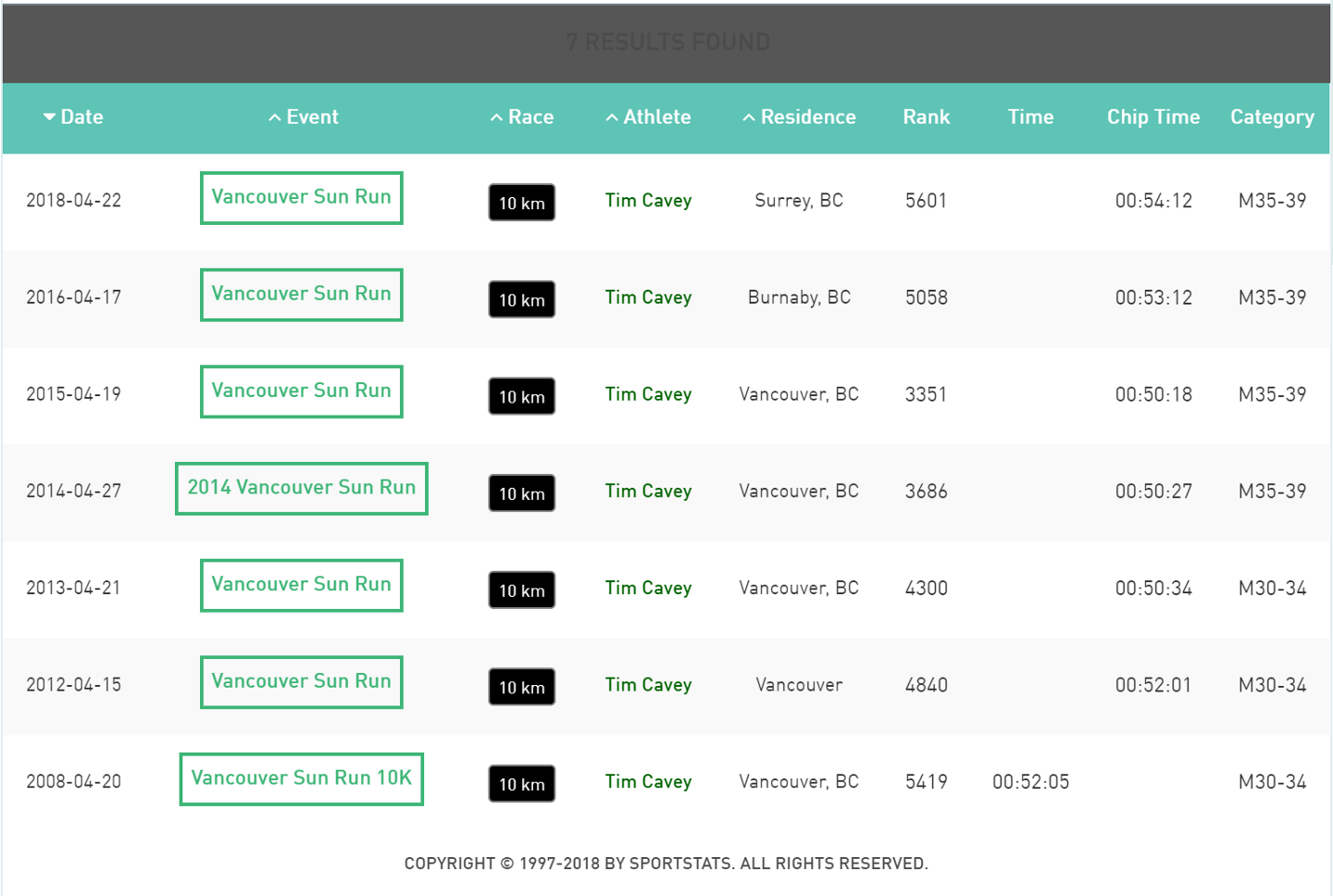
  5. Complete the Vancouver Sun Run (10 km) in under 53:48 (my 2024 time).
  6. Complete 10+ chin-ups in one set by end of year.
  7. Bench press 135 lbs. x 20 reps (recorded PB is x 12 reps) by end of year.

Financial

  1. Invest in S&P 500 ETFs within my TFSA. Single stock-picking has been fun for the last few years, but my results haven’t kept up with the S&P. When it comes to investing, boring often wins over the long haul. It’s time to get more boring.
  2. Earn $240+ from blog posts on Medium.
  3. Earn $1,200 from AdSense on my YouTube channel for teachers. To get there, I’ll need to publish more tech tutorial content — that’s what teachers around the world find most helpful.
  4. Give successively more to charitable organizations each month than the month before. This is a trend that my wife and I have followed since marriage in 2015 and we would like it to continue indefinitely.
  5. Give spontaneously to family, friends, or those in need once a month. This often takes the form of treating another couple to a meal, but it can take other forms as well.

Marital

  1. Continue to connect with my wife on Friday Family Fun nights, Saturday date nights, and Sunday afternoons. She needs lots of quality time together and I am grateful that she doesn’t ever seem to get sick of Tim Time.
  2. Create some new travel memories together in July — location still to be determined.

Parental

  1. Connect with our younger son (he lives at home with us, but the three of us have different schedules) over a meal at least once per week.
  2. Continue to match him dollar-for-dollar on his university tuition. His mother and I share finances, so this is a shared goal.

Professional

  1. Improve my contributions to my elementary team, students, and parent community. I’m happy with my current mix of teaching and administrative duties.
  2. Support my still-to-be-hired new principal (my seventh principal in nine years) this fall.
  3. Obtain my BCCT certification. I’m currently certified to teach at all schools in Manitoba, but only independent schools in BC.
  4. Publish 50 blog posts (and matching vlog posts) about my education practice.
  5. Increase my proficiency with AI-for-teachers tools. This one is difficult to quantify, but let’s say that by year’s end I want to be leveraging AI tools in my work more than once per day.

Self-Improvement

  1. Complete daily goal tracking consistently (as in: charting my progress virtually every day) using the Strides app.
  2. Finish 12 books. I read almost every night, but I hop around a lot, so the word ‘finishing’ is important here. If you’re a reader, I’d love to connect with you on Goodreads.
  3. Publish 26+ personal interest blog posts (and matching vlog posts) like this one.
  4. Complete 24+ bedtime journal entries.
  5. Complete 24+ morning reflection and prayer journal entries. These are profoundly centering and give me great peace when I actually do them
  6. Complete 6 BC hikes and 6 paddleboard trips in the summer.
  7. Publish 12 long-form videos on each of my Vancouver reviews channel (in 2024 I published 2), travel channel (in 2024 I published 3), and my hiking and paddleboarding channel (in 2024 I published 10). The long-term goal here is to have 4–5 monetized YouTube channels by the time I retire from teaching.

Social/Relational

  1. Meet weekly with other couples from our church community to share life, learning, and friendships together. This is a life-giving practice for me and my wife.
  2. Organize and attend 10+ monthly father-son Zooms (we live in different parts of the country).
  3. Complete a first-ever camping and hiking trip with my brothers and some of their children in August. I’m dreaming of an overnight trip to Landslide Lake on Vancouver Island.
  4. Meet six times with three other male teacher friends in my area. We aim for monthly get-togethers, but about half of our meetings get knocked out by life.

Final thoughts

There you have them — most of my goals for 2025. They’re as specific, measurable, achievable, relevant, and timelined as I can make them.

What do you have in mind for this year? Whatever your goals, make sure they are quantifiable.

And if you DO make yours public, tag me below and share a link to your work. I’d love to check them out and cheer you on.

Let’s GO.

Standing near the peak of Brunswick Mountain in Lions Bay, BC

Categories
Career Content Creation Education Finances Goal Setting Productivity Self-Actualization

27 Goals for 2019

My targets are clear, quantified, and higher than ever.

Photo credit: @Alexanderredl

Last year I made the case for setting New Year’s goals and resolutions, explaining that most critiques or dismissals of goal-setting amount to a failure to recognize that goals must be measurable.

Putting it bluntly, if your goals aren’t quantifiable, they’re a waste of time. And yes, the cliches apply. Goals like “eating healthier” don’t make it past the second week of January. They’re meaningless because the success criteria isn’t clearly defined.

So with quantities in mind, I’m looking for big results this year. I’m hoping that by sharing these targets, you might be encouraged and inspired, too!

Here are my 2019 goals, by the numbers.

Physical

  • Work out at Anytime Fitness 156+ times.
  • Run a total of 156+ km. Now that I have a weekly running partner, this one might get blown out of the water. But years of inconsistency in this area make me cautious.
  • Run the 10 km (6.2 miles) Vancouver Sun Run in <50 minutes with 40,000 other runners. The under-50 time has been an elusive goal for the last decade. I was 0:19 away in 2015.
  • Complete 42 push-ups in one set.
  • Complete 15 reps of 135 pounds on the bench press.
  • Continue diet of no French fries, chips, or non-alcoholic sugary drinks.
  • Monitor and maintain optimal blood pressure averages for 2018.
  • End 2019 at 179 lbs (I’m currently 188).

Self-Improvement

  • Read 15 books on my Kindle. Connect with me on Goodreads to see what I’m reading!
  • Write 104+ blog posts.
  • Purge 1+ clothing item/week.
  • Complete 104+ bedtime journal entries (handwritten).
  • Complete 104+ morning reflection and prayer journal entries.

Financial

  • Pay off our HELOC (home equity line of credit) by an average of $500/month. This thing has been in existence since we purchased our home in 2015, and it’s time to make some serious progress.
  • Earn an average of $50/month or from Medium publishing and other online activities.
  • Give $5 more per month to charitable organizations. We currently donate above 10% of our net incomes but less than 10% of our gross. The plan right now is to continue increasing our giving by $5/month to continue nudging that upward. Ultimately this speaks to our intention to live more and more generously, holding on loosely to the resources we’ve been given.

Paternal

  • Read with the boys one night/week before bed.
  • Complete monthly stepdad-stepson date nights.
  • Enjoy 36+ Friday Family Fun Nights.

Professional

  • Complete M. Ed. degree.
  • Grow the Teachers on Fire podcast to 500+ downloads/episode.

Social/Relational

  • Organize 10+ monthly father-son conference calls (I’m speaking here of my own father and three brothers.)
  • Complete a third annual father-son summer camping trip with one of my brothers and his son.
  • Meet 10+ times with a close friend and goals accountability partner. We’ll be talking about this very list each month and updating our progress.

Marital

  • Complete 36 Connect Times with my wife. Connect Time is what we call weekend meetings where we sit down together to complete a thorough review of our current spending, financial picture, calendars, event planning, pressing decisions, other discussion items, and the health of our relationship. Connect Time is agenda-driven and methodical, but once we’re finished these meetings we feel in sync and settled.
  • Write 12 handwritten notes (1/month) to my wife. By no means should this be the sum total of my romance, but a friend suggested this one and I like it.
  • Make love regularly. We do have numerical goals here, but that’s TMI. Ha!

There you have it — my goals for 2019. Again, I’m posting them here partly to channel the power of public accountability, and partly to encourage and inspire you in your own goal-setting.

Photo by Pablo Heimplatz on Unsplash

It’s 2019, people. Don’t wait for life to happen to you — make the decision to happen to life!

Let’s do this.

Categories
Career Finances Goal Setting Investing Productivity

Financial Advice for My 21-Year-Old Sons

Boys, you’ve just entered your teens … but 21 is just around the corner. Learn from my mistakes to set yourself on an early path to financial freedom.

Photo by rawpixel on Unsplash

DON’T use credit cards to finance vacations “while I’m still young.”

Relax. The travel window isn’t about to close for you any time soon. Sure, my cross-continent trips with friends were fun at the time, but the multi-thousand dollar credit card debt to follow was miserable. No one sets out in life to pay Visa and MasterCard thousands of dollars in interest, but that’s exactly what you’re choosing to do when you rack up 5-figure credit card debt on a small salary. Renowned financial consultant Dave Ramsey calls this kind of behavior stupid tax.

DO save a little money each month.

Whether it’s $250 or $25/month, the decision to save consistently over time will literally pay dividends down the road. A quote attributed to Albert Einstein says “Compound interest is the eighth wonder of the world. He who understands it, earns it. He who doesn’t, pays it.” Choose to be an interest earner, not a slave. Tax-free interest savings plans like Roth IRAs (USA) or TFSAs (Canada) make the effect of interest earnings even more amazing.

The 1998 Chevrolet Cavalier Z24

DON’T borrow money to buy a vehicle.

Little did I know that when I borrowed $12,500 to buy a 3-year-old car, it would ultimately cost me thousands more in repairs and take me several years to pay off completely. Always remember: buying a car is the single largest purchase of a depreciating asset that most people will ever make. Instead of thinking about features, think about limiting the financial damage by spending within your means for a vehicle that’s reliable.

DO purchase real estate as soon as possible.

Just as car debt is financially damaging, the decision to buy your first piece of real estate will prove to be one of the most important financial moves of your life. Among a host of other benefits, mortgage payments are a form of forced savings that will only give you better options and opportunities as the years go by. Don’t try to tell yourself that you’ll rent on the cheap and put a ton of money into savings and investments. You won’t.

Quick story on this point. As I mentioned, I borrowed a large sum of money at 21 years of age to buy a used vehicle. Around the same time and at the same age, my friend Brent bought a home for $29,000. Yes, it was a small home in a bad area and a depressed market. But predictably, his house appreciated well in the few years that followed. I believe he sold his home for about $90,000 about three years later and rolled that equity into a larger $150,000 home in a nicer area of town.

So, consider our two trajectories during this approximate five year window. I probably paid close to $20,000 in car payments, interest, and repairs, and was left with little to show for it. In contrast, Brent likely put about $5,000 down on his home and paid up to $2,500/year in mortgage payments, for a total of $17,500 in on his house before selling.

Although my numbers can’t be precise, our decisions created these divergent results:

  • Me: loss of $20,000 + “gain” of an unreliable vehicle
  • Brent: gain of $70,000 + growing equity and appreciation in a $150,000 property

If the numbers aren’t making it clear, just go with this: Don’t borrow money to buy things with engines. Buy real estate instead.

Photo by rawpixel on Unsplash

DON’T automatically accept the first job offer that comes your way.

Filled with idealism and sentiment for my would-be employer, I accepted a teaching position almost immediately after graduating from university with a bachelor’s degree. Yes, I built meaningful friendships and gained valuable experience during the six years that followed, but the starting salary of $24,000 (before taxes and deductions) with limited opportunity for advancement was a bad return on a 4-year university program. After making poor money decisions in other areas, earning less than $450/week was simply not enough income to create any kind of financial momentum.

DO be selective and explore all of your income options.

In some respects, you may never again have as much vocational freedom as you will in your twenties, something perhaps more true in the gig economy of today than it’s ever been true in human history. Find work that is spiritually satisfying, intellectually challenging, and complements your set of abilities and interests. And yes, find work that compensates you appropriately and offers avenues for advancement. Whether you find this in corporate America or as an entrepreneur, seize the opportunity to avoid the prospect of a financial flatline.

Photo by Krists Luhaers on Unsplash

DON’T consume much entertainment.

Going to movies, watching professional sports, and playing video games were all fun distractions, but they add nothing of value to your life and leave no lasting legacy. I’ll never get back the hours I spent wandering around Blockbuster Video stores looking for movies to rent — never mind the hours I spent actually watching the movies! Instead, focus on leisure activities that grow your skill set, leave lasting impact, and develop your leadership.

DO create content consistently.

Consistent content creation over time has a way of building permanent momentum, income, and opportunities. Every successful artist and creator from the blogosphere, Twitter, Medium, Youtube, or Instagram once began with zero followers and subscribers. Even the simple decision to write an article like this one once a week from the age of 21 would have set me on a completely different trajectory, and it’s certain that my writing style would have developed far more by following this simple habit.

Consistent content creation will make you more reflective, develop your mind, build your creativity, broaden your horizons, expand your networks, and create opportunities that you never thought possible. Be a constant creator. Whether it’s through writing, music, photography, or how-to videos on YouTube, create and contribute things of beauty and utility as a way of life.

Photo by frank mckenna on Unsplash

In Summary

Your early twenties. Those years are such a fantastic opportunity to work hard and save cash for things like cars, weddings, and homes — not necessities, by any means, but building blocks for a functioning life that will become more significant in the years and decades ahead. Treated with care, these years can set you on a course that will have you thanking yourself for decades.

So boys, learn from my errors. Observe the stupid taxes I paid. And make smarter decisions than I did. You’ll thank yourself for the rest of your life!

Categories
Goal Setting Goals Productivity Self-Actualization Wellness

You Hate New Year’s Resolutions Because You’re Doing Them Wrong

There’s one part of SMART goals that still doesn’t get enough love.

1__l4jZqqPaci120vl08R8zw

“80% of New Year’s resolutions fail by February.”

“Only 8% of New Year’s resolutions are successful.”

Like me, you’ve heard these depressing and oft-repeated statistics. Quite possibly, you’ve joined the ranks of the intellectually enlightened who scoff at the naivete of annual resolution-making rituals and pragmatically embrace their deficiencies instead.

And then there are some among us whose hatred of New Year’s resolutions seems almost visceral. The mere mention of resolutions is enough to produce a scowl of disgust and a healthy rant to boot.

Why all the hate?

I believe the main reason is that at one time or another, these cynics tried setting resolutions themselves. Lose weight. Work out more. Save more money. Spend more time with family. Be a better human being.

At the outset of these resolutions, there was hope. There was optimism. There was the promise of real and lasting change. Often, the resolutions were announced with fervent passion and great fanfare to family and friends.

And then inevitably, the resolutions failed. Old habits crept back in. Resolve weakened. And before they knew it, the ways of December had returned.

Disappointment, humiliation, and frustration followed. So, like a jilted lover, these resolution-makers vowed “Never again.” Never again will I set myself up for such personal disappointment or public humiliation. Never again will I waste time with this foolishness.

I can’t fail if I don’t attempt, goes the subconscious logic. It’s a form of emotional self-defense. It’s what Carol Dweck calls the fixed mindset, when we allow the fear of failure to prevent growth.

I have good news for these doubters, however. The good news is that New Year’s Resolutions can and do work. You only hate them because you’re doing them wrong.

“If you aim at nothing, you will hit it every time.” — Zig Ziglar

A quick note on semantics. If you’re a resolution hater, try replacing resolutions with goals. For some, resolutions are more easily associated with the sorts of vague, nebulous platitudes that inevitably end in failure, while goals align better with targeted, specific growth or change.

Now that we’re clear on language, we need to address the most underrated and yet most powerful part of goal-setting: numbers.

You’ve likely heard of SMART goals, so let’s begin there. You’ve heard that effective goals must be:

  • Specific
  • Measurable
  • Achievable
  • Realistic & Relevant
  • Time Limited

It’s a fantastic formula, and I do believe each piece of that formula is critical. Yet there’s one bullet that — based on personal experience — dwarfs the other four in importance.

Measurable is EVERYTHING.

If your goal doesn’t have a number in it, it’s worthless. If you have no way to quantify your goal or check for success at the end of your timeline, you are literally wasting brainpower even thinking about it.

I believe this needs to be shouted from the rooftops. Stop wasting your time setting goals — any goals — that don’t contain numbers.

Instead, set goals that are measurable, quantifiable, empirical. Start obsessing about data. Track your life in every area that’s important to you.

To show you what I mean and how I’m applying this, here are some of my measurable goals for 2018:

  • Financial: Reduce the amount owing on our HELOC by 25%. (End of February: +10%.)
  • Marital: Complete 36 ‘State of the Union’ update discussions with my wife in 2018. (End of February: 6/36.)
  • Paternal: Complete 12 monthly stepdad summits. (End of February: 2/12.)
  • Physical: Complete 45 push-ups in one set. (End of February: 35.) Earn a time of under 50 minutes in a 10 kilometer run on April 22nd. (Result to come.) Work out at Anytime Fitness 156 times. (End of February: 26/156.) Run a total of 156 km. (End of February: 9.8/156 km.) Record less than 120/80 BP. (End of February: 125/86 was best reading.)
  • Professional: Complete year 1 of MEdL degree. (End of February: 7/12 months completed.)
  • Self-Improvement: Finish reading 12 books. (End of February: 1/12.) Purge 52 items of clothing. (End of February: 8/52.) Complete 52 bedtime journal entries. (End of February: 25/52.) Write and publish 52 blog posts. (End of February: 6/52.)
  • Social: Complete 10 father-son conference calls. (End of February: 2/10.)

I lay out all of these goals and more in a spreadsheet, and now check these goals more often than I have in five years of following the practice. They keep me grounded, focused, and motivated. I press on in each of these areas partly because I can see progress. I feel momentum. I see reasons to be encouraged.

Think back to some of the classic New Year’s resolutions we’ve all set for ourselves in the past. Lose weight. Get in better shape. Save more money. Spend more time with family. Be a better human being.

Those goals have little chance of success because they’re difficult to track. You’re not going to stay motivated to make better choices for 365 days based on eat healthier. But you ARE going to stay motivated so long as you can measure and track incremental progress.

So start journaling everything. Obsess with data. Take five minutes each morning and update your life’s activity in all the areas that matter. And I promise that you’ll see results like you’ve never seen before.

There’s no time like the present to stop hating resolutions. Embrace goal-setting with all you’re worth. And if you care about success, make them measurable.