Categories
Books Growth Mindset Lifelong Learners Reading

Looking Back on My Books of 2018

Why I read it, what I thought of it, and a summarizing quote from each of my eleven titles.

Photo by Raj Eiamworakul on Unsplash

My book reading goal for 2018 was 12, and to be fair, I came really close. By year’s end, I had finished 11, with probably a dozen more titles in various states of progress.

This was the best reading year of my life, thanks to my beloved Kindle and my decision to permanently ban my phone from the bedroom at night. I’m hoping for 15 books in 2019.

But without further ado, here is my look back at the 3,471 pages I read across 11 books in 2018. For each title, I’m sharing my reason for reading, a quick review, and a quote that captures something of the book’s message.

Animal Farm, by George Orwell (3 stars)

Why I read it: I thoroughly enjoyed 1984 by Orwell, so this book seemed like a good pick in terms of classic fiction. It’s required reading in many high schools, so as an English teacher this was a logical choice.

My Review: Animals on a farm form a revolution and run the farmer (read dictator) off his property. The initial ecstasy of freedom in the aftermath gradually gives way to sadness and oppression as the pigs slowly increase their dominance over the remaining animals. The story is a thinly veiled political allegory that resonates with coups and revolutions in modern history. The book was interesting and I’m glad I read it, but this plot won’t keep you on the edge of your seat.

Key Quote: “Somehow it seemed as though the farm had grown richer without making the animals themselves any richer — except, of course, for the pigs and the dogs.”

Crushing It, by Gary Vaynerchuk (4 stars)

Why I read it: Gary has been a huge source of inspiration in terms of the kinds of content that it is possible to create in today’s world.

My Review: The old gatekeepers on media (think publishers, cable networks, record labels) are losing their control in an age when absolutely anyone can create, publish, and promote their own creative content. Gary tells stories of entrepreneurs who showed enough creativity, determination, and vision to overcome adversity and win. He makes the case that we can crush it, too, and calls out our fears and hesitations. I consume a lot of what Gary puts out on podcasts and YouTube because he inspires me to take action and create. This was no different.

Key Quote: “Put your stuff out in public so you have to live up to it. As long as it’s valuable and you know it’s true, don’t judge it. Let the market show you whether you’re good or not. There’s always something new, and the only way to win is if it’s your truth. Just produce. Become that personality, and own it.”

Fahrenheit 451, by Ray Bradbury (4 stars)

Why I read it: Like Animal Farm, this was another fiction classic on my reading to-do list. This was an itch that I’d been waiting to scratch for the last 15 years, ever since Michael Moore’s Fahrenheit 911 was released in 2004 and I never quite understood the reference.

My Review: In a society of the future, ideas and books are considered dangerous. Any reports or sightings of books lead to a complete incineration of the property where they’re found. When the protagonist begins to question this rationale and pilfer a few titles for his own review, he becomes a wanted man. Bradbury’s predictions of the future are shockingly accurate, and I would recommend this read for that reason alone.

Key Quote: “School is shortened, discipline relaxed, philosophies, histories, languages dropped, English and spelling gradually neglected, finally almost completely ignored. Life is immediate, the job counts, pleasure lies all about after work. Why learn anything save pressing buttons, pulling switches, fitting nuts and bolts?”

For Whom the Bell Tolls, by Ernest Hemingway (4 stars)

Why I read it: Yet another classic on the list, this was a title I’ve seen and heard about for years by one of America’s greatest writers.

My Review: Robert Jordan is an American who somehow got involved in the Spanish Civil War. As he colludes with a ragtag bunch of rebels to destroy a bridge, he meets a girl and falls in love. Some thrilling combat scenes fill the late stages of the book as Jordan attempts to achieve his mission and escape Spain with Maria. Although a little slow at times, this was written with passion, imagination, and great character development. A great read.

Key Quote: “Instead of the surety of failure he felt confidence rising in him as a tire begins to fill with air from a slow pump. There was little difference at first, although there was a definite beginning, as when the pump starts and the rubber of the tube crawls a little, but it came now as steadily as a tide rising or the sap rising in a tree until he began to feel the first edge of that negation of apprehension that often turned into actual happiness before action.

The Hobbit, by J. R. R. Tolkien (3 stars)

Why I read it: I was looking for some new bedtime reading with my second stepson (aged 12). I had never read this classic, so it seemed about time.

My Review: A hobbit accompanies a wizard and some dwarves on a dangerous journey across mystical lands. Strange characters appear and threaten them at seemingly every turn. Spiritual analogies abound. Because I’m not a big fantasy fan, I had to work hard to keep my mind focused during Tolkien’s length descriptions.

Key Quote: “Where there’s life there’s hope.”

The Inconvenient Indian: A Curious Account of Native People in North America, by Thomas King (4 stars)

Why I read it: This title was on a list of optional readings for my MEdL program, and classmates spoke highly of King as an authority on the indigenous experience in North America. I also really enjoyed The Reason You Walk by Wab Kinew, and this was a natural follow-up.

My Review: This reads like no history book you’ve ever read, and that’s just the way King wants it. Although his telling of indigenous stories is far from linear or chronological, he weaves a sometimes sarcastic, sometimes funny, always authentic tale that puts it all into perspective. More importantly, King shows how Canadian and American histories of colonization have affected indigenous societies, and discusses the pathway forward.

Key Quote: “When we imagine history, we imagine a grand structure, a national chronicle, a closely organized and guarded record of agreed-upon events and interpretations, a bundle of “authenticities” and “truths” welded into a flexible, yet conservative narrative that explains how we got from there to here. It is a relationship we have with ourselves, a love affair we celebrate with flags and anthems, festivals and guns.

Leaders of Their Own Learning: Transforming Schools Through Student-Engaged Assessment, by Ron Berger, Leah Rugen, and Libby Woodfin (5 stars)

Why I read it: This was another optional title from my list of course readings for my MEdL program. When my first year studies started to look at the pedagogy of learning targets, a colleague recommended this work. I’m so thankful she did.

My Review: This book turned out to be one of the best education books I’ve ever read. In one thought, it shows how student agency, ownership, and metacognitive practices can dramatically improve student learning. It’s so good and so logical that any school could adopt this as a guidebook to better learning and teaching practices.

Key Quote: “Student-engaged assessment encompasses a wide array of practices that bring students into the process of assessing their growth and learning. They gain a deeper sense of their progress and ultimately become more independent learners. Through student-engaged assessment, students learn the language of standards and metacognition, set academic goals and monitor progress, identify patterns of strengths and weaknesses, become self-advocates, and assess their own work with a striking degree of honesty and accuracy.”

Lord of the Flies, by William Golding (5 stars)

Why I read it: I was looking for a book we could read in the car as a family, something to occupy those 25-minute drives to the beach. This was another story I’d missed in my childhood, and another title that comes up frequently as a reference in pop culture.

My Review: When a plane full of schoolboys goes down on a deserted island, the boys must figure out a new social order on their own. This book wrestles with ideas of empathy and cruelty, leadership and dominance, loyalty and betrayal. It’s an intriguing story and we were on the edges of our seats through a lot of it. Some of the lines from the story still ring in our ears.

Key Quote: ‘If I blow the conch and they don’t come back; then we’ve had it. We shan’t keep the fire going. We’ll be like animals. We’ll never be rescued.’

Money Rules: Rule Your Money, or Your Money Will Rule You, by Gail Vaz-Oxlade (3 stars)

Why I read it: As I’ve shared in past posts like this one, I’ve made more than my share of financial mistakes. With Gail I was looking more for motivation than know-how, although I always want to learn more about wise money management.

My Review: This book is a collection of financial rules listed one after the other in no apparent order, so don’t look for thematic chapters here. Gail writes with refreshing candour, and she isn’t afraid to call us out for our stupidity. Overall, it was an encouraging experience to read this one.

Key Quote: “If you don’t know what you want, if you don’t lay a plan for getting from one point in your life to another, you’re just wandering in the woods blindfolded.”

Teach Like a PIRATE: Increase Student Engagement, Boost Your Creativity, and Transform Your Life as an Educatorby Dave Burgess (5 stars)

Why I read it: If you engage with other educators in today’s professional learning networks for very long, you’ll hear about this legendary author and the movement he’s begun. After this title was recommended by multiple podcast guests and professional connections, I knew I had to see for myself what Teach Like a Pirate was all about.

My Review: Dave Burgess completely redefines what is possible in the classroom. He also discusses the idea of creativity a lot, pointing out that creative ideas come from work, sacrifice, and intention — there’s nothing magical about the creative process.

Key Quote: “Grow! Try new things and do those bucket-list items. Notice the world around you and treat it like the bountiful supply of creative ideas that it is. It’s not just good for your life…it’s great for your teaching. Exploring the world and your passions allows you to bring a new perspective and energy into the classroom. It allows you to become a powerful role model for your students. We always say we want them to be life-long learners, so we must show them what that looks like.”

This Present Darknessby Frank E. Peretti (4 stars)

Why I read it: I was looking for a new bedtime story to read with my older stepson, and I decided to revisit a novel I enjoyed in my own childhood. Given the 25+ year gap between reads, it was almost like getting into it for the first time.

My Review: Peretti pulls back the curtains on the spiritual warfare happening in and all around the town of Ashton. The story bounces back and forth between the natural and the supernatural as forces of darkness and light battle in an epic struggle.

Key Quote: “Spirit, who are you?’ Andy demanded. Bobby remained silent, his entire body strained, his lips tightly together, his eyes bulging out. He was taking frantic, short breaths through his nose. His face was crimson.”

In Summary

That was it — my year of reading in 2018, including fiction classics, education, entrepreneurship, personal finance, and history. Some were awesome, some were okay, but all were interesting and instructive in their own ways.

Categories
Growth Mindset Lifelong Learners Productivity Reading Technology

7 Reasons Why You Should Own a Kindle

This device has single-handedly redefined my reading life and put my learning in overdrive.

Last year my wife bought a Kindle. I was unimpressed — largely because I’ve always been a big fan of the physical properties of my books. Whether it’s the quiet authority of hardcovers, the friendly personality of my flexible paperbacks, or the way my pens and highlighters connected me with the works I so admired, I wasn’t about to trade my connection with physical books for the unfeeling grey void of a digital screen. No freaking way.

But another reality was also at work at the time — a definite dissonance between my ideals and my reading reality. Even as an English major, an educator, as someone who actually writes for fun and genuinely geeks out over the artistry of wordcraft and prose, I just wasn’t reading the way I wanted to.

I mean, I thought of myself as a reader. And I actually was reading here and there, now and again. But I wasn’t actually making the sustained kind of cover-to-cover progress that I knew I wanted and needed in my life.

Time wore me down. Slowly but surely, the initial distaste I felt for my wife’s e-reader subsided. Finally, awash in required reading for my graduate studies, I caved and hit purchase.

And my reading has been forever transformed. That’s not an overstatement.

Here are the seven reasons why you too — and I’m looking at YOU, devout disciple and loyal defender of paper books — should venture out to the digital dark side and treat yourself to the Kindle experience.

1. It’s made for a powerful bedtime reading routine.

The light on the Kindle screen can be turned incredibly low and soft, so it’s easy on the eyes and doesn’t stimulate artificially the way the blue light from phones and tablets is prone to do. It’s incredibly lightweight and maneuverable, so yes — that hardcover Sherlock Holmes anthology is now a possibility at bedtime. I even like the unique slightly-gritty feel of the Kindle screen — a different sensory experience than the glass surfaces of our phones and tablets. And since it requires no lamp, it doesn’t keep my partner awake. Put simply, a comfortable bedtime reading routine has meant that I now read virtually every single day.

2. It tracks and stores all of my highlights.

I’ve been a highlighter since my undergrad years. I know not everyone takes in content this way, but I absorb nonfiction works in terms of gems and big ideas that I can return to, reflect on, and remix. When I realized that every one of my highlights was automatically synced and stored in my Goodreads profile, I couldn’t believe my good fortune.

Now, every inspiring line, every memorable quote, and every motivating concept is saved for me to tweet, share, email, post, and reflect on further. The same convenience applies to any book-based academic research. An absolute game-changer.

3. It lets me travel light.

I’ve got a funny story here. A few years ago I paid my parents a visit in another city. While staying with them, I hit a bargain book store and cleaned up. But my book savings cost me dearly at the airport when I went to fly back home — my suitcase was grossly overweight and I paid a heavy surcharge.

Now, packing a suitcase of books is admittedly a pretty dumb move and I’m sure not your reality. But I suspect you’ve felt the pain of having to narrow down your reading to 1–2 titles when hopping on a flight. With your Kindle, you’ll never have to reject your lovelies again.

4. Its real-time progress reports are strangely motivating.

Call me a stats nerd, but yes — I sleep better knowing I’ve read 2% more of Atomic Habits or Balance Like a Pirate before heading to bed. Maybe it’s just my own nerdy ritual, but it’s become so satisfying to nudge those percentages higher each and every day as I push my way through books large and small. Some nights I hit the hay utterly exhausted. But I’m never too tired to read 2% of a book.

5. It offers the Amazon advantage.

Come on — it’s Amazon! Because I’m logged into my Amazon account at all times on my Kindle, I’m able to add any book on the market in less than a minute.

Sure, you can point to the consumerism or impulsive spending tendencies that such power facilitates. But honestly — that’s pretty awesome power.

You’ve already embraced on-demand music on iTunes and on-demand video on Netflix. Why not embrace on-demand reading? It’s there at your fingertips.

6. Its cloud access extends across all devices.

Like you, I’m not such a big fan of reading books on my phone or PC. But the reality is that you’ll be caught Kindle-less on occasion. And you know what? Instead of checking email or surfing social media while sitting six carts deep in a Costco check-out line, you just might prefer the option of reading Brene Brown’s Dare to Lead. Admit it — it’s a nice option to have.

7. It’s ALL your books, ALL the time.

At the end of the day, the Kindle case comes down to the simple but profound experience of having all your books with you at once. Limitless, comfortable, and convenient reading that can’t be more accessible. That’s it.

Yes, going with an e-reader is a paradigm shift. It took me a while to choose screen over paper. But thanks to my Kindle, I’m now reading more often, finishing more titles, and learning and growing in ways that I never imagined possible.

And I get it — you love your paperbacks. But my advice is to give this powerful device a chance. It just might rekindle the reader inside you and ignite a passion for learning and imagination that you never knew existed.

Still not a Kindle convert? Let me know why in the comments below! Thanks for reading.

Categories
Education Growth Mindset Lifelong Learners Mindset

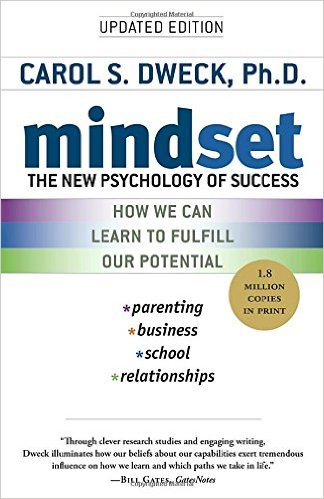
29 Essential Quotes from Mindset: The New Psychology of Success

Mindset is one of those books that has the power to powerfully change all of your most important beliefs and perspectives: the way you view yourself, others, and what is possible. Although the concepts around growth mindset are especially relevant to educators, we are called to be learners and we all have the potential to grow. This book has permanently changed the way I view myself and I believe it might do the same for you. I definitely recommend it.

From the 2016 updated edition, here are (what I believe are) the 29 most significant highlights from Carol Dweck’s Mindset: The New Psychology of Success.

  1. “The view you adopt for yourself profoundly affects the way you live your life.” (p.6)
  2. “This growth mindset is based on the belief that your basic qualities are things you can cultivate through your efforts, your strategies, and help from others. Although people may differ in every which way – in their initial talents and aptitudes, interests, or temperaments – everyone can change and grow through application and experience.” (p.7)
  3. “You can see how the belief that cherished qualities can be developed creates a passion for learning. Why waste time proving over and over how great you are, when you could be getting better? Why hide deficiencies instead of overcoming them? Why look for friends or partners who will just shore up your self-esteem instead of ones who will also challenge you to grow? And why seek out the tried and true, instead of experiences that will stretch you? The passion for stretching yourself and sticking to it, even (or especially) when it’s not going well, is the hallmark of the growth mindset. This is the mindset that allows people to thrive during some of the most challenging times in their lives.” (p.7)
  4. “In one world, effort is a bad thing. It, like failure, means you’re not smart or talented. If you were, you wouldn’t need effort. In the other world, effort is what makes you smart or talented.” (p.16)
  5. “People in a growth mindset don’t just seek challenge, they thrive on it. The bigger the challenge, the more they stretch.” (p.21)
  6. “When do people with the fixed mindset thrive? When things are safely within their grasp. If things get too challenging – when they’re not feeling smart or talented – they lose interest.” (p.22)
  7. “In the growth mindset, it’s almost inconceivable to want something badly, to think you have a chance to achieve it, and then do nothing about it.” (p.44)
  8. “You can look back and say, “I could have been …,” polishing your unused endowments like trophies. Or you can look back and say, “I gave my all for the things I valued.” Think about what you want to look back and say. Then choose your mindset.
  9. “… even when you think you’re not good at something, you can still plunge into it wholeheartedly and stick to it. Actually, sometimes you plunge into something because you’re not good at it. This is a wonderful feature of the growth mindset. You don’t have to think you’re already great at something to want to do it and to enjoy doing it.” (p.53)
  10. “People are all born with a love of learning, but the fixed mindset can undo it. Think of a time when you were enjoying something – doing a crossword puzzle, playing a sport, learning a new dance. Then it became hard and you wanted out. Maybe you suddenly felt tired, dizzy, bored, or hungry. Next time this happens, don’t fool yourself. It’s the fixed mindset. Put yourself in a growth mindset. Picture your brain forming new connections as you meet the challenge and learn. Keep on going.” (p.53)
  11. “The students with growth mindset completely took charge of their learning and motivation. Instead of plunging into unthinking memorization of the course material, they said: “I looked for themes and underlying principles across lectures,” and “I went over mistakes until I was certain I understood them.” They were studying to learn, not just to ace the test. And, actually, this was why they got higher grades – not because they were smarter or had a better background in science.” (p.61)
  12. “Just because some people can do something with little or no training, it doesn’t mean that others can’t do it (and sometimes do it even better) with training. This is so important, because many, many people with the fixed mindset think that someone’s early performance tells you all you need to know about their talent and their future.” (p.70)
  13. “Do you label your kids? This one is the artist and that one is the scientist. Next time, remember that you’re not helping them – even though you may be praising them … Find a growth-mindset way to compliment them.” (p.81)
  14. “Those with the growth mindset found setbacks motivating. They’re informative. They’re a wake-up call.” (p.99)
  15. “If the wrong kinds of praise lead kids down the path of entitlement, dependence, and fragility, maybe the right kinds of praise can lead them down the path of hard work and greater hardiness.” (p.137)
  16. “Parents think they can hand children permanent confidence – like a gift – by praising their brains and talent. It doesn’t work, and in fact has the opposite effect. It makes children doubt themselves as soon as anything is hard or anything goes wrong. If parents want to give their children a gift, the best thing they can do is to teach their children to love challenges, be intrigued by mistakes, enjoy effort, seek new strategies, and keep on learning. That way, their children don’t have to be slaves of praise. They will have a lifelong way to build and repair their own confidence.” (p.179-180)
  17. “One more thing about praise. When we say to children, “Wow, you did that so quickly!” or “Look, you didn’t make any mistakes!” what messages are we sending? We are telling them that what we prize are speed and perfection. Speed and perfection are the enemy of difficult learning: “If you think I’m smart when I’m fast and perfect, I’d better not take on anything challenging.” (p.182)
  18. “Many educators think that lowering their standards will give students success experiences, boost their self-esteem, and raise their achievement. It comes from the same philosophy as the overpraising of students’ intelligence. Well, it doesn’t work. Lowering standards just leads to poorly educated students who feel entitled to easy work and lavish praise.” (p.196)
  19. “The great teachers believe in the growth of the intellect and talent, and they are fascinated with the process of learning.” (p.197)
  20. “Great teachers set high standards for all their students, not just the ones who are already achieving.” (p.200)
  21. “When students don’t know how to do something and others do, the gap seems unbridgeable. Some educators try to reassure their students that they’re fine just as they are. Growth-minded teachers tell students the truth and then give them the tools to close the gap.” (p.203)
  22. “So, are great teachers born or made? … It starts with the growth mindset – about yourself and about children. Not just lip service to the idea that all children can learn, but a deep desire to reach in and ignite the mind of every child.” (p.205)
  23. “A growth mindset is about believing people can develop their abilities. It’s that simple.” (p.215)
  24. “Let’s be totally clear here. We as educators must take seriously our responsibility to create growth-mindset-friendly environments – where kids feel safe from judgment, where they understand that we believe in their potential to grow, and where they know that we are totally dedicated to collaborating with them on their learning. We are in the business of helping kids thrive, not finding reasons why they can’t.” (p.217)
  25. “It’s the parents who respond to their children’s setbacks with interest and treat them as opportunities for learning who are transmitting a growth mindset to their children. These parents think setbacks are good things that should be embraced, and that setbacks should be used as a platform for learning.” (p.219)
  26. “People with a growth mindset are also constantly monitoring what’s going on, but their internal monologue is not about judging themselves and others in this way. Certainly they’re sensitive to positive and negative information, but they’re attuned to its implications for learning and constructive action: What can I learn from this? How can I improve? How can I help my partner do this better?” (p.225)
  27. “Maggie’s internal monologue used to say: Don’t do it. Don’t take a writing class. Don’t share your writing with others. It’s not worth the risk. Your dream could be destroyed. Protect it.” (p.227)
  28. “Instead of being held captive by some intimidating fantasy about the Great Writer, the Great Athlete, or the Great Genius, the growth mindset gave them the courage to embrace their own goals and dreams. And more important, it gave them a way to work toward making them real.” (p.228)
  29. “Mindset change is not about picking up a few pointers here and there. It’s about seeing things in a new way. When people – couples, coaches and athletes, managers and workers, parents and children, teachers and students – change to a growth mindset, they change from a judge-and-be-judged framework to a learn-and-help-learn framework. Their commitment is to growth, and growth takes plenty of time, effort, and mutual support to achieve and maintain.” (p.254)

51FexyX8WQL._SX322_BO1,204,203,200_