Categories
Entrepreneurship Gig Economy Growth Mindset Legacy Self-Actualization

The Courage to Show Up

“The courage to be vulnerable is not about winning or losing, it’s about the courage to show up when you can’t predict or control the outcome.” — Brene Brown in Dare to Lead

Image for post
Photo by Andreas Fidler on Unsplash

Human beings are creatures of control.

We crave certainty. Where certainty doesn’t exist, we’ll accept probability. As a rule, we like to know the outcome before we start.

It’s why people tend to stay in jobs that make them unhappy for years and even decades. They make a calculated trade of happiness and self-actualization in exchange for certainty.

Golden handcuffs.

Just tell me my job is secure and my wages are guaranteed, the thinking goes. Give me good benefits, a strong pension at 65, and I’ll serve you for life.

That’s how highly we value certainty and stability.

The safe life.

Sure, we all entertain dreams from time to time. Dreams of doing the extraordinary. Of making a bigger impact. Of making greater contributions in the lives of others. Of attempting the bold and ostentatious, whatever that looks like in our world.

We dream of showing up in a big way. But as long as it remains a dream, the outcome is certain — zero chance.

If All We Had to Do Was Dream

I mean, the dreaming part is fun. Put a guaranteed road map in front of me, and my willingness to show up for the extraordinary shoots way, way up.

  • Tell me that if I launch a small business, it’ll be instantly successful and cash flow positively within its first year.
  • Tell me that if I buy an investment property, I’ll be able to find fantastic tenants and the property will appreciate steadily over time.
  • Tell me that if I launch an NGO, it’ll seize the imagination of thousands and make life-changing impact in a developing country.
  • Tell me that if I become a realtor I’ll be able to sell multiple listings per month from the outset.
  • Tell me that if I start working on a Youtube channel today, I’ll have 1M subscribers in five years.
  • Tell me that if I study for the LSAT, I’ll pass the exam and be accepted into law school.
  • Tell me that if I do the research and work to write a book, it’ll become a bestseller.

Of course, none of us have those sorts of guarantees. Sure, there are principles of hard work and investment that we can rely on to a certain extent. But no guarantees.

And so we tend to be a little cagey about showing up for risky ventures. About sacrificing to make big changes. About actually showing up when outcomes are uncertain.

So we hedge our bets.

The Many Fears of Failure

The fear of failure looms large. Unpack the fear of failure, and we find other fears.

  • Fears of rejection.
  • Fears of appearing foolish or naive in the eyes of others.
  • Fears of forever losing the time, energy, and capital required.
  • Fears of social judgment — “Who do you think you are, anyway?”
  • Fears of what we would have to say to ourselves if we were forced to admit defeat.

YouTube: A Case Study

I remember when our 14-year-old was 12. For a while, he was intensely interested in editing videos. He was dramatic, creative, and enjoyed performing.

He launched a YouTube channel at the time and dabbled for a while. But I saw his concern about going all in — say, committing to weekly publishing.

The fear of low views and poor response was real. What would it say about him if he went to all this work and there was little to no positive response? Could that result be even worse than never trying anything at all?

Those questions don’t go away in adulthood. They only get louder.

Fear is Something to be Dealt With

One quote that made a big impression on me last year was this one from Elizabeth Gilbert, who writes about risk-taking in her book, Creative Living Beyond Fear:

“Fear is always triggered by creativity, because creativity asks you to enter into realms of uncertain outcome.

This is nothing to be ashamed of. It is, however, something to be dealt with.”

In 2019 I applied for a job that I really had no business getting. I lacked the appropriate experience, and the responsibilities would have been somewhat over my head, at least at the outset. But I knew the interview would be a good step, a good stretch for me. And sitting around the table with five people, thinking on my feet, analyzing my own strengths, weaknesses, ambitions, and vision was a valuable process.

I showed up. And I’m proud of that, because that’s the person that I want to be.

But I’m not finished. There’s still a ton of sacred safety in my life — spaces where I have yet to step out, take more risks, and embrace more uncertainty.

I have more showing up to do.

What it Looks Like to Show Up When Outcomes Are Uncertain

When I think about what showing up in uncertainty can look like, I think of some great people:

  • my brother Peter and his wife Shannon, now in the process of acquiring their fourth business by the age of 35,
  • my cousin-in-law, PJ, whose online startup continues to win big contracts,
  • my friend Karalee, who recently moved away from a secure job to launch a new business in a completely different field,
  • Trevor, a teacher, who designed and patented a new sport and recently wrote a novel on the side,
  • Chris, who is starting a new career in real estate at the age of 40, and
  • Jen Rao, who left a well-paying job and sold her home to live a life of mobility and remote work.

I could share more examples. But to me, this is what it can look like to step out and show up in big ways, even when outcomes are completely uncertain.

I salute this group.

What Might Have Been

It’s been said that the most common regrets of the dying are not the things they did but the things they didn’t do. The things they didn’t have the courage to try.

What might have been.

Let us not be those people. Let us not live our lives wondering what might have happened. Let’s go for it, even when the outcome is uncertain.

It doesn’t require quitting your job. But it does require facing your fears.

It requires showing up — even without a guarantee of success.

“It is not the critic who counts; not the man who points out how the strong man stumbles, or where the doer of deeds could have done them better. The credit belongs to the man who is actually in the arena, whose face is marred by dust and sweat and blood; who strives valiantly; who errs, who comes short again and again … who at the best knows in the end the triumph of high achievement, and who at the worst, if he fails, at least fails while daring greatly.

– Theodore Roosevelt

Categories
Finances Productivity Self-Actualization

The Exceptional Power of Public Accountability

Want to achieve big goals this year? Try putting them in print.

There’s no such thing as a slam dunk commitment. But when intentions are declared out loud, they tend to be just a little more sticky. They carry a little more weight.

They raise the stakes.

There are plenty of examples of this in public life. It’s the reason why weddings — despite concerning rates of divorce — still garner plenty of attention and fanfare. Though marriage has become passe in some circles, there’s still something about vows made in front of witnesses that means a lot.

It’s why we pay attention to what our politicians say in public (and by extension, it’s why a free and robust press is foundational to a healthy democracy). It’s why signed contracts in the world still warrant headlines. It’s why when CEOs at major corporations make announcements, the markets respond accordingly.

Facing the Fears

We’re often reluctant to declare goals out loud because of the social risk. It’s so easy to imagine the pushback months down the road.

  • “Didn’t you say you were going to lose 20 pounds this year?”
  • “I thought you were going to apply to law school. What happened to that?”
  • “So what ever happened to the book that you were planning to write?”

We can hear the snickers and see the sneers.

Channel the Energy

What would happen, though, if instead of backing down in the face of those fears, we embraced the pressure they signal. I mean, what if we really leaned into the power of audience.

This is something I’ve thought a lot about lately. Just a couple of months ago, I decided to finally — finally — FINALLY start writing on a weekly basis.

And in my writing, I’ve tried to be real. Real about where I’ve been. Real about where I want to go from here. In posts like My 27 Goals for 2019, I’ve really put it out there.

Some Public Goals and Decisions

In fact, since my first article on Medium in October of 2017, I’ve shared the following goals and decisions:

  • I’m working on a Master’s degree.
  • I keep my phone out of the bedroom at night.
  • My wife and I will not borrow money to buy a vehicle.
  • I’m going to start a podcast (this became reality in March of 2018).
  • I don’t eat potato chips, French fries, or non-alcoholic sugary drinks.
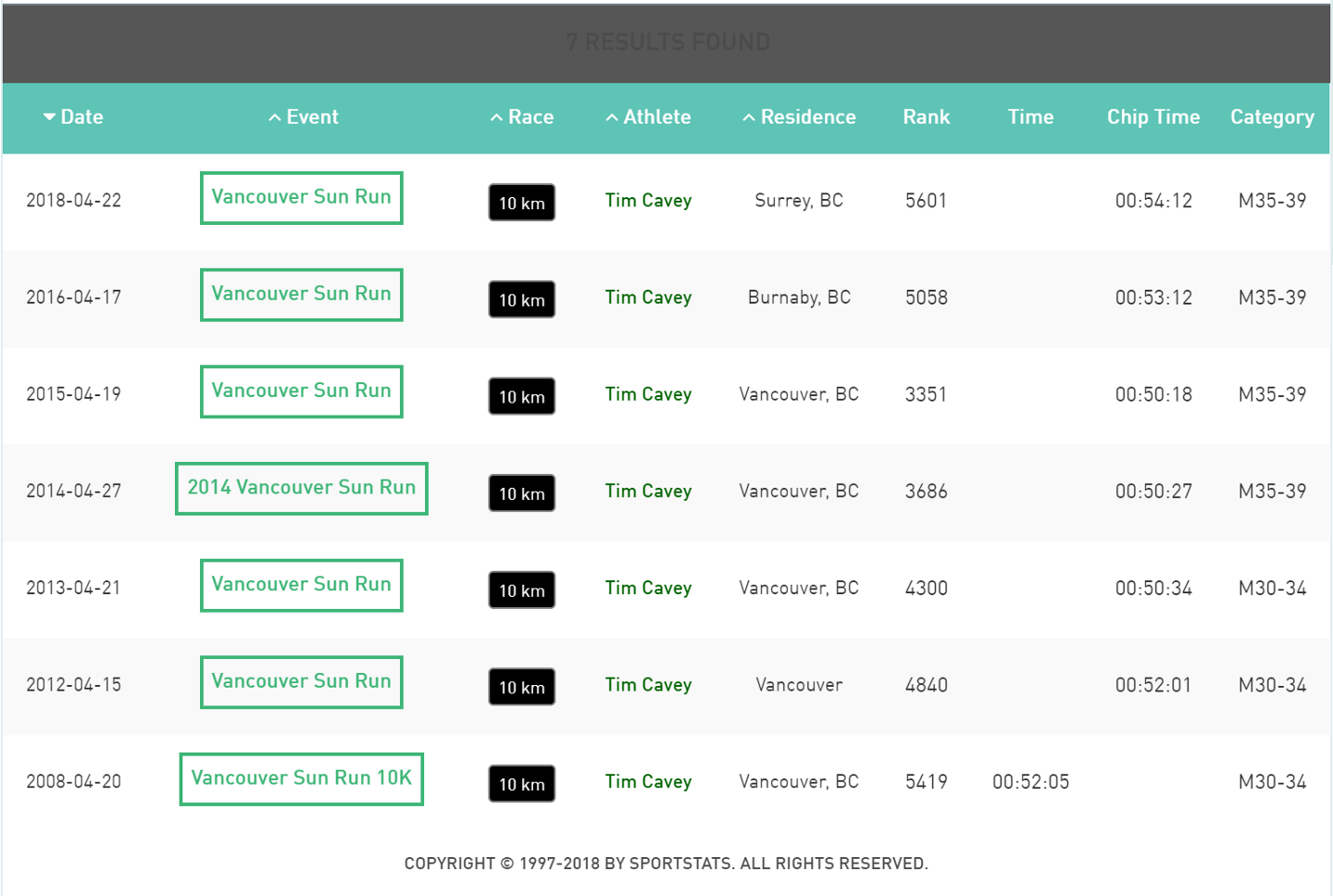
  • I’m going to try to finish the Vancouver Sun Run (10 km/6.2 miles) in <50 minutes.
  • My family eats dinner at the dining room table sans screens — not in front of the TV and not with phones present.

Find the Tipping Point

Of course, I’ve set a ton of other goals and made a ton of other decisions in terms of how I live my life, but I share these examples in particular because they each represent terrific battles. They’re not always things I want to do in the moment.

Mind over matter, spirit over flesh — each of these goals and decisions invites powerful opposition from a dark part of me that wants to settle, wants comfort, wants less struggle and more status quo.

And sometimes, that dark part of me speaks very loudly. When I’m BLASTed (Bored, Lonely, Angry, Stressed, or Tired), it’s hard to find the resolve to resist McDonald’s fries and run 3 miles instead.

But do you know what helps me win in every case? Public accountability.

I’ve literally told so many family members, friends, colleagues, and readers that I’m going to do X and not do Y that I paint myself into a corner.

I leave myself with no choice. Either I press onward, or my credibility takes a beating.

So call it pride. Call it dignity. But I want my word to mean something. I want to be a man that follows through. I want to be intentional and committed and reliable. And as a result, I press on.

Life’s Wins Never Come Easily

As Dave Ramsey likes to say, “You can wander into debt, but you can’t wander out of it.” As it is with financial freedom, so it is with most of life’s wins.

But if you’re looking to make permanent changes, chart better courses, and realize bigger dreams, may I recommend embracing the power of accountability.

Take a look at the goals you wrote on that piece of scrap paper, and tell someone. Share your decision. Write about your plans.

Raise the stakes. You’ll be glad you did.

Because there’s excpetional power in public accountability.

Categories
Career Content Creation Education Finances Goal Setting Productivity Self-Actualization

27 Goals for 2019

My targets are clear, quantified, and higher than ever.

Photo credit: @Alexanderredl

Last year I made the case for setting New Year’s goals and resolutions, explaining that most critiques or dismissals of goal-setting amount to a failure to recognize that goals must be measurable.

Putting it bluntly, if your goals aren’t quantifiable, they’re a waste of time. And yes, the cliches apply. Goals like “eating healthier” don’t make it past the second week of January. They’re meaningless because the success criteria isn’t clearly defined.

So with quantities in mind, I’m looking for big results this year. I’m hoping that by sharing these targets, you might be encouraged and inspired, too!

Here are my 2019 goals, by the numbers.

Physical

  • Work out at Anytime Fitness 156+ times.
  • Run a total of 156+ km. Now that I have a weekly running partner, this one might get blown out of the water. But years of inconsistency in this area make me cautious.
  • Run the 10 km (6.2 miles) Vancouver Sun Run in <50 minutes with 40,000 other runners. The under-50 time has been an elusive goal for the last decade. I was 0:19 away in 2015.
  • Complete 42 push-ups in one set.
  • Complete 15 reps of 135 pounds on the bench press.
  • Continue diet of no French fries, chips, or non-alcoholic sugary drinks.
  • Monitor and maintain optimal blood pressure averages for 2018.
  • End 2019 at 179 lbs (I’m currently 188).

Self-Improvement

  • Read 15 books on my Kindle. Connect with me on Goodreads to see what I’m reading!
  • Write 104+ blog posts.
  • Purge 1+ clothing item/week.
  • Complete 104+ bedtime journal entries (handwritten).
  • Complete 104+ morning reflection and prayer journal entries.

Financial

  • Pay off our HELOC (home equity line of credit) by an average of $500/month. This thing has been in existence since we purchased our home in 2015, and it’s time to make some serious progress.
  • Earn an average of $50/month or from Medium publishing and other online activities.
  • Give $5 more per month to charitable organizations. We currently donate above 10% of our net incomes but less than 10% of our gross. The plan right now is to continue increasing our giving by $5/month to continue nudging that upward. Ultimately this speaks to our intention to live more and more generously, holding on loosely to the resources we’ve been given.

Paternal

  • Read with the boys one night/week before bed.
  • Complete monthly stepdad-stepson date nights.
  • Enjoy 36+ Friday Family Fun Nights.

Professional

  • Complete M. Ed. degree.
  • Grow the Teachers on Fire podcast to 500+ downloads/episode.

Social/Relational

  • Organize 10+ monthly father-son conference calls (I’m speaking here of my own father and three brothers.)
  • Complete a third annual father-son summer camping trip with one of my brothers and his son.
  • Meet 10+ times with a close friend and goals accountability partner. We’ll be talking about this very list each month and updating our progress.

Marital

  • Complete 36 Connect Times with my wife. Connect Time is what we call weekend meetings where we sit down together to complete a thorough review of our current spending, financial picture, calendars, event planning, pressing decisions, other discussion items, and the health of our relationship. Connect Time is agenda-driven and methodical, but once we’re finished these meetings we feel in sync and settled.
  • Write 12 handwritten notes (1/month) to my wife. By no means should this be the sum total of my romance, but a friend suggested this one and I like it.
  • Make love regularly. We do have numerical goals here, but that’s TMI. Ha!

There you have it — my goals for 2019. Again, I’m posting them here partly to channel the power of public accountability, and partly to encourage and inspire you in your own goal-setting.

Photo by Pablo Heimplatz on Unsplash

It’s 2019, people. Don’t wait for life to happen to you — make the decision to happen to life!

Let’s do this.

Categories
Education Family Self-Actualization

7 Lessons Learned in 2018

Looking back on a year of transformative experiences.

What follows is a look back at some of the key moments and experiences that taught me, shaped me, and propelled me forward in 2018.

Experience 1: A Breakthrough on Medium.

On January 7, 2018, I published 7 Keys to Winning the Morning on Medium. This was only my second piece on this platform, and the focus of the article was on my ideal weekday morning routine. Simple.

The post performed unbelievably well. To date, it’s received 3,800 views, 235 fans, a 55% read rate, and earned $192.

I was stunned.

For the first time in my life, my writing had actually earned significant engagement and even a monetary reward. Keep in mind that I’ve been writing sporadically for most of my adult life. Up to that point, most of those pieces had received little to no engagement.

Twenty years of crickets. And then this.

My Takeaway: More than anything, this experience put a wrecking ball to my writer’s imposter syndrome. It confirmed value in my writing, and cemented my resolve to write more often.

Experience 2: The Teachers on Fire Podcast.

On Saturday, March 24, 2018, I published my first episode of the Teachers on Fire podcast.

This came after months of dreaming and deliberation. It followed hours and hours spent listening to education thought leaders and amazing entrepreneurs like Pat Flynn, Gary Vaynerchuk, and John Lee Dumas. As I listened to their podcasts on my daily commute, I slowly started to believe that I could bring the same sort of value to the education space. Over spring break, that’s what I set out to do.

Truthfully, it was a rocky beginning, and my first recordings were technical nightmares. But I’ve kept with it, and since that day, I’ve slowly become a better podcaster. In May, I published 7 Things I’ve Learned from Podcasting, and my growth has continued since.

The mission of the Teachers on Fire podcast is to profile agents of growth and transformation in K-12 education. On my show, I interview education leaders from across North America and around the world. I ask these education leaders to share their highs and lows, their passions and goals, and the voices and resources that inspire their practice today.

Despite some difficult challenges and stressful moments, the podcast has been an incredibly rewarding experience. I now receive encouraging testimonials after every episode, and my listenership grows every week. Each guest stimulates my own thinking and practice, and I learn something from every conversation. There’s a lot to celebrate and a lot to look forward to.

My Takeaway: When it comes to trying something new, it’s not always the right move to wait until you have it all figured out. My first episodes were rough, and I had a ton of learning to do around equipment, applications, recording techniques, publishing, workflow, and promotion.

But I was taking action. I was experimenting, failing, improving, and learning. I refused to let fear of failure stop me. And that’s the takeaway that I want to pass on to my boys and students.

Experience 3: Five Weeks Away.

In July, I spent five weeks (Monday through Friday) studying at Vancouver Island University. I’m in the middle of a Master’s program there, and the program hosted some on-campus courses during those weeks. My MEdL will open all kinds of career opportunities for me, and it’s something I should have completed a decade ago.

The five weeks spent away from home were not easy. Yes, I love learning and love engagement, and I loved seeing more of my brother and his family (they graciously put me up in his home for the entire five weeks). The in-class learning was amazing and the collegial relationships were rich during these five weeks.

But it was tough to be separated from my family for this period. I missed my wife and stepsons a lot. And I missed our typical summer adventures of swimming, hiking, paddleboarding, and canoeing. Although we did our best to fit these activities in where we could throughout the summer, the reality was that the best weather weeks of the year were sacrificed in the name of my degree.

My Takeaway: When a partner and parent decides to pursue further education, the whole family sacrifices to make it happen. Count the cost before you build the tower.

Experience 4: A Mountaintop Moment

Sleeping bags set up on top of the Stawamus Chief

On Tuesday, August 14, I convinced my family to climb a local mountain and camp out overnight. The conditions weren’t perfect: forest fires throughout the region were obscuring the normally glorious views. But the timing was right, and with no end of fire haze in sight, we decided to go for it.

It turned out to be an absolute blast. Our boys conquered the climb like nobody’s business, leaving me and their mom far behind at times. Bugs and wildlife weren’t a factor, other than some friendly chipmunks in the morning. Even with heavy smoke in the air, the views at the top were majestic.

We had the mountain to ourselves for the whole evening. With boulders for beds and stars for our ceiling, we spent the night in sleeping bags, talking ourselves to sleep.

It was one of my favorite family memories of the year.

My Takeaway: In the busy seasons of life, make sure to carve out some mountaintop moments — the stuff of memories and stories for years to come. Although we all love our home time, nothing beats getting out of the house and enjoying screen-free adventures together. Don’t let the busy seasons keep you off the mountain.

Experience 5: A New School

In September, I took a new teaching position at a large school close to my home. This change came after eleven years spent at my previous school, a place that I had come to love and one where I had built many meaningful relationships.

The new position came with a few surprises. For one, I now teach more students and prepare lessons for more courses than ever before. Great teachers that I expected to partner with this year decided to serve with other schools instead. And of course with any new school comes new expectations, and in some cases, that means saying goodbye to freedoms that I’ve enjoyed for many years.

There’s a lot to celebrate in my new workplace, though. My school has a great reputation and a high commitment to excellence. The community is strong, progressive, missional, and enjoys solid parent support. Professional engagement around Twitter, YouTube, edublogs, and books is by far the strongest of any team I’ve ever served with. Administrators have been gracious, encouraging, and open-minded. My colleagues are positive, supportive, keen to improve their practice, and I already love them dearly. It’s a place where I can grow, thrive, and contribute.

A good friend once told me that he believes educators need a change in scenery every seven years or so. Work in a different environment, take on some new challenges, learn new curriculum. Whatever the change looks like, the key is to keep it fresh, to keep growing, learning, and evolving.

I agree. And that’s what’s happening here.

My Takeaway: Professional growth often requires professional change. Don’t get so comfortable in one environment that your own learning starts to stagnate. Sometimes keeping it real means moving on and redefining the journey.

Experience 6: Turning 40.

I finished my fourth decade in October. 40 years is obviously a pretty big milestone — one that gets a lot of attention in our culture.

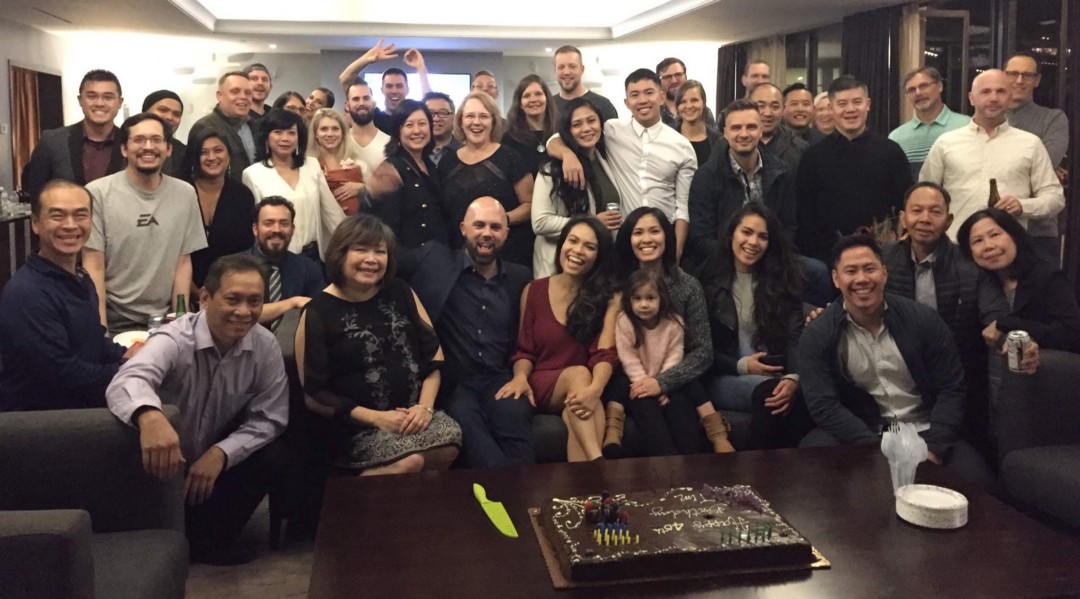
My wife planned an amazing evening of celebration for it. We got an incredible deal on a very large suite in a 5-star hotel, and we partied with family, relatives, and friends from every corner and circle of my life. Best of all, two of my three out-of-town brothers were able to join me.

I don’t think of myself as a big one for celebrations. In the past, I’ve let my birthdays slip by without so much as a stir.

But my dear Filipina wife was having none of it this time. She made it a big deal, invited a ton of people, and I’m so glad she did.

It was an incredible evening shared with most of my favorite people on the planet. It was a night to soak up the love, and that’s exactly what I did.

My Takeaway: Like them or not, celebrations are an important part of the rhythm of life. Savor them when they come. Enjoy the milestones and practise gratefulness for the meaningful relationships you enjoy. Because people are the stuff of life.

Experience 7: Bracing for Impact.

In October, my family got braces. All four of us accepted the prospect of various bits of metal and plastic in our mouths for the next 1–2 years.

I’ve had a bad overbite my whole life, and my bottom teeth also have crowding issues that show up right at the centre of my smile.

Braces have been a long, long time in coming for me. With two robust health benefit plans now in the family, it was finally time to take action.

The first few days were horrible. The Invisalign braces weren’t painful as much as they were simply uncomfortable. My mouth had been invaded by foreign objects. It was harder to speak and snacking was suddenly awkward.

Since that first week, however, the experience has gotten a lot better. Strangely, I now look forward to putting the next new teeth trays in my mouth each week. The tension I feel on my teeth at the beginning of the week reminds me that my smile is incrementally improving.

My Takeaway: Besides giving me newfound empathy for all my middle school students with braces, my journey with braces is building character: patience, consistency, and perseverance. As I wear these things for the next year and a half, I can’t take days or chunks of hours off. These teeth have to stay with me through thick and thin, no matter what. The payoff doesn’t happen if I slack off.

2018: A Year of Transformative Experiences

A breakthrough on Medium. The Teachers on Fire podcast. Five weeks away. A mountaintop moment. A new school. Turning 40. Bracing for impact.

These are the events that shaped my 2018. Together, they transformed me as a person, an educator, and leader. There was some pain, but a whole lot of gain. I am not the same person I was a year ago.

Here’s to more growth and transformation in 2019.

Categories
Goal Setting Goals Productivity Self-Actualization Wellness

You Hate New Year’s Resolutions Because You’re Doing Them Wrong

There’s one part of SMART goals that still doesn’t get enough love.

1__l4jZqqPaci120vl08R8zw

“80% of New Year’s resolutions fail by February.”

“Only 8% of New Year’s resolutions are successful.”

Like me, you’ve heard these depressing and oft-repeated statistics. Quite possibly, you’ve joined the ranks of the intellectually enlightened who scoff at the naivete of annual resolution-making rituals and pragmatically embrace their deficiencies instead.

And then there are some among us whose hatred of New Year’s resolutions seems almost visceral. The mere mention of resolutions is enough to produce a scowl of disgust and a healthy rant to boot.

Why all the hate?

I believe the main reason is that at one time or another, these cynics tried setting resolutions themselves. Lose weight. Work out more. Save more money. Spend more time with family. Be a better human being.

At the outset of these resolutions, there was hope. There was optimism. There was the promise of real and lasting change. Often, the resolutions were announced with fervent passion and great fanfare to family and friends.

And then inevitably, the resolutions failed. Old habits crept back in. Resolve weakened. And before they knew it, the ways of December had returned.

Disappointment, humiliation, and frustration followed. So, like a jilted lover, these resolution-makers vowed “Never again.” Never again will I set myself up for such personal disappointment or public humiliation. Never again will I waste time with this foolishness.

I can’t fail if I don’t attempt, goes the subconscious logic. It’s a form of emotional self-defense. It’s what Carol Dweck calls the fixed mindset, when we allow the fear of failure to prevent growth.

I have good news for these doubters, however. The good news is that New Year’s Resolutions can and do work. You only hate them because you’re doing them wrong.

“If you aim at nothing, you will hit it every time.” — Zig Ziglar

A quick note on semantics. If you’re a resolution hater, try replacing resolutions with goals. For some, resolutions are more easily associated with the sorts of vague, nebulous platitudes that inevitably end in failure, while goals align better with targeted, specific growth or change.

Now that we’re clear on language, we need to address the most underrated and yet most powerful part of goal-setting: numbers.

You’ve likely heard of SMART goals, so let’s begin there. You’ve heard that effective goals must be:

  • Specific
  • Measurable
  • Achievable
  • Realistic & Relevant
  • Time Limited

It’s a fantastic formula, and I do believe each piece of that formula is critical. Yet there’s one bullet that — based on personal experience — dwarfs the other four in importance.

Measurable is EVERYTHING.

If your goal doesn’t have a number in it, it’s worthless. If you have no way to quantify your goal or check for success at the end of your timeline, you are literally wasting brainpower even thinking about it.

I believe this needs to be shouted from the rooftops. Stop wasting your time setting goals — any goals — that don’t contain numbers.

Instead, set goals that are measurable, quantifiable, empirical. Start obsessing about data. Track your life in every area that’s important to you.

To show you what I mean and how I’m applying this, here are some of my measurable goals for 2018:

  • Financial: Reduce the amount owing on our HELOC by 25%. (End of February: +10%.)
  • Marital: Complete 36 ‘State of the Union’ update discussions with my wife in 2018. (End of February: 6/36.)
  • Paternal: Complete 12 monthly stepdad summits. (End of February: 2/12.)
  • Physical: Complete 45 push-ups in one set. (End of February: 35.) Earn a time of under 50 minutes in a 10 kilometer run on April 22nd. (Result to come.) Work out at Anytime Fitness 156 times. (End of February: 26/156.) Run a total of 156 km. (End of February: 9.8/156 km.) Record less than 120/80 BP. (End of February: 125/86 was best reading.)
  • Professional: Complete year 1 of MEdL degree. (End of February: 7/12 months completed.)
  • Self-Improvement: Finish reading 12 books. (End of February: 1/12.) Purge 52 items of clothing. (End of February: 8/52.) Complete 52 bedtime journal entries. (End of February: 25/52.) Write and publish 52 blog posts. (End of February: 6/52.)
  • Social: Complete 10 father-son conference calls. (End of February: 2/10.)

I lay out all of these goals and more in a spreadsheet, and now check these goals more often than I have in five years of following the practice. They keep me grounded, focused, and motivated. I press on in each of these areas partly because I can see progress. I feel momentum. I see reasons to be encouraged.

Think back to some of the classic New Year’s resolutions we’ve all set for ourselves in the past. Lose weight. Get in better shape. Save more money. Spend more time with family. Be a better human being.

Those goals have little chance of success because they’re difficult to track. You’re not going to stay motivated to make better choices for 365 days based on eat healthier. But you ARE going to stay motivated so long as you can measure and track incremental progress.

So start journaling everything. Obsess with data. Take five minutes each morning and update your life’s activity in all the areas that matter. And I promise that you’ll see results like you’ve never seen before.

There’s no time like the present to stop hating resolutions. Embrace goal-setting with all you’re worth. And if you care about success, make them measurable.

Categories
Goals Mindset Morning Routines Self-Actualization

9 Daily Actions That Create Greater Self-Actualization

Some day. Some day very soon, we like to tell ourselves.

Some day soon I will pull it all together. I’ll invest in the relationships that matter most. I’ll journal and meditate. I’ll set clear goals every morning. I’ll read the books I’ve been meaning to read. I’ll get into great shape and eat better. I’ll brush up on that musical instrument. I’ll start to write, design, and create things of beauty or utility that others will value.

Some day very soon. Just as soon as life settles down and becomes a little more manageable, I’ll make my move. And it’ll be awesome.

Yet, if we’re honest, we know what comes next. Life doesn’t slow down, and it doesn’t become more manageable. Or if it does, another challenge appears on the horizon. Family obligations increase. Work pressures loom. Health issues complicate.

The prerequisite state of equilibrium that we demand before we move forward has been disrupted again, and ‘some day’ remains as elusive as ever. All the future tense talk that friends and family hear from us about all the great initiatives on the way remains just that. Talk.

The reality is that ideas and intentions are absolutely worthless. The only thing that counts, that makes an impact, that produces real results and lasting legacy is action. That’s it.

Everyone dreams. Everyone has a concept — however vague or ill-defined — of their best life and best self. But sadly, this maximal manifestation of one’s passions, abilities, and creative energies just never takes shape for most people.

It’s not for lack of vision. And it’s not for lack of desire. The reasons we don’t step out and express our truest passions and purpose usually amount to uncertainty and fear — fear that the changes we want and the achievements we imagine are just too difficult and overwhelming.

We fear the failure that might follow the shock of a giant leap or an abrupt change in life direction. And so our fear keeps us in a state of paralysis by analysis. And nothing changes. Nothing happens.

We fail to see that the only thing lacking is simply action — any action at all. We miss the fact that even tiny, daily habits represent momentum and progress in the right direction. Taken over time, things start happening.

Impressive Progress Can Happen in Small Increments

One of the biggest lessons I learned in 2017 was the incredible power of incremental progress. Fueled by influencers like Brendon Burchard, Tom Karadza, and Brian Buffini, I finally understood that some of my life’s most precious dreams and ambitions would never be realized until I started to actually invest in them every single day.

“How you spend your days is how you spend your life.” — John Lee Dumas

The idea that each day is actually a microcosm of my life really got my attention. I had all these visions for change, for growth, for things I wanted to accomplish across the grand narrative of my life. But if they weren’t showing up in my day to day, they weren’t showing up in my life. That was a brutal reality check.

And so, in 2017 I decided to make intentional growth and greater self-actualization a goal of every day. The results have been gradual, steady, and ultimately transformative. What follows is a sampling of what happened … and continues to happen for me on a daily basis.

9 Daily Actions that Build Progress Toward Self-Actualization

  1. Journaling and Meditation. Through handwritten journaling, meditation, and prayer for just 15 minutes a day, I feel more spiritually connected and centred than ever.
  2. Goal Setting. By taking two minutes each morning to set big goals for the day, every day feels more focused and intentional.
  3. Creative Writing. Always a joy but rarely a reality in years gone by, I now push myself to write at least 100+ words a day. By lowering the bar from an essay to a paragraph, I’m now producing more written content than ever before.
  4. Working Out. By visiting a gym close to my house for just 25 minutes every workday morning, I’ve never been fitter or stronger. It doesn’t require an hour for me to break a wicked sweat and push my body to the max. Quick and efficient is the new name of my exercise game.
  5. Eating Better = -3 +2. Besides cutting out three of my vices (chips, fries, and sugary drinks), I’ve given myself a small and simple daily eating challenge: eat two green things. The first is usually the kale or spinach that goes into my morning smoothie, so finding a second green food somewhere in my day is relatively easy. By subtracting three items and intentionally adding two, I’m now leaner and meaner than ever. Instead of subscribing to some paradigm-shifting diet plan, I’m just taking a few small steps in the right direction. And I’m 12 pounds down from last year.
  6. Side Hustle Income. Although this is definitely not a passion project, my goal is to list or mail at least one item on eBay per day. This simple 5-minute activity keeps a few extra bucks flowing our way. It’s surprisingly encouraging and motivating.
  7. Piano Practice. My parents gave me the option to quit my lessons at age 15 or so, and predictably I’ve lived to regret it ever since. By learning and practising just one piece for a few minutes each day, I’m warming up that old muscle memory and reigniting an old passion.
  8. Reading. Every night, I make sure I read for at least a few minutes from two books on my Kindle: the first a book for my Master’s program, the second a work of fiction. By making sure this happens every night — even if it’s just a few pages from each — I’m staying solidly on track with my degree and projecting an all-time personal best for number of books finished in a year.
  9. Eyeball Time. Since Apple claimed FaceTime as its own, I use ‘Eyeball Time’ to refer to the kind of quality screen-free time required every day to cultivate intimate and meaningful relationships with my wife and stepsons. As a result, we fight hard to protect the weekday dinner hour and bedtime from screens. It’s not a ton of time. But it’s the minimum needed to keep the most important relationships in my life healthy and vibrant. If I’m not making progress on this front, nothing else matters.

Between my marriage, two adolescent stepsons, my teaching career, and Master’s studies, I’ve got a lot on my plate right now. In past seasons of life, I’d have seen this as reason enough to put my hours on cruise control, dissolving into Netflix at each day’s end and waking up lazily to the snooze button.

“So many choices to make today. And each choice I make … makes me.” — John Stackhouse

But I’ve spent enough of my life on meaningless distractions and diversions — as Jim Gaffigan so elegantly describes it, the McDonald’s of life — waiting for conditions to ripen, the waves to calm, the proverbial dust to settle perfectly before taking action and realizing my full potential as a human being.

Those days are over. I’ve discovered the exhilarating power of daily progress— the truth that small actions, taken over time, have the power to yield truly transformative results. And I can’t wait to see what’s in store.