Categories
Communication Family Food Marriage Nutrition

High Steaks: One Family’s Quest to Navigate Nutrition

She’s paleo, and I’m not. But with caring communication and clear expectations of each other, we have a plan that will work for our family.

Just a Quick Run to the Grocery Store

It was a Saturday morning.

I noticed we were short on breakfast food supplies, so I headed off to our local grocery store with my younger stepson in tow.

While there, I stocked up on my breakfast staples: eggs, milk, bacon, eggs. I also grabbed a few quick and easy snacks that I know the boys like: a box of Kraft Dinner, a couple packs of cheap instant noodles, a block of marble cheese, three boxes of cereal, and a discounted birthday cake.

Not a big deal.

Frosty Reception

But it WAS a big deal.

We returned home with our booty, and Kristine wasn’t in the mood to celebrate. You know my beliefs around nutrition, she protested. Why are you choosing to poison our family?

Poison. Surely you’re hyperbolizing. Right?

Nope. My wife has some strong beliefs around food, and she felt that I was ignoring them.

It was time for a summit.

Separating Positions and Interests

It’s been 20 years since I took Introduction to Conflict Resolution in my undergrad, but I still remember the importance of the distinction between positions and interests.

In this case, our positions were obvious. I like to buy basically whatever food works — with three notable exceptions: pop, fries, and chips. My wife adheres to much stricter food doctrines.

Moments of tension between our positions was inevitable. But what were our underlying interests?

Before I go there, let me clarify Kristine’s position a little better.

What is the Paleo Diet?

Photo by Jakub Kapusnak on Unsplash

Kristine’s food conscience has been gradually sharpening for years, but her convictions found new heights in June of 2016. At the time, key catalysts included Netflix documentaries that you’ve likely seen or heard of: What the Health, What’s with Wheat, and Hungry for Change, among others.

These films, along with some serious research and reading, led her to the conclusion that the Paleo Diet was the only path forward. What is Paleo, you ask?

Paleo is short for paleolithic, a reference to ancestral hunters and gatherers. The idea is that if you can’t hunt or gather it in a natural setting — don’t eat it. Even wheat that is grown as a strict monoculture doesn’t make the cut.

In practical terms, the Paleo Diet means no grains, dairy, or processed foods — especially foods containing high sugar, trans fats, sulfates, and nitrates. Meat is a go, as long as it hasn’t been processed. Think steaks and chicken, but no deli meats. Paleo Leap is a helpful resource.

Much to my chagrin, the Paleo Diet rules out a ton of my personal favorites, including milk, bagels, bread, pasta, cereal, minute rice, pizza, hot dogs, burgers, and seasoned chicken wings. Although there is much I admire about the Paleo Diet, I just can’t go all in.

We Actually Share Interests

Although our positions seemed to be pure opposites, our interests are actually not too far apart.

I actually do care about nutrition. I want all of us to be fit, healthy, and cancer-free. I don’t want our boys eating instant noodles every day. But I also put high value on convenience and taste.

Kristine cares about taste and convenience as well. Like me, she works full time and doesn’t have unlimited hours to spend in the kitchen each day. But she places higher value on nutritional principles, and by extension, the consequences of ignoring those principles.

We have other common ground, as well. Kristine is willing to occasionally make Paleo exceptions for a few special items, like her favorite ice cream. There are chinks in that armor that give me hope.

Negotiating a Food Agreement

As I’ve written here previously, I believe most marital friction happens because of miscommunication around expectations. Couples don’t always have to agree, but they do need to understand common rules of the game and have clarity around expectations of the other.

With that in mind, Kristine and I sat down to have a loving and thoughtful discussion about our family’s food.

We knew we wouldn’t see eye to eye on every point. But as long as we could build some common understandings, we knew we could live happily in the tension.

Our Family Food Agreement

And we did it. We crafted a family food agreement that we can both live by. It’s on a shared Google Doc, of course, and it starts with a nutrition mission statement:

As a family, we will eat foods that nourish our bodies, provide the foundation for a healthy lifestyle, prevent illness and disease, and allow for occasional moments of convenience, celebration, and pleasure.

That last part was from me.

Our agreement goes on to break our food into three classes:

  • Class 1: Green Light. Appropriately green, these are wonderful go-to snack foods that have Mom’s full approval, foods that we’ll continue to keep stocked as often as possible. Any time we’re hungry, these are the recommended snack selections.

Finding Harmony in the Tension

Food is emotional. Some couples may be blessed to find themselves on precisely the same page in this area. We’re not one of them.

But it’s okay, because great marriages don’t thrive on unanimity — they thrive on love, care, trust, respect, and communication. And as with everything else in life, that’s our goal with food.

The boys and I will continue to eat cereal on occasion, and Kristine will still eat incomprehensible amounts of kale and avocado. But we will continue to love each other and share great food in the middle spaces.

Because families that eat together stay together. And that’s the most important interest of all.

We don’t agree completely on food, and we probably never will. But with caring communication and clear expectations of each other, we have a plan that will work for our family.

Categories
Communication Connect Time Family Relationships

How to Use Your Calendar to Build Relationships

If it’s a relationship that matters, make the time for it.

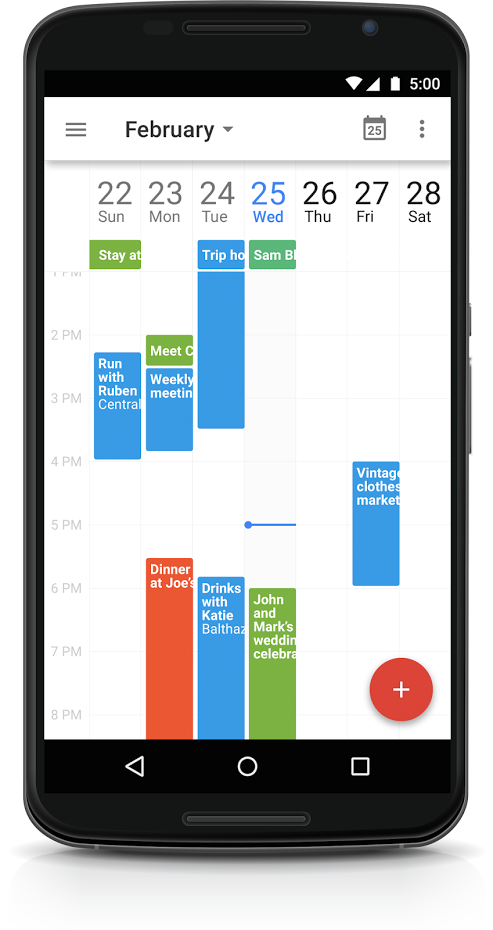
Image Source: Android Authority

“We really need to have a conversation about this.”

“I really wish I was spending more time with my family.”

“Hey, it was great to run into you! Let’s meet for coffee some time soon.”

They’re all touching expressions of interest, and they’re often heartfelt. But they simply don’t materialize.

Days pass into weeks, and weeks pass into months. Old patterns resume. And like a receding fog, hopes and wishes slip away into the oblivion of time.

You know what they say — the road to hell is paved with good intentions. And when it comes to relationships that matter, wishes are usually not enough.

The good news? Your calendar just may be the solution.

5 Calendar Tips and Strategies to Consider

Okay, so up to this point you’ve largely ignored the calendars in your phone. You’ve added a few birthdays, and maybe your cousin’s wedding.

But you’ve never really used your calendar to actually do life.

Here’s where I would start.

1. Share your calendar with your partner.

“Google Calendar saved our marriage,” my friend Julia once told me. And I completely get it.

It’s never fun to be surprised by your partner’s activities or obligations during the week, which is why Kristine and I share Google calendars. We also make it a point to sit down together every weekend to talk through the week ahead.

I’ve even taken the additional step of turning on email notifications on for my wife’s calendar, which produces an email notification every time she adds or changes an event. Some might curse the number of emails that generates, but that’s how much I value the life synchronization.

You’re planning on meeting your girlfriends on Sunday? Got it. I’ll need to pick up the boys on Wednesday night? No problem. We’ve got a family celebration across town all Saturday afternoon? Cool.

Just don’t tell me these things at the last minute. That’s all I ask.

I believe most of marital harmony is really just communication about expectations. Seriously.

So eliminate surprises. Communicate often, share your calendars, and get in sync.

2. Actually respect your scheduled events.

When I was first warming up to my Google Calendar, I’d pencil in my good intentions — only to ignore them or push them quickly aside if something better came along.

Don’t do that. Instead, be intentional. If it’s an important ritual or practice, pencil it in and try hard to respect it.

If it’s not important, or you find yourself ignoring an event repeatedly, have that real conversation with yourself about whether the relationship is actually something that you want to invest in.

3. Share the event with the people involved.

There are a ton of reasons to do this. For one, it serves as information central regarding time and location, avoiding the plethora of “Hey, what time are we meeting?” texts.

Everyone can check the event, and because it’s a living document, everyone sees the same info in real time.

Not only that, Google Calendar gives you the option of sending an additional notification every time an event is modified. New restaurant location? Send the notice with a click.

Another reason to share the event with the people involved is that everyone can see everyone else’s attendance status. Wondering who’s coming? The event makes it pretty clear.

4. RSVP.

On that last note … actually RSVP.

When sharing an event with others, I try to keep my own attendance intentions as clear and current as possible.

Let’s say that my friend declines our weekly run — regularly scheduled for this evening. When he goes to the effort of declining the (shared) event on his calendar, I don’t have to wonder about his status or try to find his last text message. It’s right there on the event. He’s not going.

5. Email directly from the event.

Another reason to share the event with the people involved is the ability to email people directly from the event. Thinking about making a change to an event three months away?

An email sent directly from the event gives all parties quick and direct access to the event info. No back and forth required.

Weekly Commitments: for the People Who Matter Most

For the relationships and rituals that matter most, make sure they’re happening at least once a week. I find that weekly meetings and routines offer a rhythm steady enough to keep these relationships vibrant and strong.

It’s easy to set these events in motion. Just pencil the slot into your Google Calendar and set it to repeat weekly. Be thoughtful about the time window and avoid designating it as an all-day event if possible. Add notes, comments, location, and relevant links or Docs.

One example of a weekly commitment I’ve made is reading to my two stepsons at bedtime. I read for about twenty minutes with each boy on Tuesday evenings.

My friend Steve reads to his girls virtually every night. That’s amazing, but I’m not out to match him. I have to do what works for our family and my schedule. And weekly works.

Weekly bedtime readings give us a frequency that is memorable, meaningful, and allows us to follow the plot from week to week. It’s something we all look forward to.

Here are other weekly commitments on my calendar that strengthen important relationships:

  • Monday evenings: family board game night (about 30 minutes after dinner)
  • Tuesday evenings: bedtime readings with the boys
  • Wednesday mornings: weekly run on treadmill
  • Thursday evenings: small group meetings
  • Friday evenings: Friday Family Fun Nights
  • Saturday mornings: family walk to Starbucks
  • Saturday evenings: Date Night
  • Sunday mornings: church with the family

Because these are all penciled in permanently, deviations are rare and we can be pretty intentional about making them happen. When we’re asked if we’re available during these times, that’s usually a short conversation. NO.

I won’t pretend to follow these routines perfectly, because I don’t. But having them on shared calendars is a pretty big step towards consistency.

Monthly Commitments: Checking In

There are other relationships that are important, but it’s simply not practical to maintain them every single week. For some of those, I set auto-repeating monthly meetings.

Some examples of monthly meetings that auto-repeat in my Google Calendar:

  • phone call with an out-of-town brother
  • evening meeting with three teacher friends
  • Pop & Boys Night — an agenda-driven heart-to-heart update-on-life conversation with my stepsons, including “How can I be a better parent?”
  • conference call with my Dad and three brothers
  • Saturday morning breakfast with an uncle and cousin in another city

By setting these events to auto-repeat for the same day of each month, I keep these relationships on the radar and add some intentionality that could otherwise be lost to the distractions of life.

Your Calendar Can Strengthen Your Relationships

Sometimes it’s a relationship you’d like to cultivate. Other times, it’s a critical decision kind of conversation that you need to have with your partner (before the mental fog of sleep).

Whatever it is, your calendar can help. Make the decision to leverage the tool well, and you’ll experience the benefits of a structured, intentional life.

Because if it’s a relationship that matters, it won’t grow by itself.

You have to make the time for it.

three man sitting on gray surface
Photo Credit: Toa Heftiba on Unsplash

Categories
Communication Smartphones Technology

Living in the Moment with my Phone

Smartphones are amazing. And alarming. They allow us to do so much, yet limit how much we can do. Since the appearance of the first iPhone in 2007, we’ve experienced a cultural shift the size and speed of which rivals anything in recorded history.

In the space of a few years, these shiny little computers have become ubiquitous across the culture. As recently as the year 2000 they were nonexistent. In 2010 they were a novelty. By 2020 there will be virtually no productive adults in society without one.

Of course this current state of being has been oft-repeated and much discussed over the last decade. It’s a conversation not about to go away any time soon. I won’t belabour the point by listing the endless conveniences offered or distractions created by these devices. You’ve heard it all before.

With this massive cultural shift comes questions around norms. How do phones change the rules of social behaviour? It seems every other person has strong opinions in this area. You’ve heard many of them: no phones at the dinner table, don’t acknowledge your phone in the middle of a face-to-face conversation, don’t break up by text message. These three particular examples enjoy broad social consensus because they appear to place higher value on actual human interactions over virtual ones. A good thing, to be sure.

I guess the suggested norms that I’m most resistant to argue that the mere presence of a phone is enough to degrade so-called “real life” experiences. You’ve heard these suggestions, too: writing with a pen on paper is more intimate than typing on a device, reading paper versions of religious texts is more meaningful than reading those same texts on a screen, walking on a beach at sunset is more wonderful without the option of snapping a picture.

In the age of organic, phones are GMO.

This is the religious orthodoxy of what I will call the school of real-life purism. These self-appointed defenders of real life are often – although not always – Luddite in their attitudes to technology in general. Nature good, technology bad. Pen good, keyboard bad. Conversations good, FaceTime bad. And so on. These critics feign a sort of low-key, casual ignorance around technology, but press them enough and you’ll unearth a strongly held distaste for devices of any kind.

For the most orthodox of the screen-free variety, it boils down to this: technology is stealing away our very lives. It’s tearing at the fabric of our human existence. In somber tones they lament the day when missing an exit on a freeway in a strange place might cost a stop at a gas station to ask for directions. Look what Google Maps has cost us in human interactions, they protest. They’ll shake their heads at all the transit passengers with music in their ears, mourning all those lost conversations between strangers. They’ll decry the death of the newspaper, assuming that journalism is disappearing instead of evolving.

Some of these arguments have a small seed of validity, just enough of a semblance of truth to make us feel guilty about our use of devices. But it’s easy to romanticize and overstate the qualities of life before smartphones. I remember well the transit norms of yesteryear, and they didn’t include an expectation to strike up conversations with strangers on the bus. No, Grandpa didn’t start the day with his head buried in a screen. But he sure liked his morning newspaper. Contrary to what you might think, recent studies show that modern dads spend more quality one-on-one interaction time with their children than the dads of 50 years ago. It seems technology hasn’t destroyed us just yet.

One of my favourite points of contention with the most orthodox of these real life purists is their supposition that to be fully present in a moment demands the phone be put away. (Thankfully my wife isn’t one of them.) I love photography. I enjoy the thrill of the capture. And I like seeing the captures of others. And so when I’m on a paddleboard at sunset, when I’m biking the seawall, or when I’m hiking a mountain, you’d better believe I’ll have my phone with me.

Does that mean I’m somehow less present in the experience? I think not. In fact, I like to argue that my loves of photography and Instagram makes me more observant, more curious, more easily delighted by the small details of everyday life.

My personal rationale is simple: I use technology to amplify experiences. I use technology to document them. To comment on them. To organize them, share them, and recall them conveniently. Ask a no-device purist what they did in March of 2012 or August of 2014. If they’re human, that mental recall might be tricky. But without checking to be sure, I know my chain of daily photos will tell me exactly where I was, what I was doing, and what was interesting during those months. My digital footprint is recording the story of my life.

No, I’m not advocating for a mindless embrace of all things digital and shiny. Clearly we need to defend human relationships where they are threatened by digital activities. We need to discriminate in terms of our application of screens. We need to be mindful of how our devices shape our time and money expenditures. We need to focus on applying technology in ways that solve problems, create beauty, and build relationships.

But let’s not make the false distinction between technology and so-called “real life.” Let’s not treat technology as more powerful than the medium that it is. The humans are still in charge, and it’s still entirely possible to be fully present, to fully experience relationships, to remain fully alive in the Digital Age.

Categories
Communication Connect Time Marriage

Start a Weekly Connect Time

In Our Top Ten Marriage Hacks, I mentioned the importance of setting aside some time for a weekly meeting with your marriage partner. Getting on the same page with calendars, money, decisions, and vision for the future doesn’t always happen by accident. It takes intentional planning.

Based on our current lives, Sunday nights after the kids are in bed tend to be the best times to make Connect Time materialize. It might be another day or time for you, but let me encourage you to give this Connect Time agenda a try. It’s not sexy or fun, and you’ll never feel like doing it when it’s 9:00 p.m. and you’re feeling tired. But just like going to the gym, it’s a decision that you never regret.

Here it is: our weekly Connect Time agenda.

1. Financial Review.

We look at the balance of every one of our accounts and carefully update our current spending in every budget category for the month. Do we need to rein things in on restaurants? Can we afford any more clothes this month? How will we pay for the trip to the Island in a few weeks? Are we hitting our savings or debt reduction goals? There’s no way to overstate the value of being on the same financial page.

2. Preview the Week.

She’s going out with her sister on Tuesday night. I’m picking up the boys on Friday. The boys have a band concert on Thursday. When you leave all this stuff ’til the day of, it inevitably creates frustration. Once you figure out that differing expectations are one of the chief sources of stress in marriage, you’ll see the value of syncing calendars (for us, this means sharing our Google Calendars) and having this weekly discussion. Just like money, time is a commodity that must be managed with care for the other.

3. Plan Friday Family Nights.

Actually sitting down to set this in motion in advance a) raises anticipation for the family and b) improves the quality of the activity. One of our best Friday Family Nights this year was when I set up a game of Sardines – just the way I used to play it back in my old youth group days. I talked up the game all week but refused to tell the boys exactly what it was. Once Friday night rolled around and we actually played Sardines, the boys ate it up. It was a memorable night.

4. Plan the next Saturday Date Night.

Thanks to some amazing grandparents who take our kiddos for a weekly sleepover on Saturdays, we usually have a designated date night. As with Family Nights, advance planning tends to produce better outcomes here.

5. Plan the Next Double Date.

Let’s face it: most couples have full calendars. Texting “You guys up for something tonight?” to friends at the last minute doesn’t usually produce what you might hope. Our best double date so far this year was planned over a month in advance. Make the investments you need to in order to nurture supportive relationships outside of the marriage.

6. Discuss Relevant Items.

Whether it’s reviewing the family policy on sleepovers, revising the boys’ screen time, or considering a major purchase, we discuss everything else that matters to us here. We keep a live agenda in a Google Doc that we can both contribute to throughout the week. That way, issues that are worthy of thoughtful discussion don’t get continually ignored or pushed to the periphery by the business of life.

7. Prayer Time.

My wife and I share a faith in Jesus. Although this won’t apply to everyone, praying together is an opportunity to surrender issues to God, seek his leading, and get on the same spiritual page. It’s powerful and rewarding.

There you have it – our weekly Connect Time Agenda. If you found any of this helpful or objectionable, I’d love to hear about it. Please comment below.