Categories
Goal Setting Goals

Aiming to Run 1,000 Kilometers, and Other Goals for 2025

My weekends already look quite different than they did in 2024.

One of my favorite things about the Christmas holiday season is the opportunity to reflect. To take stock of my life. To zoom out and re-imagine things.

Where am I succeeding?

Where am I growing?

Where do I need to realign my investments of time and energy?

An annual tradition that anchors me

An important part of this annual reflection is a goal-setting session that my dad and three brothers complete together. It usually takes us 3–4 hours to discuss each domain of life, and because we love and trust each other, we get pretty real.

This year was our twelfth annual meeting of the minds, and as always, I’m fired up for more growth in 2025.

One of the most significant changes I’ll be making in 2025 is to hit pause on weekly livestream interviews with educators. I’ve thoroughly enjoyed this hobby, but it’s taken 7–8 hours a week (mostly weekends) to get through each step of the workflow involved.

It’s actually quite painful to hit pause on these episodes, because I enjoy the activity and weekly rhythm. But freeing up this time allows me the margin to create other forms of content that I’m passionate about, including this blog post.

Why share these goals publicly?

Fair question, and I know most of my acquaintances would be horrified by the idea of sharing their own personal goals on the web.

I’m posting them here for three main reasons:

  1. When we write them down, our goals become a little more real.
  2. The power of public accountability is REAL. People may ask me how I’m doing on these goals this year, and that awareness pushes me to stick with them.
  3. Even if I don’t reach every goal, I believe that aiming for a goal is better than playing it safe and not aiming at all. Some progress is better than none.

I’m not afraid of failure.

Here they are — my goals for 2025

Physical

  1. Run 1,000 km. This will be tracked automatically on Strava.
  2. Complete daily mini-workouts (push-ups, squats, curls, stretches) for 300/365 days.
  3. Check blood pressure numbers weekly (52 times) and push my averages below 130/80. My BP numbers have always been poor, but 2024 was especially worrying.
  4. End 2025 at 189 lbs. I ended 2024 at 195 lbs.
  5. Complete the Vancouver Sun Run (10 km) in under 53:48 (my 2024 time).
  6. Complete 10+ chin-ups in one set by end of year.
  7. Bench press 135 lbs. x 20 reps (recorded PB is x 12 reps) by end of year.

Financial

  1. Invest in S&P 500 ETFs within my TFSA. Single stock-picking has been fun for the last few years, but my results haven’t kept up with the S&P. When it comes to investing, boring often wins over the long haul. It’s time to get more boring.
  2. Earn $240+ from blog posts on Medium.
  3. Earn $1,200 from AdSense on my YouTube channel for teachers. To get there, I’ll need to publish more tech tutorial content — that’s what teachers around the world find most helpful.
  4. Give successively more to charitable organizations each month than the month before. This is a trend that my wife and I have followed since marriage in 2015 and we would like it to continue indefinitely.
  5. Give spontaneously to family, friends, or those in need once a month. This often takes the form of treating another couple to a meal, but it can take other forms as well.

Marital

  1. Continue to connect with my wife on Friday Family Fun nights, Saturday date nights, and Sunday afternoons. She needs lots of quality time together and I am grateful that she doesn’t ever seem to get sick of Tim Time.
  2. Create some new travel memories together in July — location still to be determined.

Parental

  1. Connect with our younger son (he lives at home with us, but the three of us have different schedules) over a meal at least once per week.
  2. Continue to match him dollar-for-dollar on his university tuition. His mother and I share finances, so this is a shared goal.

Professional

  1. Improve my contributions to my elementary team, students, and parent community. I’m happy with my current mix of teaching and administrative duties.
  2. Support my still-to-be-hired new principal (my seventh principal in nine years) this fall.
  3. Obtain my BCCT certification. I’m currently certified to teach at all schools in Manitoba, but only independent schools in BC.
  4. Publish 50 blog posts (and matching vlog posts) about my education practice.
  5. Increase my proficiency with AI-for-teachers tools. This one is difficult to quantify, but let’s say that by year’s end I want to be leveraging AI tools in my work more than once per day.

Self-Improvement

  1. Complete daily goal tracking consistently (as in: charting my progress virtually every day) using the Strides app.
  2. Finish 12 books. I read almost every night, but I hop around a lot, so the word ‘finishing’ is important here. If you’re a reader, I’d love to connect with you on Goodreads.
  3. Publish 26+ personal interest blog posts (and matching vlog posts) like this one.
  4. Complete 24+ bedtime journal entries.
  5. Complete 24+ morning reflection and prayer journal entries. These are profoundly centering and give me great peace when I actually do them
  6. Complete 6 BC hikes and 6 paddleboard trips in the summer.
  7. Publish 12 long-form videos on each of my Vancouver reviews channel (in 2024 I published 2), travel channel (in 2024 I published 3), and my hiking and paddleboarding channel (in 2024 I published 10). The long-term goal here is to have 4–5 monetized YouTube channels by the time I retire from teaching.

Social/Relational

  1. Meet weekly with other couples from our church community to share life, learning, and friendships together. This is a life-giving practice for me and my wife.
  2. Organize and attend 10+ monthly father-son Zooms (we live in different parts of the country).
  3. Complete a first-ever camping and hiking trip with my brothers and some of their children in August. I’m dreaming of an overnight trip to Landslide Lake on Vancouver Island.
  4. Meet six times with three other male teacher friends in my area. We aim for monthly get-togethers, but about half of our meetings get knocked out by life.

Final thoughts

There you have them — most of my goals for 2025. They’re as specific, measurable, achievable, relevant, and timelined as I can make them.

What do you have in mind for this year? Whatever your goals, make sure they are quantifiable.

And if you DO make yours public, tag me below and share a link to your work. I’d love to check them out and cheer you on.

Let’s GO.

Standing near the peak of Brunswick Mountain in Lions Bay, BC

Categories
Content Creation Education Entrepreneurship Growth Mindset Podcasts

7 Things I’ve Learned from Podcasting

photo-1485579149621-3123dd979885
Photo Credit: Matt Bosford

I published my first podcast episode in March of 2018. It was a rocky beginning, but it followed months of dreaming, thinking, and deliberation. I was finally taking action, and it was an exciting start.

I’ve published new episodes every week since. In some ways it’s been more of a challenging experience than I would have ever imagined. But I’m learning, improving my craft, and enjoying the process.

Why start a podcast based on interviews with educators?

One reason I began the podcast was to address what I saw as a hole in the education podcast space. There are many education podcasts currently available, but few that I found personally stimulating. I just wasn’t finding many real stories of real educators working in the trenches, partnering with their students, sharing the ecstasy of victories and learning from the agony of defeats. These stories were hard to find, and they weren’t being told in compelling ways.

I was also interested to find out what other educators are reading, listening to, connecting with, and depending on in their classrooms. What voices and resources are inspiring great practice? I continue to believe that I can bring these stories and testimonials to the education world in a way that will invigorate educators and lead to improved learning outcomes.

K-12 education is at an incredible place right now. Within the last decade, professional learning and networking has absolutely exploded, thanks largely to social media platforms like Twitter and Instagram. Today’s teachers, administrators, and influencers now have incredible opportunities to plug into rich, real-time pipelines of best practices, ideas, and exemplars from schools across North America and around the world. I’m energized by the idea that I might be able to play a useful role in building these networks of learning.

Another reason that I began the podcast was the powerful motivation I took from entrepreneurship thought leaders like Gary Vaynerchuk, John Lee Dumas, and Pat Flynn. Months of listening to these three voices in particular (and several other great podcasts) convinced me of two foundational ideas.

  • It is still possible to create content of value and significance. It’s easy to feel that in the the din of noise and distraction we hear and see online, there’s no opportunity or reason to add your voice. But the truth is that we all have content to offer, content that can add value to the marketplace of ideas.
  • Audio is about to get a lot, lot bigger. Although podcasts have been around for about 15 years, they’ve only started to go mainstream in the last five or so. In addition, the confluence of smart home devices (Google Home, Amazon Echo), rapid improvements in voice-to-text smartphone technology (Siri, Bixby, Cortana), and a societal shift toward on-demand infotainment (Netflix, YouTube) are all pointing to exponential growth in podcasting and audio publications in the very near future. It’s a good time to get in.

What I knew at the start

I didn’t know much about podcasting in the beginning. My primary resource was the hundreds of hours I’d spent listening to podcasts over the last ten years. I knew what I liked, what worked well, and what didn’t. I also watched a few how-to tutorials on YouTube to get a sense of what went into good interviewing and podcasting.

I had recently heard of a new app called Anchor. Anchor is a free podcasting platform that allows you to record and publish audio content in a matter of minutes. Unbelievably, Anchor also distributes your content across most podcast distribution platforms, including iTunes — all for free. Anchor looked like a good place to begin my audio publishing career.

One thing I didn’t have was a lot of expensive equipment. I had an iPhone 8 with earbuds, a Surface Pro computer with Adobe Audition, and a low-end microphone called a Blue Snowball. That was it.

I could have waited around before launching to gain more proficiency and acquire more knowledge and better resources. But I was keenly aware that many creators never actually create because they get caught in overthinking the process. Paralysis by analysis. And so I decided to just do this thing and learn as I went.

7 things I’ve learned from podcasting

  1. Embrace failures. Right from my very first episode, I’ve experienced more technical problems and glitches than I would have thought possible. At times, the Anchor app has crashed mid-interview, requiring me to reconnect with guests and ask them to repeat their last comments. Another phone-to-phone recording service has rendered in poor quality, and a laptop-to-laptop recording service has delivered inconsistent results as well. Every crash and recording glitch is discouraging and tempts me to pack it all in. But instead of quitting, I’ve learned to double down and stay the course.
  2. Always learn the craft. When I began this journey, I didn’t know the first thing about Adobe Audition — audio software I’d long owned but never used. The controls seemed overwhelming, and I wasn’t even sure how to import my audio — let alone edit it. But little by little, I’m learning and improving. By trial, error, and YouTube tutorials, I’m gaining confidence and expertise every time I edit an episode. Although the challenges don’t always feel good in the moment, it’s gratifying to look back and see how far I’ve come.
  3. Forgive yourself quickly. I’ve learned that after virtually every single interview, I’m going to have regrets. Why did I say that? Why didn’t I ask the guest this question? Why did I laugh so awkwardly? And on and on it goes. It’s important to recognize that regret and self-doubt can paralyze if we allow them to. I have to force myself to try to take something from my mistakes, shake them off, and move forward.
  4. Twitter is incredibly powerful. Professionals of any sort stand to benefit enormously from plugging into a vibrant professional learning network, and to that end, Twitter is king. In my first eleven months on Twitter as @TeachersOnFire, I connected with over 1,100 educators across the United States, Canada, Asia, and elsewhere. Many of my interviews have come from those connections. And I’m just getting started.
  5. Be content with incremental growth. Even though I get more listens and subscriptions to my podcast each week, growth is slow. I’ve learned not to expect the hockey stick curve and exponential growth rates that I experienced with my very first posts on Medium. And that’s okay. As long as growth continues, that means my ceiling is still an unknown quantity. And that’s motivation enough.
  6. People are generous. I’ve been amazed by the willingness of other education professionals to partner with me to prepare for and give a great interview. My requests are almost never declined — all it takes is an honest, humble, and respectful ask. Part of that might be a credit to the network-ability of the education community, but I suspect it’s also a function of human nature. You’ve just got to put yourself out there and ask.
  7. Real people and real stories make the best content. At the outset of the podcast, I had to choose between formats: monologue, interview, or a mix of both. It turns out that the interview format takes more work pre and post-production than one might think, but the content is exceptional. Guests offer a rich variety of experiences, perspectives, and suggestions — far more than I could possibly conjure up on my own. Best of all, every interview stimulates my own thinking and takes my learning in new directions. I’m directly benefiting from the process.

Podcasting hasn’t been all fun. Between contacting potential interviewees, scheduling and conducting interviews, editing audio, writing show notes, publishing, and promoting, each episode adds at least six hours a week for this little passion project — no small sacrifice.

But podcasting has been a fantastically positive journey. Every new episode and guest represents new things learned and a new relationship formed. I’m offering value to the education community and improving my own practice. Last but not least, I’m putting myself in uncomfortable spaces that force me to grow as a person.

And that’s reason enough to continue.

Categories
Education Growth Mindset Lifelong Learners Mindset

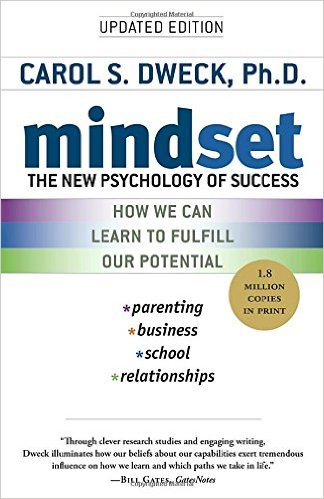
29 Essential Quotes from Mindset: The New Psychology of Success

Mindset is one of those books that has the power to powerfully change all of your most important beliefs and perspectives: the way you view yourself, others, and what is possible. Although the concepts around growth mindset are especially relevant to educators, we are called to be learners and we all have the potential to grow. This book has permanently changed the way I view myself and I believe it might do the same for you. I definitely recommend it.

From the 2016 updated edition, here are (what I believe are) the 29 most significant highlights from Carol Dweck’s Mindset: The New Psychology of Success.

  1. “The view you adopt for yourself profoundly affects the way you live your life.” (p.6)
  2. “This growth mindset is based on the belief that your basic qualities are things you can cultivate through your efforts, your strategies, and help from others. Although people may differ in every which way – in their initial talents and aptitudes, interests, or temperaments – everyone can change and grow through application and experience.” (p.7)
  3. “You can see how the belief that cherished qualities can be developed creates a passion for learning. Why waste time proving over and over how great you are, when you could be getting better? Why hide deficiencies instead of overcoming them? Why look for friends or partners who will just shore up your self-esteem instead of ones who will also challenge you to grow? And why seek out the tried and true, instead of experiences that will stretch you? The passion for stretching yourself and sticking to it, even (or especially) when it’s not going well, is the hallmark of the growth mindset. This is the mindset that allows people to thrive during some of the most challenging times in their lives.” (p.7)
  4. “In one world, effort is a bad thing. It, like failure, means you’re not smart or talented. If you were, you wouldn’t need effort. In the other world, effort is what makes you smart or talented.” (p.16)
  5. “People in a growth mindset don’t just seek challenge, they thrive on it. The bigger the challenge, the more they stretch.” (p.21)
  6. “When do people with the fixed mindset thrive? When things are safely within their grasp. If things get too challenging – when they’re not feeling smart or talented – they lose interest.” (p.22)
  7. “In the growth mindset, it’s almost inconceivable to want something badly, to think you have a chance to achieve it, and then do nothing about it.” (p.44)
  8. “You can look back and say, “I could have been …,” polishing your unused endowments like trophies. Or you can look back and say, “I gave my all for the things I valued.” Think about what you want to look back and say. Then choose your mindset.
  9. “… even when you think you’re not good at something, you can still plunge into it wholeheartedly and stick to it. Actually, sometimes you plunge into something because you’re not good at it. This is a wonderful feature of the growth mindset. You don’t have to think you’re already great at something to want to do it and to enjoy doing it.” (p.53)
  10. “People are all born with a love of learning, but the fixed mindset can undo it. Think of a time when you were enjoying something – doing a crossword puzzle, playing a sport, learning a new dance. Then it became hard and you wanted out. Maybe you suddenly felt tired, dizzy, bored, or hungry. Next time this happens, don’t fool yourself. It’s the fixed mindset. Put yourself in a growth mindset. Picture your brain forming new connections as you meet the challenge and learn. Keep on going.” (p.53)
  11. “The students with growth mindset completely took charge of their learning and motivation. Instead of plunging into unthinking memorization of the course material, they said: “I looked for themes and underlying principles across lectures,” and “I went over mistakes until I was certain I understood them.” They were studying to learn, not just to ace the test. And, actually, this was why they got higher grades – not because they were smarter or had a better background in science.” (p.61)
  12. “Just because some people can do something with little or no training, it doesn’t mean that others can’t do it (and sometimes do it even better) with training. This is so important, because many, many people with the fixed mindset think that someone’s early performance tells you all you need to know about their talent and their future.” (p.70)
  13. “Do you label your kids? This one is the artist and that one is the scientist. Next time, remember that you’re not helping them – even though you may be praising them … Find a growth-mindset way to compliment them.” (p.81)
  14. “Those with the growth mindset found setbacks motivating. They’re informative. They’re a wake-up call.” (p.99)
  15. “If the wrong kinds of praise lead kids down the path of entitlement, dependence, and fragility, maybe the right kinds of praise can lead them down the path of hard work and greater hardiness.” (p.137)
  16. “Parents think they can hand children permanent confidence – like a gift – by praising their brains and talent. It doesn’t work, and in fact has the opposite effect. It makes children doubt themselves as soon as anything is hard or anything goes wrong. If parents want to give their children a gift, the best thing they can do is to teach their children to love challenges, be intrigued by mistakes, enjoy effort, seek new strategies, and keep on learning. That way, their children don’t have to be slaves of praise. They will have a lifelong way to build and repair their own confidence.” (p.179-180)
  17. “One more thing about praise. When we say to children, “Wow, you did that so quickly!” or “Look, you didn’t make any mistakes!” what messages are we sending? We are telling them that what we prize are speed and perfection. Speed and perfection are the enemy of difficult learning: “If you think I’m smart when I’m fast and perfect, I’d better not take on anything challenging.” (p.182)
  18. “Many educators think that lowering their standards will give students success experiences, boost their self-esteem, and raise their achievement. It comes from the same philosophy as the overpraising of students’ intelligence. Well, it doesn’t work. Lowering standards just leads to poorly educated students who feel entitled to easy work and lavish praise.” (p.196)
  19. “The great teachers believe in the growth of the intellect and talent, and they are fascinated with the process of learning.” (p.197)
  20. “Great teachers set high standards for all their students, not just the ones who are already achieving.” (p.200)
  21. “When students don’t know how to do something and others do, the gap seems unbridgeable. Some educators try to reassure their students that they’re fine just as they are. Growth-minded teachers tell students the truth and then give them the tools to close the gap.” (p.203)
  22. “So, are great teachers born or made? … It starts with the growth mindset – about yourself and about children. Not just lip service to the idea that all children can learn, but a deep desire to reach in and ignite the mind of every child.” (p.205)
  23. “A growth mindset is about believing people can develop their abilities. It’s that simple.” (p.215)
  24. “Let’s be totally clear here. We as educators must take seriously our responsibility to create growth-mindset-friendly environments – where kids feel safe from judgment, where they understand that we believe in their potential to grow, and where they know that we are totally dedicated to collaborating with them on their learning. We are in the business of helping kids thrive, not finding reasons why they can’t.” (p.217)
  25. “It’s the parents who respond to their children’s setbacks with interest and treat them as opportunities for learning who are transmitting a growth mindset to their children. These parents think setbacks are good things that should be embraced, and that setbacks should be used as a platform for learning.” (p.219)
  26. “People with a growth mindset are also constantly monitoring what’s going on, but their internal monologue is not about judging themselves and others in this way. Certainly they’re sensitive to positive and negative information, but they’re attuned to its implications for learning and constructive action: What can I learn from this? How can I improve? How can I help my partner do this better?” (p.225)
  27. “Maggie’s internal monologue used to say: Don’t do it. Don’t take a writing class. Don’t share your writing with others. It’s not worth the risk. Your dream could be destroyed. Protect it.” (p.227)
  28. “Instead of being held captive by some intimidating fantasy about the Great Writer, the Great Athlete, or the Great Genius, the growth mindset gave them the courage to embrace their own goals and dreams. And more important, it gave them a way to work toward making them real.” (p.228)
  29. “Mindset change is not about picking up a few pointers here and there. It’s about seeing things in a new way. When people – couples, coaches and athletes, managers and workers, parents and children, teachers and students – change to a growth mindset, they change from a judge-and-be-judged framework to a learn-and-help-learn framework. Their commitment is to growth, and growth takes plenty of time, effort, and mutual support to achieve and maintain.” (p.254)

51FexyX8WQL._SX322_BO1,204,203,200_