Categories
Family Finances Legacy Real Estate

When it Comes to Real Estate, Baby Boomers Can Be Game-Changers

Formidable real estate markets position parents to help their children at little to no cost.

EnterPhoto by Breno Assis on Unsplash

My Story

My parents have always been careful stewards of resources, and it allowed them to do something incredibly important in my life.

In 2006, they gave me a financial gift — one in the low five-figure range — as a down payment on a house. I was 27 at the time.

The house was not great. It was over 100 years old and situated in a run-down neighborhood. Regular drug transactions took place in the back alley.

But it was a house. And my name was on the title.

In 2015, after a move to the west coast, a refinanced mortgage, a failed marriage, nine years of semi-successful long-distance landlording, and a recent wedding, I finally sold the home.

Once the dust had settled and I paid all related expenses, the sale netted me and my bride about $40,000. Not a huge profit, by any stretch.

But using this little chunk of change and an unsecured line of credit, we were able to squeeze our way into a detached home in suburbia.

At the outset, our equity position was awful — we actually owed more to lenders than the entire purchase price of the home. I break down those figures further in House Poor and Loving Life.

But the point is that we were in a home. We knew that with two steady incomes, we could begin the process of chipping away at our enormous mortgage while market appreciation did its work.

What this meant for us was that instead of spending the $2,000+/month that families our size spend to rent, my parents’ financial assistance was allowing us to actually build equity by paying down a mortgage instead. And in that sense, it put us on a completely different financial trajectory.

My Parents Made the Difference

What strikes me about my story is that my wife and I aren’t special. Both of us earn modest five-figure incomes, which puts us in the same company as most couples our age.

What separates our story from that of many couples is that 2006 gift from my parents. Again, we aren’t talking Donald Trump money here — we’re talking low five figures. But that act of assistance was an absolute game-changer in my life.

I’ll be grateful for it for as long as I live.

The Down Payment Savings Struggle is Real

Today, the reality for most middle-class millennials is that putting aside enough money for even a 5–10% down payment (plus associated purchasing costs) in today’s market is a daunting challenge. Even at a steady rate of $1,000/month or $12,000/year in savings, these couples are looking at consecutive years of disciplined saving in order to put even a small down payment together.

And let’s face it — with high rental prices, student loans, car payments, rising gas and grocery costs, the costs of raising children, etc. — most millennials and gen-x couples aren’t banking $1,000 month over month. Even with no-fluff, scorched earth budgets, those savings aren’t easy. To make matters worse, market prices are unpredictable and prone to sudden increases.

Some Parents May Not Realize Their Ability to Help

One person’s housing crisis is another person’s equity windfall. In markets that have experienced rapid appreciation, long-time homeowners enjoy the benefits.

Of course the tricky thing about market appreciation is that it doesn’t affect cash flow whatsoever. A $1M gain in property value doesn’t translate into any more money for groceries.

And it’s for that reason that I think many parents — and to be clear, I’m not thinking of my own parents or my in-laws here — simply don’t realize the incredible power to help that they hold.

They don’t feel rich. And in a practical, everyday kind of sense, they may not be.

But thanks to the equity in their properties, they have tremendous power to be game-changers.

The Power of a HELOC

HELOCs, or home equity lines of credit, mean that baby boomers can borrow large sums at low interest by using their own home as security.

Let’s take a fictional Bob, his wife Shirley, and their daughter Jenny as examples.

Bob and Shirley purchased a home in 1990 for $300,000. In the years since, they raised a daughter that they love very much. As little Jenny grew from toddler into young professional, Bob and Shirley used their modest incomes to pay their mortgage faithfully. Today, their mortgage principal is at $50,000.

Their home has appreciated well over the last decade. Though the numbers don’t make any sense to Bob and Shirley, the local tax assessment assigns their home a market value of $1.1M.

Bob and Shirley are sitting on over $1M in equity, but they definitely don’t feel very rich. As prices rise, they continue to spend frugally throughout the year in order to maintain a modest lifestyle and remain on a track of responsible savings and investment for retirement. These are wise and responsible goals.

What Bob and Shirley fail to see is the power of a home equity line of credit. They miss the fact that a bank would gladly lend them $30,000 at 4%, or just $1,200 in interest per year.

For just $100/month, they could give or lend $30,000 to their daughter, Jenny. And that $30k would be enough for Jenny to purchase a condo.

Not a grand place. But a toe in the market. A place to call her own.

Heck, Jenny could even pay the interest on her parents’ HELOC herself, meaning the loan wouldn’t cost Bob and Shirley anything at all. By the time she sells her first property to upgrade to her second, Jenny should net enough from the sale to pay her parents back in full.

Think about that for a second, because this is the point I’m trying hard to make.

For no cost at all, these parents could completely change the financial trajectory of their daughter’s life.

Don’t Hear Entitlement

This piece is a bold argument to make, and some will hear millennial or gen-x entitlement here (I fall into either generation category, depending on the source you go by).

Please don’t hear entitlement. I fully recognize that not every parent is in a position to do what my parents did for me. In my case, I’ll be forever and humbly grateful.

Far be it from me to tell any other person — of any age or status — how to manage their hard-earned money.

Instead, I write this piece out of a place of genuine care. Out of a genuine belief that there are families who could be multiplying their wealth generationally, but don’t understand how to do it.

I write out of the knowledge that there are professional couples out there whose parents are sitting on the means to absolutely transform the financial futures of their children at little to no cost at all. They just don’t realize it.

A Legacy Move

Of course the best part about my parents’ financial help is that one day, my wife and I will be able to help our boys out in the very same way. That makes me smile.

The help may not be a lot. And like the Jenny scenario I described above, it may be a loan instead of an outright gift.

But it will be enough to help them get into the market, something that will help not only them but their families as well.

The gift that my parents gave back in 2006 will continue to give for years and even decades to come. And that’s a powerful thought.

It makes their gift a legacy move. One that changed a family tree for generations to come.

When it comes to today’s real estate, baby boomers can be game-changers.

Categories
Career Content Creation Education Finances Goal Setting Productivity Self-Actualization

27 Goals for 2019

My targets are clear, quantified, and higher than ever.

Photo credit: @Alexanderredl

Last year I made the case for setting New Year’s goals and resolutions, explaining that most critiques or dismissals of goal-setting amount to a failure to recognize that goals must be measurable.

Putting it bluntly, if your goals aren’t quantifiable, they’re a waste of time. And yes, the cliches apply. Goals like “eating healthier” don’t make it past the second week of January. They’re meaningless because the success criteria isn’t clearly defined.

So with quantities in mind, I’m looking for big results this year. I’m hoping that by sharing these targets, you might be encouraged and inspired, too!

Here are my 2019 goals, by the numbers.

Physical

  • Work out at Anytime Fitness 156+ times.
  • Run a total of 156+ km. Now that I have a weekly running partner, this one might get blown out of the water. But years of inconsistency in this area make me cautious.
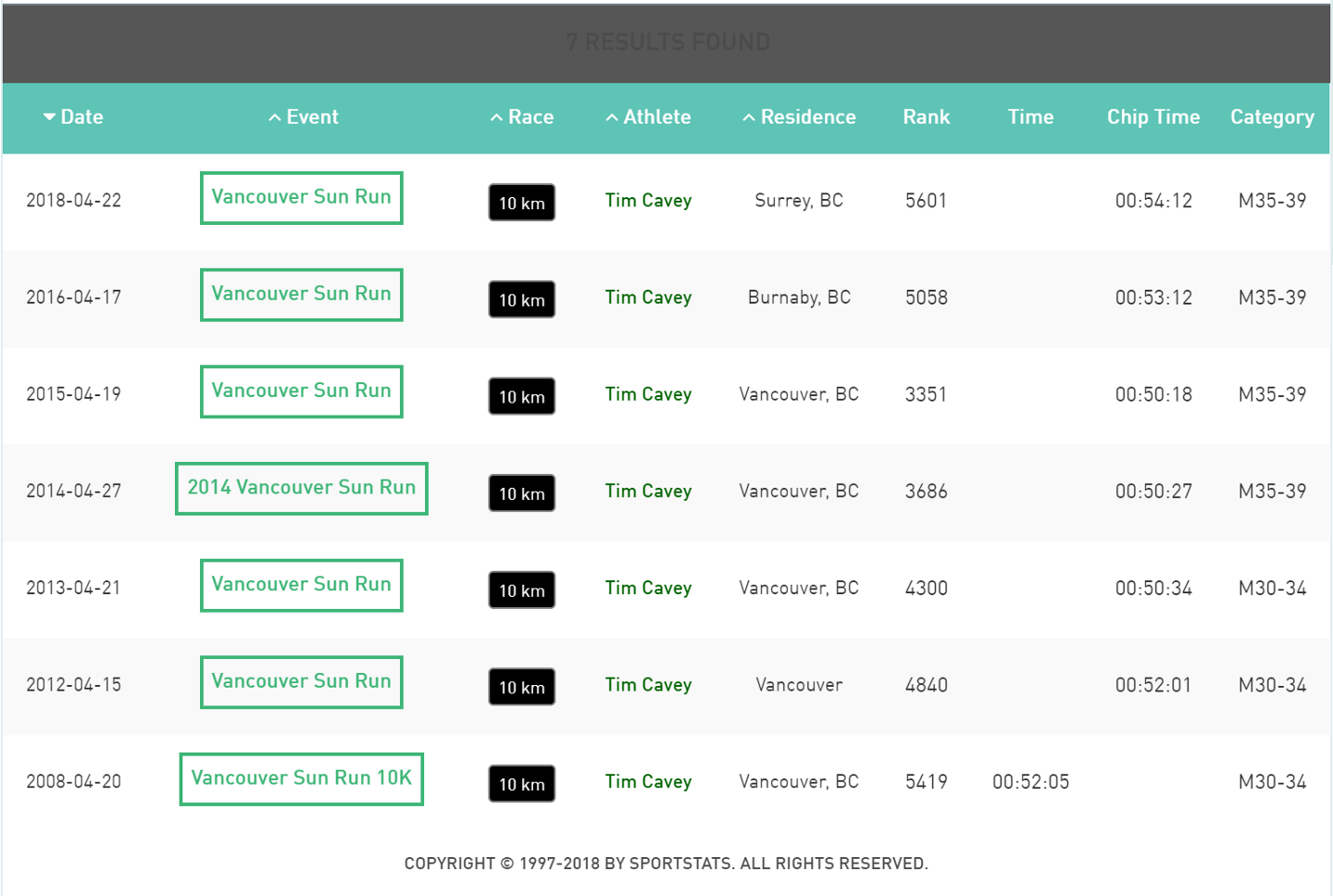
  • Run the 10 km (6.2 miles) Vancouver Sun Run in <50 minutes with 40,000 other runners. The under-50 time has been an elusive goal for the last decade. I was 0:19 away in 2015.
  • Complete 42 push-ups in one set.
  • Complete 15 reps of 135 pounds on the bench press.
  • Continue diet of no French fries, chips, or non-alcoholic sugary drinks.
  • Monitor and maintain optimal blood pressure averages for 2018.
  • End 2019 at 179 lbs (I’m currently 188).

Self-Improvement

  • Read 15 books on my Kindle. Connect with me on Goodreads to see what I’m reading!
  • Write 104+ blog posts.
  • Purge 1+ clothing item/week.
  • Complete 104+ bedtime journal entries (handwritten).
  • Complete 104+ morning reflection and prayer journal entries.

Financial

  • Pay off our HELOC (home equity line of credit) by an average of $500/month. This thing has been in existence since we purchased our home in 2015, and it’s time to make some serious progress.
  • Earn an average of $50/month or from Medium publishing and other online activities.
  • Give $5 more per month to charitable organizations. We currently donate above 10% of our net incomes but less than 10% of our gross. The plan right now is to continue increasing our giving by $5/month to continue nudging that upward. Ultimately this speaks to our intention to live more and more generously, holding on loosely to the resources we’ve been given.

Paternal

  • Read with the boys one night/week before bed.
  • Complete monthly stepdad-stepson date nights.
  • Enjoy 36+ Friday Family Fun Nights.

Professional

  • Complete M. Ed. degree.
  • Grow the Teachers on Fire podcast to 500+ downloads/episode.

Social/Relational

  • Organize 10+ monthly father-son conference calls (I’m speaking here of my own father and three brothers.)
  • Complete a third annual father-son summer camping trip with one of my brothers and his son.
  • Meet 10+ times with a close friend and goals accountability partner. We’ll be talking about this very list each month and updating our progress.

Marital

  • Complete 36 Connect Times with my wife. Connect Time is what we call weekend meetings where we sit down together to complete a thorough review of our current spending, financial picture, calendars, event planning, pressing decisions, other discussion items, and the health of our relationship. Connect Time is agenda-driven and methodical, but once we’re finished these meetings we feel in sync and settled.
  • Write 12 handwritten notes (1/month) to my wife. By no means should this be the sum total of my romance, but a friend suggested this one and I like it.
  • Make love regularly. We do have numerical goals here, but that’s TMI. Ha!

There you have it — my goals for 2019. Again, I’m posting them here partly to channel the power of public accountability, and partly to encourage and inspire you in your own goal-setting.

Photo by Pablo Heimplatz on Unsplash

It’s 2019, people. Don’t wait for life to happen to you — make the decision to happen to life!

Let’s do this.

Categories
Career Finances Goal Setting Investing Productivity

Financial Advice for My 21-Year-Old Sons

Boys, you’ve just entered your teens … but 21 is just around the corner. Learn from my mistakes to set yourself on an early path to financial freedom.

Photo by rawpixel on Unsplash

DON’T use credit cards to finance vacations “while I’m still young.”

Relax. The travel window isn’t about to close for you any time soon. Sure, my cross-continent trips with friends were fun at the time, but the multi-thousand dollar credit card debt to follow was miserable. No one sets out in life to pay Visa and MasterCard thousands of dollars in interest, but that’s exactly what you’re choosing to do when you rack up 5-figure credit card debt on a small salary. Renowned financial consultant Dave Ramsey calls this kind of behavior stupid tax.

DO save a little money each month.

Whether it’s $250 or $25/month, the decision to save consistently over time will literally pay dividends down the road. A quote attributed to Albert Einstein says “Compound interest is the eighth wonder of the world. He who understands it, earns it. He who doesn’t, pays it.” Choose to be an interest earner, not a slave. Tax-free interest savings plans like Roth IRAs (USA) or TFSAs (Canada) make the effect of interest earnings even more amazing.

The 1998 Chevrolet Cavalier Z24

DON’T borrow money to buy a vehicle.

Little did I know that when I borrowed $12,500 to buy a 3-year-old car, it would ultimately cost me thousands more in repairs and take me several years to pay off completely. Always remember: buying a car is the single largest purchase of a depreciating asset that most people will ever make. Instead of thinking about features, think about limiting the financial damage by spending within your means for a vehicle that’s reliable.

DO purchase real estate as soon as possible.

Just as car debt is financially damaging, the decision to buy your first piece of real estate will prove to be one of the most important financial moves of your life. Among a host of other benefits, mortgage payments are a form of forced savings that will only give you better options and opportunities as the years go by. Don’t try to tell yourself that you’ll rent on the cheap and put a ton of money into savings and investments. You won’t.

Quick story on this point. As I mentioned, I borrowed a large sum of money at 21 years of age to buy a used vehicle. Around the same time and at the same age, my friend Brent bought a home for $29,000. Yes, it was a small home in a bad area and a depressed market. But predictably, his house appreciated well in the few years that followed. I believe he sold his home for about $90,000 about three years later and rolled that equity into a larger $150,000 home in a nicer area of town.

So, consider our two trajectories during this approximate five year window. I probably paid close to $20,000 in car payments, interest, and repairs, and was left with little to show for it. In contrast, Brent likely put about $5,000 down on his home and paid up to $2,500/year in mortgage payments, for a total of $17,500 in on his house before selling.

Although my numbers can’t be precise, our decisions created these divergent results:

  • Me: loss of $20,000 + “gain” of an unreliable vehicle
  • Brent: gain of $70,000 + growing equity and appreciation in a $150,000 property

If the numbers aren’t making it clear, just go with this: Don’t borrow money to buy things with engines. Buy real estate instead.

Photo by rawpixel on Unsplash

DON’T automatically accept the first job offer that comes your way.

Filled with idealism and sentiment for my would-be employer, I accepted a teaching position almost immediately after graduating from university with a bachelor’s degree. Yes, I built meaningful friendships and gained valuable experience during the six years that followed, but the starting salary of $24,000 (before taxes and deductions) with limited opportunity for advancement was a bad return on a 4-year university program. After making poor money decisions in other areas, earning less than $450/week was simply not enough income to create any kind of financial momentum.

DO be selective and explore all of your income options.

In some respects, you may never again have as much vocational freedom as you will in your twenties, something perhaps more true in the gig economy of today than it’s ever been true in human history. Find work that is spiritually satisfying, intellectually challenging, and complements your set of abilities and interests. And yes, find work that compensates you appropriately and offers avenues for advancement. Whether you find this in corporate America or as an entrepreneur, seize the opportunity to avoid the prospect of a financial flatline.

Photo by Krists Luhaers on Unsplash

DON’T consume much entertainment.

Going to movies, watching professional sports, and playing video games were all fun distractions, but they add nothing of value to your life and leave no lasting legacy. I’ll never get back the hours I spent wandering around Blockbuster Video stores looking for movies to rent — never mind the hours I spent actually watching the movies! Instead, focus on leisure activities that grow your skill set, leave lasting impact, and develop your leadership.

DO create content consistently.

Consistent content creation over time has a way of building permanent momentum, income, and opportunities. Every successful artist and creator from the blogosphere, Twitter, Medium, Youtube, or Instagram once began with zero followers and subscribers. Even the simple decision to write an article like this one once a week from the age of 21 would have set me on a completely different trajectory, and it’s certain that my writing style would have developed far more by following this simple habit.

Consistent content creation will make you more reflective, develop your mind, build your creativity, broaden your horizons, expand your networks, and create opportunities that you never thought possible. Be a constant creator. Whether it’s through writing, music, photography, or how-to videos on YouTube, create and contribute things of beauty and utility as a way of life.

Photo by frank mckenna on Unsplash

In Summary

Your early twenties. Those years are such a fantastic opportunity to work hard and save cash for things like cars, weddings, and homes — not necessities, by any means, but building blocks for a functioning life that will become more significant in the years and decades ahead. Treated with care, these years can set you on a course that will have you thanking yourself for decades.

So boys, learn from my errors. Observe the stupid taxes I paid. And make smarter decisions than I did. You’ll thank yourself for the rest of your life!

Categories
Family Finances Lifestyle

Ending Our Love Affair with Restaurants

“If you will live like no one else, later you can live like no one else.” — Dave Ramsey

Image credit: https://medium.com/@pablomerchanm

The term “sacred cow” comes from the sad reality that in some countries — India in particular — famine and hunger can run rampant through communities where cows graze undisturbed. Since Hinduism teaches a reverence for cows as a symbol of life, many Indians refuse to kill them. No matter how badly hunger beckons or how seriously malnutrition ravages their villages, these walking sources of beef are considered non-options.

That’s what we’ve come to call it when an obvious solution is unreasonably avoided due to beliefs, preference, or pride.

A sacred cow.

Spenders and Savers

Financial expert and consultant Dave Ramsey teaches that people are generally spenders or savers by nature. Sure, just about everyone enjoys both activities to an extent. But most people derive a discernibly greater sense of pleasure from either watching wealth accrue or experiencing its benefits.

My wife and I are both spenders. I mean, we talk a good savings and investments game. But when it comes right down to it, our budget numbers tell the true story. We really, really like the experiences that money can provide.

And restaurants. Do we ever love restaurants. What follows is our restaurant spending for this year:

  • January: $451
  • February: $227
  • March: $628
  • April: $781
  • May: $941
  • June: $1,175
  • July: $1,570
  • August: $1,296
  • September: $734
  • October: $471
  • November: $468

Restaurants add up very quickly, as anyone with a family can attest. Just one date night and one family dinner out can easily total $150. Repeat that pattern four weeks in a row, and you’re at $600/month. Add more meals out to the mix and watch those numbers skyrocket, as they did for us this summer.

Here’s a sad fact. My wife and I both enjoy decent incomes, but we have literally no cash. Instead of a large bank account, what we have is a line of credit. And that’s unacceptable.

For the first eight months of this year, we actually budgeted $200/month for restaurants. That would be laughable if it wasn’t so sad. I mean, it’s ridiculous when you look at how much we actually spent in comparison.

Our Sacred Cow

Our extravagant restaurant spending is serious. It’s serious because it exposes some ugly realities.

For one, we’re living in cognitive dissonance. We’re repeatedly saying we want one outcome (to spend less than we earn) and will make choices to that end. Then we’re repeatedly going out and making different choices, month after month after month.

Diagnosing the Problem

Why does it happen? Because there are always good reasons and excuses to cheat. Because it turns out that self-control and delayed gratification have never been easy. Because on some level, we’re telling ourselves that the overspending just doesn’t matter, that we’re somehow entitled to it.

We’ve both had long days at work.

We need some date time together.

It’s for the family.

We deserve this.

Gazelle Intensity Required

Dave Ramsey knows all about spending denial. He’s seen thousands of individuals, couples, and families lose the fight to control their spending and dig out of debt because they just can’t seem to find the ruthless resolve required to win. In his bestselling book, The Total Money MakeoverDave calls this determination “gazelle intensity,” alluding to the sort of urgency you see from gazelles when they’re fleeing for their lives.

Photo credit: Art.com

With a lion on their heels, gazelles don’t fool around or get distracted. Their focus is laser clear, and there really is only one mission: escape.

“You can walk into debt, but you can’t walk out of it,” Dave Ramsey likes to remind his listeners.

No, we can’t walk out of debt. And changes to our spending won’t happen by themselves. When it comes to restaurant spending, there really is only one solution.

This year, it’s time to get real about restaurants.

It’s time to kill a sacred cow.


Categories
Family Home Real Estate

House Poor and Loving Life

We stretched to buy a home we could barely afford, and we wouldn’t change a thing.

My wife and I were married in the spring of 2015. After the wedding, I moved into the 3BR basement suite that she shared with her two boys at the time. We were insanely happy to start building this new chapter of life together, consumed by love, hopes, and dreams.

It was an interesting housing arrangement. The two floors over our heads were occupied by another family of four and my wife’s cousin. Vehicles numbered six, adults numbered five, children four. Because the five adults represented four different cultures, we affectionately called the place UN House. It was a fun experience, and our families shared some great memories together during the five months I lived there.

Almost immediately, however, my wife and I could see that this living situation would be challenging for our new family. Call it a first world problem, but sharing one bathroom between four people is frustrating even on the best of days. The suite was tight, the ceiling was low, rooms were dark, there were no views, and parts of the carpet smelled like cat urine. This wasn’t the dream, to put it bluntly.

Fresh out of our wedding, neither my wife or I had much in the way of savings. In fact, we had the opposite of savings — over $20,000 in debt on credit cards and an unsecured line of credit, plus $13,000 owing on one of our cars. What we did have was my old house in another city across the country. Already showing the signs of over a century of age, seven years of long-distance landlording had taken their toll on the place: my former home was in rough shape.

So it was that soon after getting married, I took a week away to clean up my old house as best I could and get it listed. With my parents pitching in to help, we repainted walls, set mouse traps, and installed new carpets. The house sold in mid-April for a disappointing figure, but at least it sold quickly. Minus the realtor’s commission and other associated costs, we pocketed around $60,000.

After paying off credit cards and my unsecured line of credit, we were left with about $40,000 in cash. For that sum, we were incredibly grateful. We were both acutely aware — and remain mindful — that many couples and singles our age are unable to set aside such an amount. Yet, when we looked at our Pacific Northwest housing market, our $40,000 looked pathetic.

So what were our options, exactly? We started having the housing discussion that so many couples have had, are having, or will have: to rent, how much to rent, to buy, or what to buy. It is primarily for couples and individuals in the throes of this same decision-making process that I want to share our experience.

Four Housing Options

Weeks of research in the spring of 2015 eventually produced the following cost estimates for four housing options:

  • Scenario 1: RENT for $1000/month — stay in our basement suite indefinitely ($950 rent + $50 utilities)
  • Scenario 2: RENT for $2150/month — start renting a small home or a larger portion of a home ($2000 rent + $150 utilities)
  • Scenario 3: BUY for $2750/month — a townhome of about 1,800 square feet, price tag around $450,000 ($2100 mortgage + $250 strata/HOA fees + $150 property taxes + $150 utilities + $100 home insurance)
  • Scenario 4: BUY for $2850/month — a large detached home with a basement suite, price tag of $700,000 ($3,100 mortgage + $300 property taxes + $250 utilities + $200 home insurance – $1000 rental income from basement suite)

Additional Notes

  1. The ‘buy’ options in scenarios 3 and 4 assumed 5% down payment with a fixed rate of 2.7% and 25-year amortization.
  2. Down payment minimums have increased since we purchased in 2015. At the time, buyers could acquire financing with just 5% down, regardless of the total purchase price. As of 2018, borrowing laws now require buyers to put down 5% on the first $500,000 + 10% for everything above that. So as an example, a property purchased for $700,000 would require a down payment of $45,000.
  3. Some critics in the real estate or lending spaces might balk at my math in scenario 4, saying that rental income is no guarantee and should not be factored into the calculation of monthly housing costs. Three years into ownership, it’s been 100% reliable. I think it’s fair to factor it in.
  4. *Exchange rate note: at the time of writing, $700,000 CAD =$535,668 USD.

Only One Way Made Sense

We gave each of these four housing scenarios a serious look. But one by one, they failed the common sense test. Scenario 1 just wasn’t going to cut it long term in terms of space. The idea of staying in the suite as long as possible to save up a larger down payment made no sense with the local housing market exploding rapidly around us. Prices would continue to rise faster than we could possibly save. Even more concerning, I couldn’t help but wonder if we would be tempted to spend some of what we should be saving in this scenario. It would definitely be tempting to live a little larger, yet that would be disastrous in the long term.

Scenario 2 just looked like burning $25,000+/year with nothing to show for it, while again missing out on the rapid ascent of the local real estate market. No savings and no appreciation. Double trouble.

For some time we were certain that Scenario 3 was the right path. It just seemed like the wisest and most sensible route to go with a townhome purchase. We even got excited enough about one particular unit that we visited it three times and sent pictures to friends and family.

But in the end, after some wise counsel from said family members, we took another look at the cash flow math detailed above. After factoring in the rental income from a basement suite, we realized that a large home would cost us virtually the same as a townhome while giving us twice the square footage, a piece of actual land, better appreciation, and a permanent source of passive income. Once we accepted that logic, there was no turning back. Buying a detached home with a suite — Scenario 4 — would be the path for us.

Stretched to the Limit

Enter our buying limits. Remember, we had about $40,000 cash. Borrowing laws at the time required homeowners to put down a minimum of 5% of the total purchase price on a principal residence. That meant that our absolute ceiling for purchase price would be under $800,000. In addition, there were a couple of other major costs levied at purchase:

  • $26,000 for nationally legislated mortgage insurance (commonly known as CMHC in Canada, PMI in the United States) for high-ratio buyers like us (anyone putting less than 20% down on a purchase). Fortunately, this cost is amortized across the entire term of the mortgage, which meant there was no need to try to cough up an additional $26,000 at the time of purchase.
  • $12,000 for a local land transfer tax. Buyers in British Columbia are required to pay a percentage-based surcharge on every purchase of property. It’s an awful policy.

With these bleak numbers in hand, the house hunt was on. As it turned out, the search was shorter, sweeter, and more enjoyable than we thought it would be. By mid-August of 2015, after about two months of semi-serious looking, we found a beautiful 9-year-old home. It measured a whopping 3,600 square feet, contained a good 2BR basement suite, and was listed at $729,000. Working without realtor representation, we offered $703,000. Our offer was accepted without negotiation, and we moved in about ten days later.

An Ugly Equity Position

Here’s the scary part, and part of my purpose for writing this article. We had almost no equity in the home at all. I mean, our equity position was obscene. Here’s what it looked like:

  • $703,000 purchase price
  • $693,000 mortgage principal (purchase price – $35,150 down payment + $26,000 mortgage insurance)
  • = 1.4% equity

That’s a nauseating percentage, but in reality the picture was actually even worse. Remember the land transfer tax of about $12,000? We still had to pay that — plus some associated costs — out of an unsecured line of credit.

Adding this unsecured LOC to our house purchase calculation, our balance sheet (excluding cars) looked something like this:

  • Assets: $703,000 (market value of house)
  • Liabilities: $708,000 ($693,000 on mortgage principal + $15,000 on the unsecured LOC)
We actually owed more on our house than it was worth.

Did such buyers even exist? Before we bought, I wouldn’t have thought such ratios were even possible. But like it or not, we were now proof that they did.

Going forward, we were faced with a monstrous mortgage payment of $3,100/month (that’s before property taxes, home insurance, utilities, and maintenance). I still have to chuckle as I write that number. Nine years earlier, I had bought my first home (remember, in a different real estate market) for $120,000. At the time, my mortgage payment was just under $600/month, yet that was enough to warrant a letter from my father gravely warning me of the dangers of borrowing so much money. Neither of us could imagine that just nine years later, I would borrow more than seven hundred thousand dollars and take on a payment five times larger. The magnitude of our debt is still hard to fully grasp.

Evaluating the Decision to Become House Poor

So, was the decision to become house poor the right move for us? 30 months after purchasing, a thoughtful analysis shows that it’s not even close.

First, the Cons.

Home ownership hasn’t been all roses.

Housing costs equalling approximately $4,000/month (minus $1,000/month in rental income, as we projected) hasn’t been easy. At times, it’s been downright stressful. Our two middle class salaries plus rental income have allowed us to occasionally break even or even manage the occasional slim surplus against our budgeted spending for the month. But there have been many other months where unforeseen spending put us above and beyond our means, and our account balances moved in the wrong direction. Practically speaking, we’re not saving any cash at all (although thankfully, my wife and I are both enrolled in healthy pension plans through our employers). In terms of cash in the chequing account, it’s not a great picture.

This situation also means that lots of delayed gratification is in order. We have to say no to out-of-state vacations, with the exception of visiting my family every three years for Christmas. We can’t justify an upgrade to the awful couches in the family room that my wife received as free donations a decade ago. We can’t afford to buy new bicycles for the family or put up nice art pieces on our walls. We can’t fix the small dent in my trunk that I planted by backing into a tree three years ago. And so on.

A frank admission. The examples I just listed are classic examples of first world problems, and I’m definitely not crying about them. What I am trying to describe are some of the realities of the house-poor life. Translation: we can’t have our house and spend it too.

The Pros: Why We’re Glad We Stretched to the Max

Despite these sacrifices — and the continual burden of a jaw-dropping mortgage — our house has been an enormous blessing, and choosing to become house poor was absolutely the right decision for us. Here are the main reasons why.

  1. Market Appreciation. Since I’ve framed this essay largely as a financial analysis, I’ll start with the numbers. In the 2.5 years since purchase, our home has appreciated by about $350,000. I don’t mind sharing this figure because we’re far from alone in this phenomenon — virtually every single homeowner in the Greater Vancouver area has enjoyed gains of similar or far greater proportions over the same time period, and property assessments are all accessible online. But steady appreciation of more than $10,000/month over 30 consecutive months serves as indisputable confirmation that we were right to get out of renting as soon as possible. No, not every market will behave like this during every window of time, and our local market can’t sustain this pace indefinitely. But in general, most real estate markets in Canada and the United States head in only one direction over sustained periods: up.
  2. Forced Savings. Our mountainous mortgage payment contains another silver lining: our principal shrinks by $1,800/month. That steady progress on our debt (amounting to $21,600/year) represents real dollars that will be fully realized at point of sale. Even if we were still renting our old basement suite at $1,000/month (see scenario 1), I doubt that we would be investing $1,800/month without fail, month after month. Thanks to our unrelenting mortgage payments, we now have no choice but to save.So even if point 1 was nonexistent and this market had flatlined for the last three years, we’d still be in a good spot.
  3. A Passive Income Stream. Any passive revenue stream is something to be thankful for, but those that offer built-in tax benefits are even better. Thanks to fantastic renters, we’ve been able to rely on this additional income from our basement suite for every month since purchase. Realistically, there may be some bumps in the road in the years ahead: temporary vacancies, needed repairs, etc. But additional revenue streams are not easy to come by — just try building a side hustle that consistently produces $1,000/month of passive income. Having one in your basement that you don’t need to think about often is a huge asset.
  4. Providing Housing for Others. As a by-product to the previous point, there’s a certain satisfaction in providing safe, clean, reliable shelter for renters. I don’t want to overly romanticize this point, but there’s something special in knowing that we are providing other human beings with a staple of life.
  5. Having a Forever Home. Financials aside, my wife and I are grateful for a beautiful home that is large enough to consistently host family and friends. This, after all, is what house and home are all about. At the outset of our house hunt three years ago, my wife and I prayed for a place that would not only build memories for our family but offer a warm space of hospitality for our community of friends and relatives. Just two and a half years in, it’s done that countless times over. We love the spaces of our home, the light, the neighbourhood, and nearby amenities. We’re settled in for the long term.

Is House Poor Right for You?

Choosing the right housing scenario is a tough process for any individual, couple, or family. Deciding to stretch into negative equity in order to make a daunting house purchase and then remain house poor indefinitely isn’t the wisest or healthiest choice for everyone. But for this family, it’s working.

The new vehicles and Hawaii vacations will have to keep waiting. But we wouldn’t change a thing.