Looking back on a year of transformative experiences.

What follows is a look back at some of the key moments and experiences that taught me, shaped me, and propelled me forward in 2018.
Experience 1: A Breakthrough on Medium.
On January 7, 2018, I published 7 Keys to Winning the Morning on Medium. This was only my second piece on this platform, and the focus of the article was on my ideal weekday morning routine. Simple.
The post performed unbelievably well. To date, it’s received 3,800 views, 235 fans, a 55% read rate, and earned $192.
I was stunned.
For the first time in my life, my writing had actually earned significant engagement and even a monetary reward. Keep in mind that I’ve been writing sporadically for most of my adult life. Up to that point, most of those pieces had received little to no engagement.
Twenty years of crickets. And then this.
My Takeaway: More than anything, this experience put a wrecking ball to my writer’s imposter syndrome. It confirmed value in my writing, and cemented my resolve to write more often.
Experience 2: The Teachers on Fire Podcast.
On Saturday, March 24, 2018, I published my first episode of the Teachers on Fire podcast.
This came after months of dreaming and deliberation. It followed hours and hours spent listening to education thought leaders and amazing entrepreneurs like Pat Flynn, Gary Vaynerchuk, and John Lee Dumas. As I listened to their podcasts on my daily commute, I slowly started to believe that I could bring the same sort of value to the education space. Over spring break, that’s what I set out to do.
Truthfully, it was a rocky beginning, and my first recordings were technical nightmares. But I’ve kept with it, and since that day, I’ve slowly become a better podcaster. In May, I published 7 Things I’ve Learned from Podcasting, and my growth has continued since.
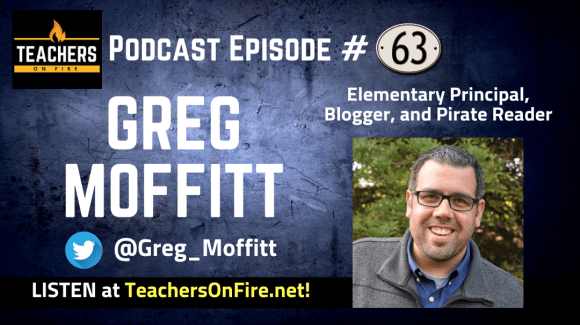
The mission of the Teachers on Fire podcast is to profile agents of growth and transformation in K-12 education. On my show, I interview education leaders from across North America and around the world. I ask these education leaders to share their highs and lows, their passions and goals, and the voices and resources that inspire their practice today.
Despite some difficult challenges and stressful moments, the podcast has been an incredibly rewarding experience. I now receive encouraging testimonials after every episode, and my listenership grows every week. Each guest stimulates my own thinking and practice, and I learn something from every conversation. There’s a lot to celebrate and a lot to look forward to.
My Takeaway: When it comes to trying something new, it’s not always the right move to wait until you have it all figured out. My first episodes were rough, and I had a ton of learning to do around equipment, applications, recording techniques, publishing, workflow, and promotion.
But I was taking action. I was experimenting, failing, improving, and learning. I refused to let fear of failure stop me. And that’s the takeaway that I want to pass on to my boys and students.
Experience 3: Five Weeks Away.

In July, I spent five weeks (Monday through Friday) studying at Vancouver Island University. I’m in the middle of a Master’s program there, and the program hosted some on-campus courses during those weeks. My MEdL will open all kinds of career opportunities for me, and it’s something I should have completed a decade ago.
The five weeks spent away from home were not easy. Yes, I love learning and love engagement, and I loved seeing more of my brother and his family (they graciously put me up in his home for the entire five weeks). The in-class learning was amazing and the collegial relationships were rich during these five weeks.
But it was tough to be separated from my family for this period. I missed my wife and stepsons a lot. And I missed our typical summer adventures of swimming, hiking, paddleboarding, and canoeing. Although we did our best to fit these activities in where we could throughout the summer, the reality was that the best weather weeks of the year were sacrificed in the name of my degree.
My Takeaway: When a partner and parent decides to pursue further education, the whole family sacrifices to make it happen. Count the cost before you build the tower.
Experience 4: A Mountaintop Moment
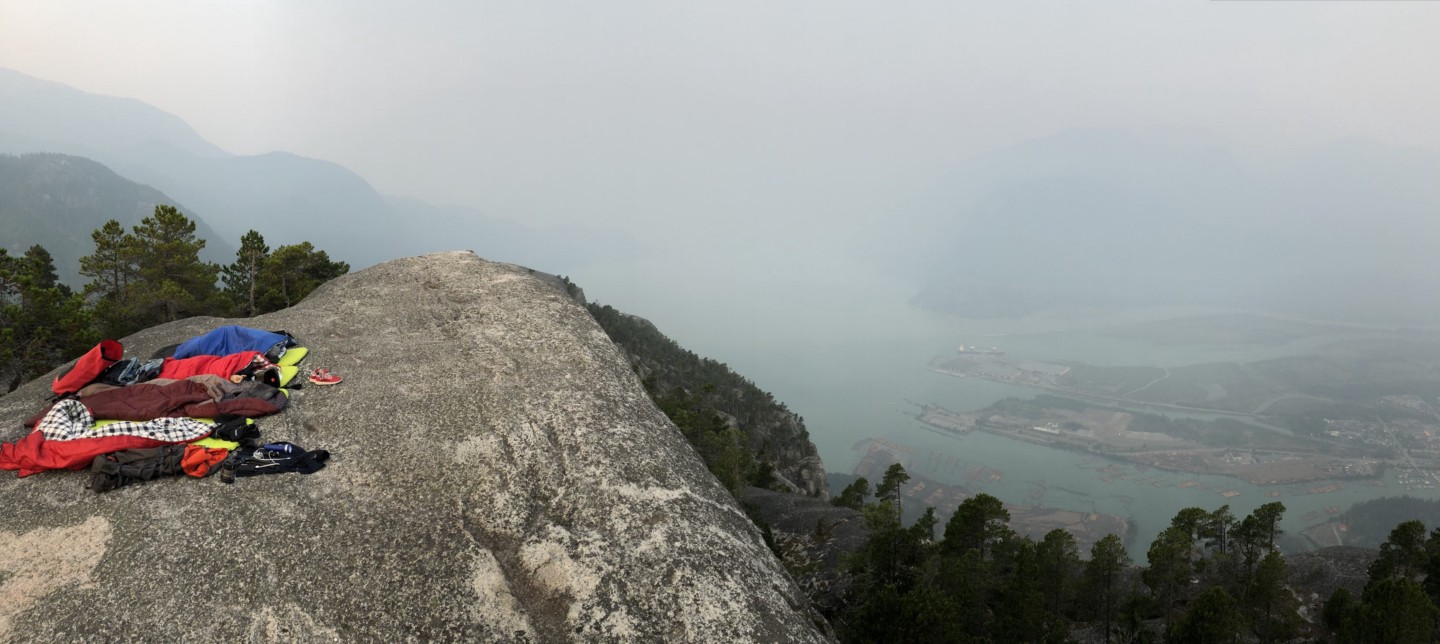
On Tuesday, August 14, I convinced my family to climb a local mountain and camp out overnight. The conditions weren’t perfect: forest fires throughout the region were obscuring the normally glorious views. But the timing was right, and with no end of fire haze in sight, we decided to go for it.
It turned out to be an absolute blast. Our boys conquered the climb like nobody’s business, leaving me and their mom far behind at times. Bugs and wildlife weren’t a factor, other than some friendly chipmunks in the morning. Even with heavy smoke in the air, the views at the top were majestic.
We had the mountain to ourselves for the whole evening. With boulders for beds and stars for our ceiling, we spent the night in sleeping bags, talking ourselves to sleep.
It was one of my favorite family memories of the year.
My Takeaway: In the busy seasons of life, make sure to carve out some mountaintop moments — the stuff of memories and stories for years to come. Although we all love our home time, nothing beats getting out of the house and enjoying screen-free adventures together. Don’t let the busy seasons keep you off the mountain.
Experience 5: A New School

In September, I took a new teaching position at a large school close to my home. This change came after eleven years spent at my previous school, a place that I had come to love and one where I had built many meaningful relationships.
The new position came with a few surprises. For one, I now teach more students and prepare lessons for more courses than ever before. Great teachers that I expected to partner with this year decided to serve with other schools instead. And of course with any new school comes new expectations, and in some cases, that means saying goodbye to freedoms that I’ve enjoyed for many years.
There’s a lot to celebrate in my new workplace, though. My school has a great reputation and a high commitment to excellence. The community is strong, progressive, missional, and enjoys solid parent support. Professional engagement around Twitter, YouTube, edublogs, and books is by far the strongest of any team I’ve ever served with. Administrators have been gracious, encouraging, and open-minded. My colleagues are positive, supportive, keen to improve their practice, and I already love them dearly. It’s a place where I can grow, thrive, and contribute.
A good friend once told me that he believes educators need a change in scenery every seven years or so. Work in a different environment, take on some new challenges, learn new curriculum. Whatever the change looks like, the key is to keep it fresh, to keep growing, learning, and evolving.
I agree. And that’s what’s happening here.
My Takeaway: Professional growth often requires professional change. Don’t get so comfortable in one environment that your own learning starts to stagnate. Sometimes keeping it real means moving on and redefining the journey.
Experience 6: Turning 40.
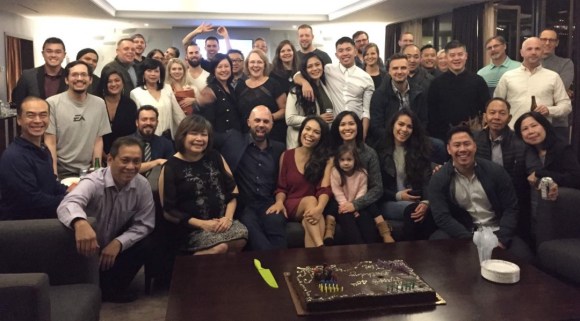
I finished my fourth decade in October. 40 years is obviously a pretty big milestone — one that gets a lot of attention in our culture.
My wife planned an amazing evening of celebration for it. We got an incredible deal on a very large suite in a 5-star hotel, and we partied with family, relatives, and friends from every corner and circle of my life. Best of all, two of my three out-of-town brothers were able to join me.
I don’t think of myself as a big one for celebrations. In the past, I’ve let my birthdays slip by without so much as a stir.
But my dear Filipina wife was having none of it this time. She made it a big deal, invited a ton of people, and I’m so glad she did.
It was an incredible evening shared with most of my favorite people on the planet. It was a night to soak up the love, and that’s exactly what I did.
My Takeaway: Like them or not, celebrations are an important part of the rhythm of life. Savor them when they come. Enjoy the milestones and practise gratefulness for the meaningful relationships you enjoy. Because people are the stuff of life.
Experience 7: Bracing for Impact.
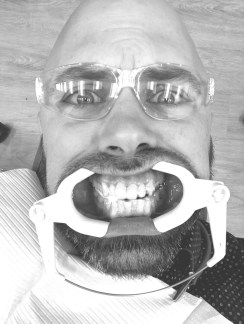
In October, my family got braces. All four of us accepted the prospect of various bits of metal and plastic in our mouths for the next 1–2 years.
I’ve had a bad overbite my whole life, and my bottom teeth also have crowding issues that show up right at the centre of my smile.
Braces have been a long, long time in coming for me. With two robust health benefit plans now in the family, it was finally time to take action.
The first few days were horrible. The Invisalign braces weren’t painful as much as they were simply uncomfortable. My mouth had been invaded by foreign objects. It was harder to speak and snacking was suddenly awkward.
Since that first week, however, the experience has gotten a lot better. Strangely, I now look forward to putting the next new teeth trays in my mouth each week. The tension I feel on my teeth at the beginning of the week reminds me that my smile is incrementally improving.
My Takeaway: Besides giving me newfound empathy for all my middle school students with braces, my journey with braces is building character: patience, consistency, and perseverance. As I wear these things for the next year and a half, I can’t take days or chunks of hours off. These teeth have to stay with me through thick and thin, no matter what. The payoff doesn’t happen if I slack off.
2018: A Year of Transformative Experiences
A breakthrough on Medium. The Teachers on Fire podcast. Five weeks away. A mountaintop moment. A new school. Turning 40. Bracing for impact.
These are the events that shaped my 2018. Together, they transformed me as a person, an educator, and leader. There was some pain, but a whole lot of gain. I am not the same person I was a year ago.
Here’s to more growth and transformation in 2019.

 Tim Cavey